






The Challenge of Clutter in Radar Systems
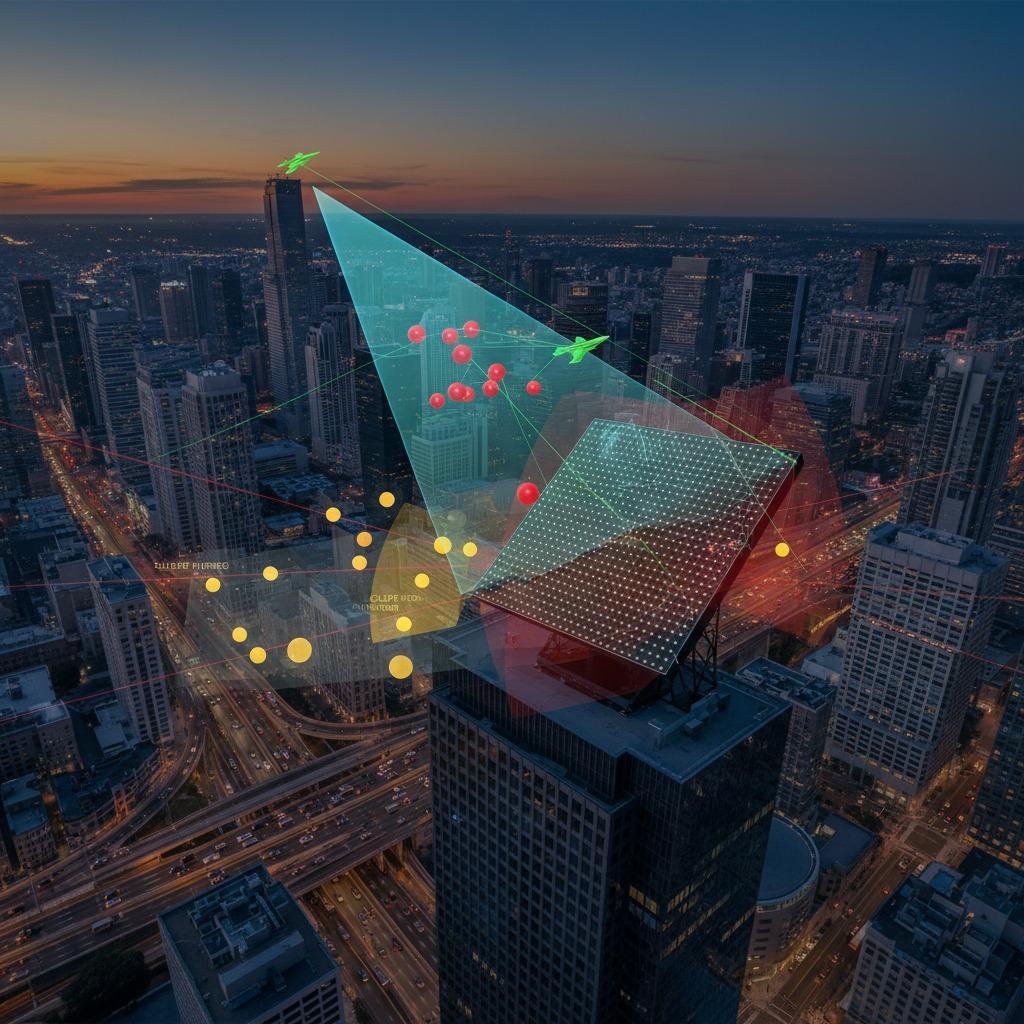
In modern radar applications, such as automotive safety systems, weather monitoring, and military surveillance, clutter filtering emerges as a critical hurdle. Clutter refers to unwanted echoes from non-target objects like ground reflections, rain, or vegetation that obscure genuine signals. Without effective clutter filtering, radar operators face high false alarm rates and reduced detection accuracy, leading to unreliable performance in dynamic environments. For instance, in urban settings, multipath signals and static obstacles can drown out moving targets, complicating real-time decision-making. This problem is exacerbated in dense scenarios where distinguishing between clutter and actual threats becomes nearly impossible, potentially endangering lives or missing vital intelligence.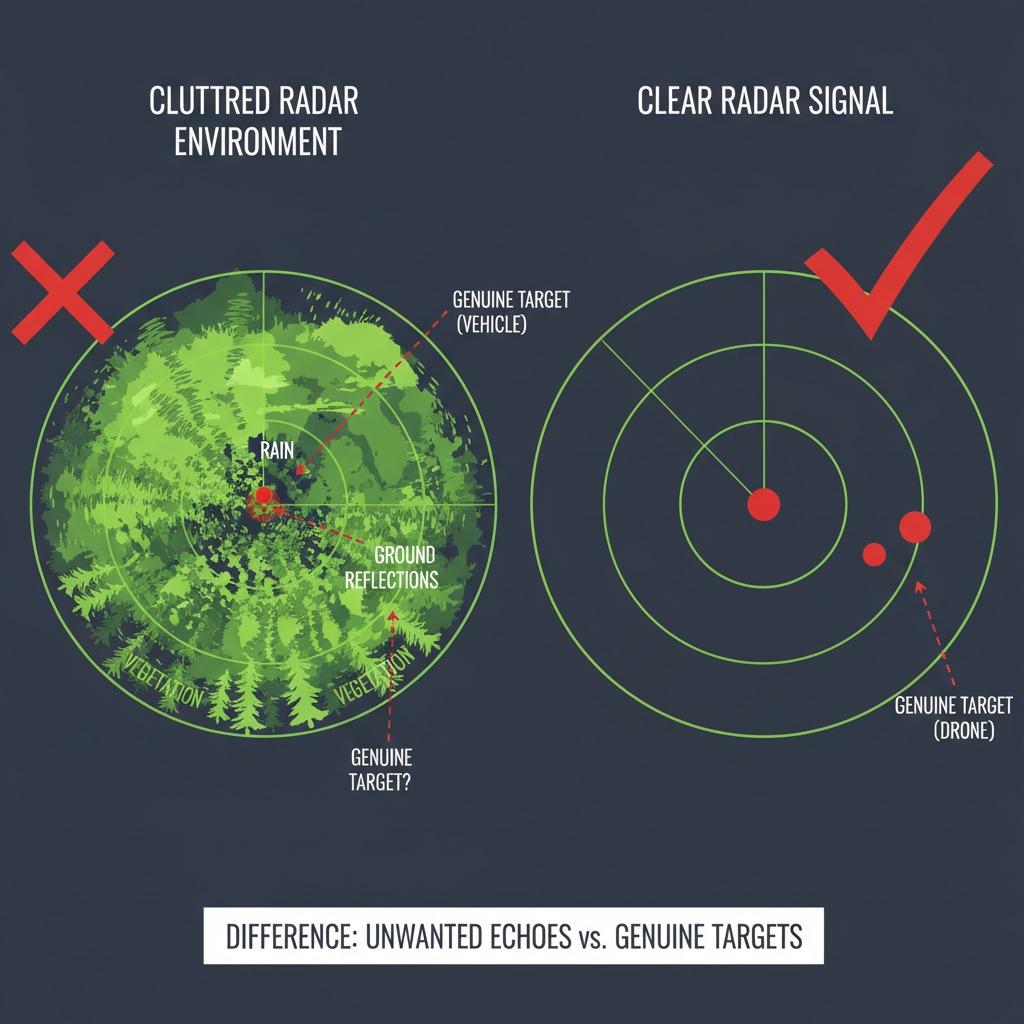
Integrating Beamforming Algorithms for Targeted Signal Isolation
To combat the clutter filtering dilemma, advanced beamforming algorithms offer a robust solution by focusing radar beams on specific directions, suppressing off-axis interference. These algorithms digitally steer the antenna array to enhance signals from desired angles while nulling out clutter sources. By incorporating beamforming algorithms into radar processing pipelines, systems can achieve narrower beamwidths, improving spatial resolution and reducing the impact of environmental noise. For example, adaptive beamforming techniques dynamically adjust weights based on incoming signals, effectively isolating targets amid heavy clutter. This approach not only boosts signal-to-clutter ratios but also integrates seamlessly with other estimation methods, paving the way for more precise target tracking.
Leveraging Angle of Arrival (AoA) Estimation for Precise Localization
Another key strategy in clutter filtering involves angle of arrival (AoA) estimation, which determines the direction of incoming signals to differentiate targets from clutter. AoA techniques use phase differences across antenna elements to pinpoint signal origins, allowing radars to filter out echoes from irrelevant azimuths. In cluttered environments, such as forested areas or crowded airspace, AoA enables the system to ignore broad-spectrum noise and focus on high-probability target directions. When combined with clutter filtering protocols, AoA reduces computational load by preprocessing data, ensuring that only relevant signals proceed to further analysis. This results in faster processing times and higher accuracy, making it indispensable for applications requiring quick responses.
Utilizing Range-Doppler Maps to Separate Motion from Static Clutter
Range-Doppler maps provide a visual and analytical framework for clutter filtering by mapping targets in both distance and velocity dimensions. These maps are generated through Fourier transforms of radar returns, revealing stationary clutter as clusters near zero Doppler while highlighting moving objects with distinct velocity signatures. In scenarios plagued by ground clutter, such as low-altitude drone detection, range-Doppler maps allow for straightforward thresholding to suppress static returns, enhancing overall system clarity. By refining clutter filtering with these maps, radars can achieve superior target discrimination, minimizing false positives and optimizing resource allocation for threat assessment.
Enhancing Accuracy with Doppler Estimation Techniques
Doppler estimation plays a pivotal role in advanced clutter filtering by quantifying the radial velocity of objects, effectively separating slow-moving or stationary clutter from fast targets. Techniques like maximum likelihood estimators or autocorrelation methods extract precise Doppler shifts, enabling filters to adaptively remove low-velocity echoes. In high-clutter radar deployments, such as maritime surveillance amid sea waves, Doppler estimation refines the clutter model, allowing for real-time adjustments that maintain detection sensitivity. Integrating Doppler estimation with beamforming algorithms and AoA further amplifies clutter rejection, creating a multi-layered defense that ensures reliable operation even in adverse conditions.
By addressing clutter through these interconnected solutions—beamforming algorithms for directionality, angle of arrival for localization, range-Doppler maps for visualization, and Doppler estimation for motion analysis—radar systems can overcome pervasive interference challenges. This holistic problem-solution paradigm not only elevates performance but also future-proofs technologies against evolving environmental complexities, delivering actionable insights with confidence.