






Overcoming Security Challenges with Geofencing Enforcement

In today's increasingly connected world, geofencing enforcement has become essential for protecting critical infrastructure and sensitive areas from unauthorized access. The problem arises when traditional security measures fail to detect and deter intruders in real-time, especially in environments where GPS signals are unreliable or jammed. Without robust geofencing enforcement, organizations face risks of breaches, regulatory non-compliance, and operational disruptions, leading to financial losses and safety concerns.
Addressing Intruder Detection Gaps
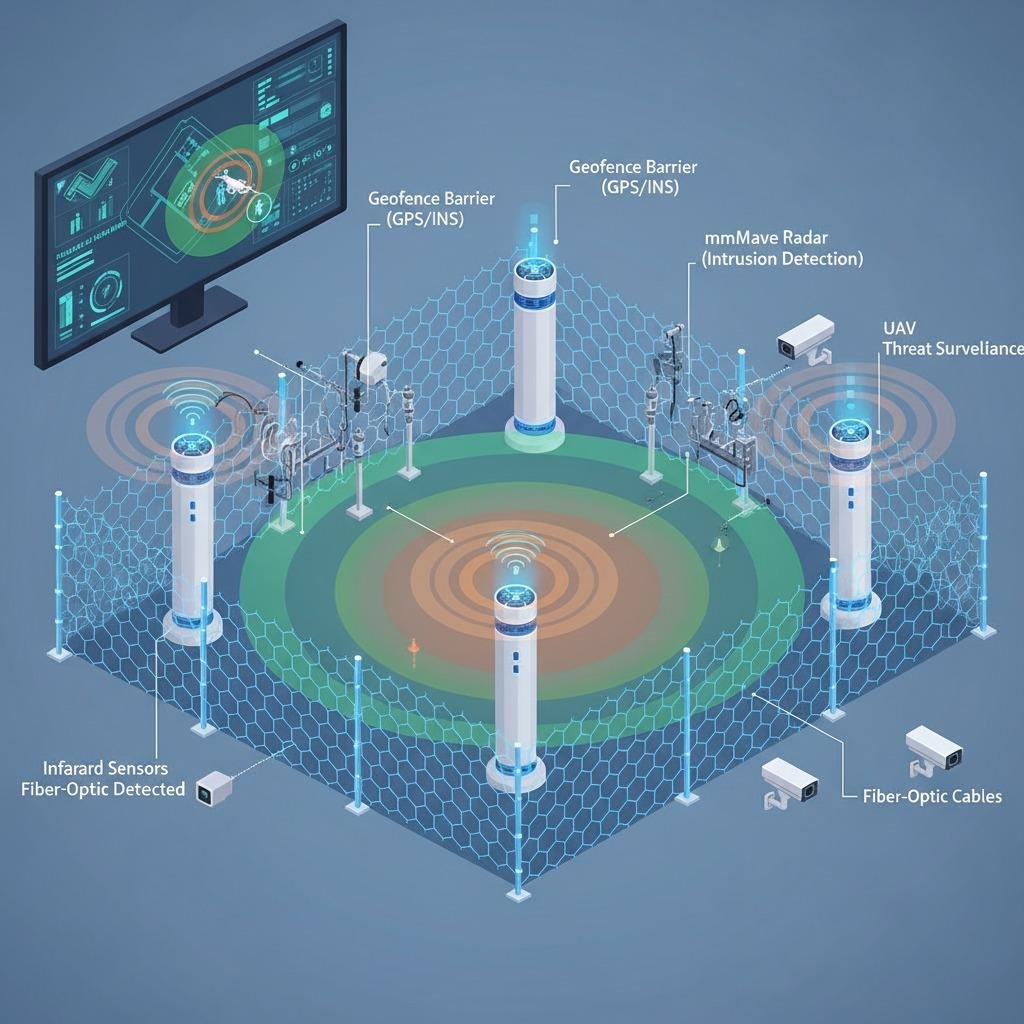
Intruder detection is a core challenge in geofencing enforcement systems. Conventional methods often rely on visible barriers or basic sensors that can be easily bypassed or tampered with. To solve this, advanced intruder detection technologies integrate seamlessly with geofencing enforcement protocols, using multi-layered sensing to identify unauthorized entries promptly. For instance, deploying mmWave radar for precise motion tracking allows systems to differentiate between legitimate personnel and potential threats, even in low-visibility conditions. This approach ensures that geofencing enforcement not only alerts but also responds automatically, minimizing response times and enhancing overall security posture.
Ensuring Reliability Under GNSS-Denied Conditions
Another significant issue is reliability under GNSS-denied conditions, where satellite signals are disrupted by interference or environmental factors, rendering standard geofencing enforcement ineffective. Fail-safe sensing mechanisms address this by incorporating redundant technologies that don't depend on GPS. MmWave radar, for example, provides accurate localization and tracking without GNSS, maintaining geofencing enforcement integrity in jammed or indoor environments. By combining these with AI-driven analytics, systems can predict and prevent intrusions, offering a reliable solution that upholds security without interruptions. This is crucial for sectors like aviation and defense, where downtime can have severe consequences.
Achieving Airspace Compliance Through Advanced Solutions
Airspace compliance poses yet another hurdle, particularly for drone operations and aerial surveillance, where geofencing enforcement must prevent incursions into restricted zones. The problem intensifies when systems lack the precision to enforce boundaries dynamically. Solutions involving intruder detection fused with fail-safe sensing enable real-time airspace compliance monitoring. MmWave radar excels here by detecting small objects at long ranges, ensuring geofencing enforcement adapts to evolving threats. Organizations can implement these technologies to meet regulatory standards effortlessly, reducing liability and fostering safer operations. Ultimately, integrating reliability under GNSS-denied conditions with robust detection creates a comprehensive framework that not only solves current problems but also anticipates future challenges in security and compliance.
By prioritizing geofencing enforcement with these innovative elements, businesses and institutions can transform vulnerabilities into strengths, safeguarding assets with confidence and precision.