






Why chirp modulation design still matters in modern radar
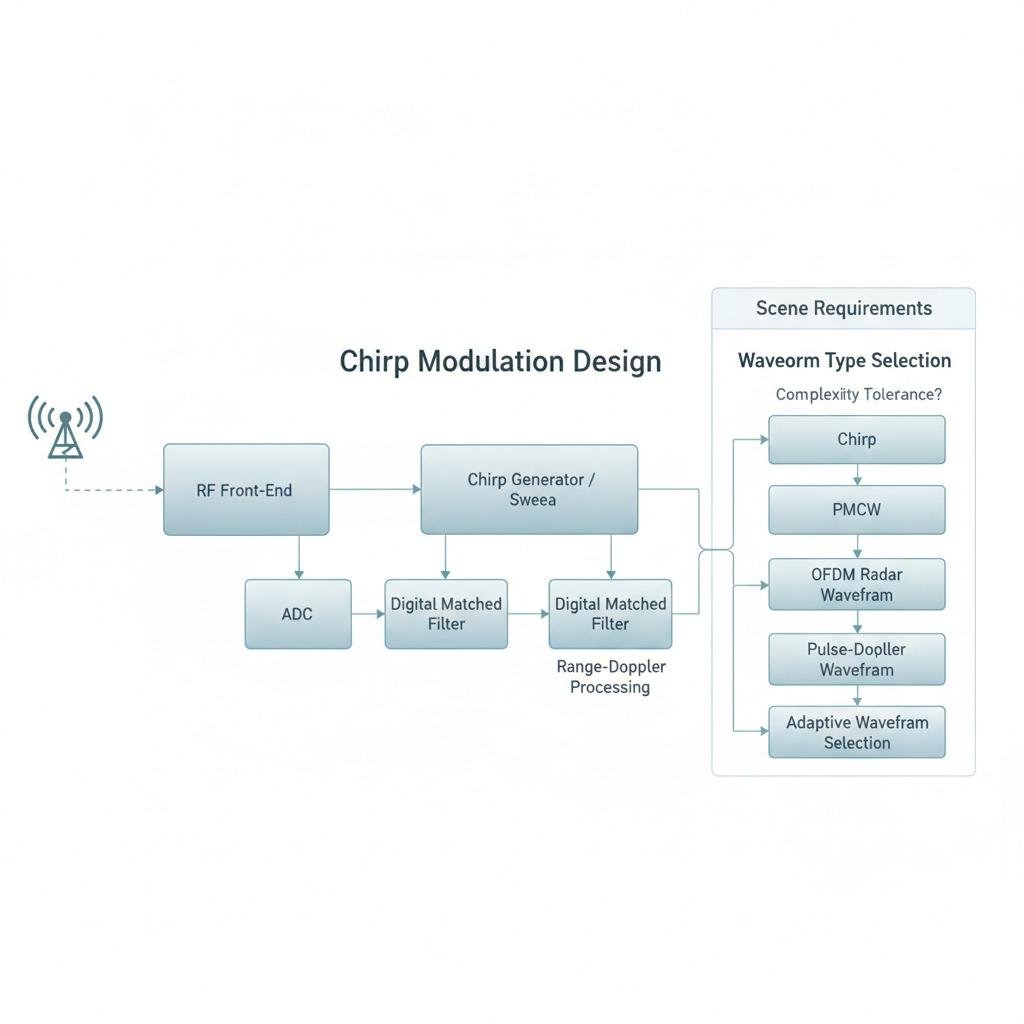
Chirp modulation design sits at the center of many radar decisions because it directly shapes range resolution, velocity handling, interference resilience, and the burden placed on downstream signal processing. For engineering teams comparing waveforms, the real question is rarely whether a chirp can work. It is whether the chosen waveform will still behave well once it is mounted in a crowded spectrum, pushed through real hardware, and judged by a system requirement that usually has more than one master.
That is why waveform choice is not a purely theoretical exercise. A radar team may need short-range discrimination, low probability of interference, strong motion sensing, or compatibility with existing silicon and antennas. The wrong waveform can force compromises later in the stack: more calibration effort, heavier processing, or reduced performance in clutter. The right one gives the system margin. Not glamorous, but valuable.
What chirp modulation is solving
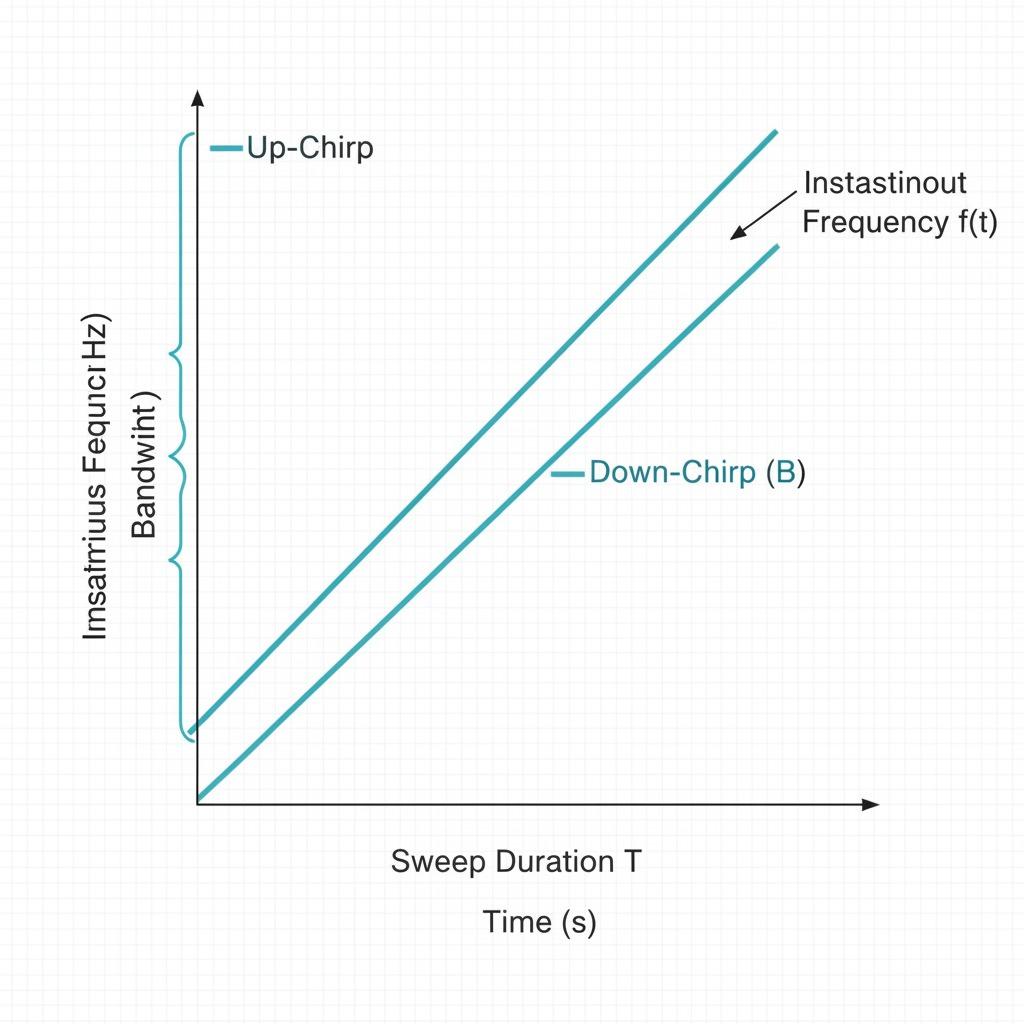
A chirp waveform changes frequency over time in a controlled way. In radar, that sweep can be used to estimate distance from the returned echo and, depending on the system architecture, help separate moving targets from static background clutter. The appeal is straightforward: a well-designed chirp can offer useful range performance without demanding extreme peak power.
For sourcing managers and product teams, the practical point is that chirp modulation design is rarely just a waveform spec. It touches bandwidth allocation, transmitter linearity, receiver dynamic range, calibration strategy, and even the regulatory or coexistence environment the product will live in. A design that looks clean on a block diagram can become messy if the RF chain cannot support the sweep accurately.
Key waveform options and where they tend to fit
Chirp-based radar
Chirp waveforms remain common because they are well understood and relatively mature. They are often favored when the system needs a balance of range measurement, implementation simplicity, and predictable processing. In many product discussions, chirps are the baseline option because engineering teams already know how to model their behavior and package the signal chain around them.
Phase-modulated continuous wave (PMCW)
PMCW is often discussed when a team wants strong interference handling or specific correlation advantages. Compared with a basic chirp approach, PMCW may offer different tradeoffs in unambiguous measurement and processing structure. It is not automatically better; it is simply a different answer to the same problem. The catch is that the system-level processing and timing discipline may become more demanding.
OFDM radar waveform
An OFDM radar waveform can be attractive when a design team is trying to combine sensing and communications concepts or when spectral flexibility matters. The downside is that OFDM usually brings complexity, both in waveform generation and in managing the realities of the RF front end. If the hardware is not built for it, theory will not save the program.
Pulse-Doppler waveform
Pulse-Doppler waveform designs remain relevant in applications where motion detection and velocity estimation are central. They are familiar to many engineers, and that familiarity matters when schedules are tight. Still, pulse-based architectures bring their own compromises in duty cycle, ambiguity management, and peak power handling. They are often chosen because they fit an application, not because they are universally superior.
How to think about adaptive waveform selection
Adaptive waveform selection is becoming more relevant as systems face changing interference, shifting operating modes, and tighter performance expectations. Rather than locking the product into one fixed behavior, adaptive approaches let the radar adjust the waveform depending on scene conditions or mission goals.
That sounds elegant, but buyers should be cautious. Adaptive systems can improve robustness, yet they also add software complexity, validation workload, and a longer path to production maturity. If a program already has thin margins in processing or verification, adaptation can become a burden instead of a benefit. The question is not whether adaptation is advanced. It is whether the team can support it through full product life.
Selection criteria that actually move the decision
When teams compare chirp modulation design against PMCW, OFDM radar waveform options, or a pulse-Doppler waveform, the most useful criteria are usually practical:
The first is hardware linearity. Swept or coded waveforms can expose weak points in the RF chain.
The second is processing load. A waveform that looks efficient in simulation may demand more compute than the target platform can comfortably provide.
The third is interference behavior. In dense environments, coexistence is not a side issue.
The fourth is validation effort. A sophisticated waveform can slow down bring-up if the test team lacks the tools or time to characterize it properly.
The fifth is product fit. A short-range sensing product, a long-range industrial system, and an automotive module do not share the same priorities, even if they use similar radar language.
Common mistakes buyers and engineers make
One frequent mistake is treating waveform selection like an isolated RF choice. It is not. The waveform, antenna, analog front end, sampling strategy, and digital processing chain are linked.
Another mistake is overvaluing peak performance numbers from lab conditions. Real environments have temperature drift, mutual interference, mounting constraints, and clutter that is rarely cooperative.
A third, more subtle error is choosing a waveform because it is fashionable. OFDM radar waveform approaches can be compelling, but they are not a universal upgrade. The same is true for PMCW. A careful engineer asks what problem is being solved and what cost is being accepted.
A practical buying perspective
For sourcing and product teams, the best purchasing decision is often the one that aligns waveform complexity with program maturity. If a platform needs stable, explainable behavior and fast validation, chirp modulation design may remain the safest route. If the product is entering a noisier spectral environment or needs more flexible sensing behavior, PMCW or adaptive waveform selection may deserve a deeper review. If the use case is built around motion discrimination and a familiar radar stack, pulse-Doppler waveform architectures may still be the most sensible option.
The useful habit is to ask suppliers and engineering partners for more than a block diagram. Ask how the waveform behaves under interference, how it scales with processing constraints, and what assumptions are baked into the design. Those answers usually tell you more than the headline spec.
FAQ
Is chirp modulation design always the simplest option?
Not always. It is often simpler than more coded or adaptive approaches, but implementation quality still depends on the RF chain and signal processing.
When should a team look beyond chirps?
When interference resilience, waveform agility, or system integration requirements start to dominate the design brief.
Is adaptive waveform selection worth the added complexity?
Sometimes. It depends on whether the product can support the extra software, validation, and maintenance effort.
Next step
If your team is comparing waveform strategies for a new radar platform, start with the constraints before the buzzwords. Map the hardware limits, processing budget, and operating environment first, then decide whether chirp modulation design, PMCW, OFDM radar waveform, pulse-Doppler waveform, or adaptive waveform selection is the better fit for the product you actually need to ship.