







Why a complementary sensing modality matters in real systems
When engineers talk about a complementary sensing modality, they are usually trying to solve a very practical problem: one sensor type sees something the others miss. In automation, robotics, advanced driver assistance, inspection equipment, and security systems, no single sensor is equally strong in every condition. Light changes, surfaces vary, vibration creeps in, dust builds up, and reflective materials can distort readings. That is where a second, differently behaved sensor earns its place.
The value is not just “more data.” The point is to reduce blind spots, improve confidence, and keep a system working when the environment gets messy. Buyers often focus on raw accuracy numbers, but field performance depends just as much on whether the sensing stack can tolerate real-world faults, partial occlusion, and changing operating conditions.
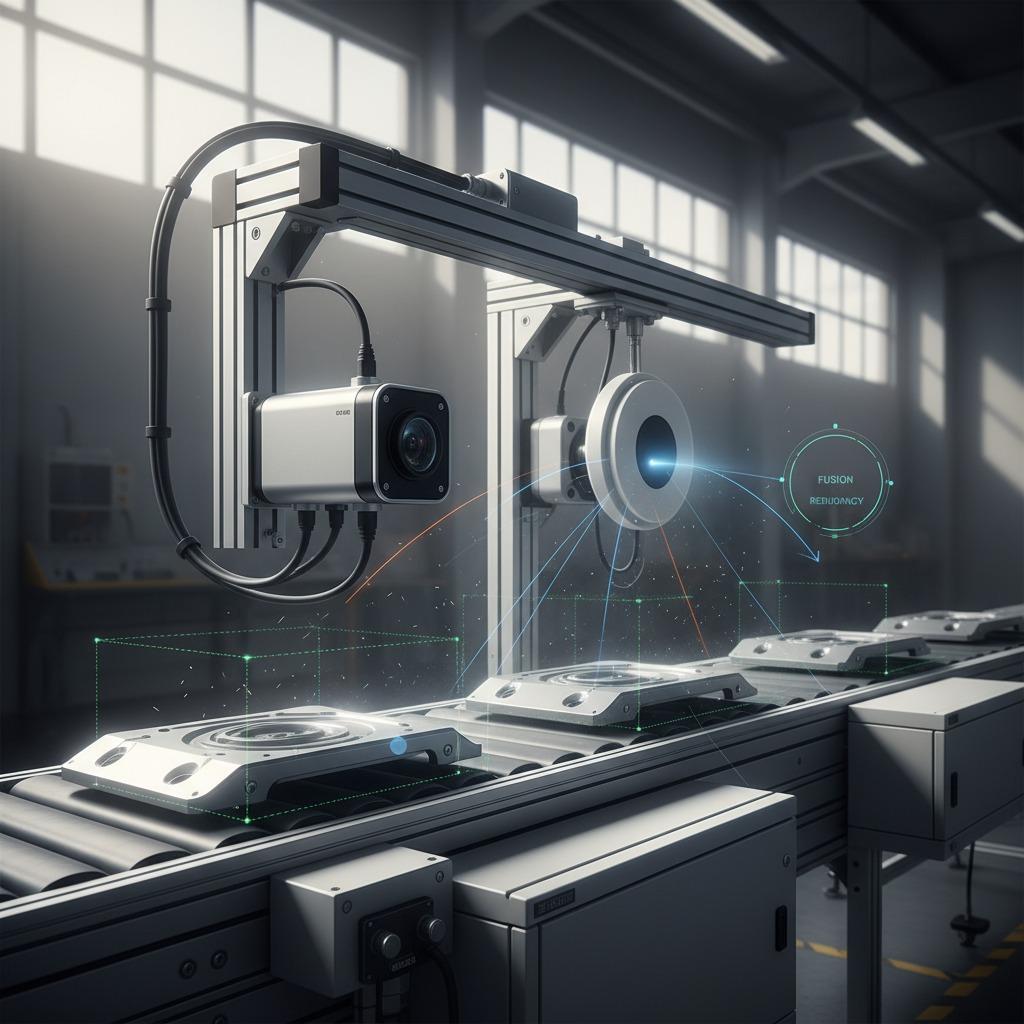
What problem this approach actually solves
Many sensing failures are not dramatic. They look like small shifts, intermittent dropout, or noisy readings that create hesitation in the control loop. A camera may struggle with glare or darkness. A radar may be strong on distance and motion, but less helpful for fine shape detail. Lidar can offer precise spatial information, yet dust, rain, or target material can complicate the picture. Pairing sensors with different strengths helps the system stay usable when one channel degrades.
This is why sensor fusion for redundancy has become more than a design buzzword. In critical applications, redundancy is not only about backup hardware. It is about having a second measurement principle that can support the first one when conditions change. That distinction matters during product selection, because the real question is not whether two sensors exist in the same enclosure, but whether they truly cover each other’s weaknesses.
Quick comparison: where different sensing pairs tend to help
Radar-lidar integration
Radar-lidar integration is often discussed in mobile platforms and industrial vehicles because the two sensors bring different strengths. Radar is generally valued for robustness in poor visibility and for motion-related detection. Lidar is often used where geometric detail matters. Together, they can improve object tracking, distance estimation, and scene understanding. The caveat is integration effort. Data synchronization, mounting geometry, and processing logic can become the real project, not the sensors themselves.
Radar-camera fusion
Radar-camera fusion is common when a system needs both object motion cues and richer classification from visual data. The camera contributes texture, shape, and context; the radar can support detection in low light or adverse weather. This combination is attractive in outdoor environments, but it does demand disciplined alignment and calibration. If the sensor views are not aligned well, the resulting confidence can be misleading rather than helpful.
Calibration-free fusion: useful goal, not magic shortcut
Calibration-free fusion sounds appealing because it reduces setup burden and can speed deployment. In practice, engineers should treat it as a design target rather than a universal promise. Some architectures reduce the amount of manual calibration needed by using tight mechanical placement, built-in timing compensation, or software methods that tolerate small offsets. That can make installation easier and reduce maintenance work later.
Still, “calibration-free” should be read carefully. Even systems marketed that way may require verification after mounting, thermal cycling, or mechanical shock. A buyer should ask what is truly eliminated: factory calibration, field alignment, periodic recalibration, or all of the above. Those are very different claims.
Selection criteria that matter more than spec sheets
Engineers and sourcing teams usually get better results when they evaluate the whole sensing stack instead of comparing isolated sensor datasheets. The first question is environmental fit. Will the system face dust, fog, vibration, bright sunlight, reflective metal, or wet surfaces? The second is latency. A strong fusion concept can fail if it arrives too late for control decisions. The third is data compatibility. Clean interfaces, timestamping, and consistent coordinate frames matter more than many procurement checklists admit.
Another practical point: redundancy is only valuable if the two sensing channels are meaningfully independent. Two sensors that fail in the same way do not give you much protection. Likewise, if one sensor is so weak that it only echoes the other’s output, you have added cost and complexity without much resilience.
Common mistakes buyers make
The most common mistake is assuming fusion automatically improves performance. Sometimes it does. Sometimes it just blends two uncertain signals into one more complicated uncertain signal. Another mistake is underestimating mechanical integration. A slight change in bracket stiffness, lens placement, or antenna orientation can affect final behavior more than a software tweak.
Teams also underbudget for validation. A sensing concept may look excellent in a lab and then behave differently on a moving platform, in a warehouse aisle, or after several hours of heat soak. If the application is safety-relevant or time-sensitive, plan for scenario testing early.
Practical buyer advice
If you are sourcing a sensing solution, ask for evidence of performance across the edge cases, not just the happy path. Request examples of behavior in glare, darkness, partial obstruction, vibration, or airborne contamination, depending on your use case. Ask how the system handles dropped frames, missed detections, and inconsistent timestamps. Those are the details that usually reveal whether the architecture is mature.
It is also worth asking what the integration burden looks like after delivery. A system that is easy to prototype but painful to maintain can become expensive over time. For many buyers, that is where complementary sensing modality earns its keep: not by replacing engineering judgment, but by making the final system more forgiving.
What decision this article should help you make
If your current sensing approach is vulnerable to environmental noise, occlusion, or single-point failure, a complementary sensing modality may be the right next step. If your application is simple and controlled, it may not be necessary. The better decision is usually to match the sensing pair to the failure modes you actually expect, then verify the integration path before committing to hardware at scale.
For engineering teams, that means looking beyond the headline sensor type and asking a tougher question: which combination gives us the most reliable information when the plant floor, roadway, or outdoor site stops behaving like a test bench?