






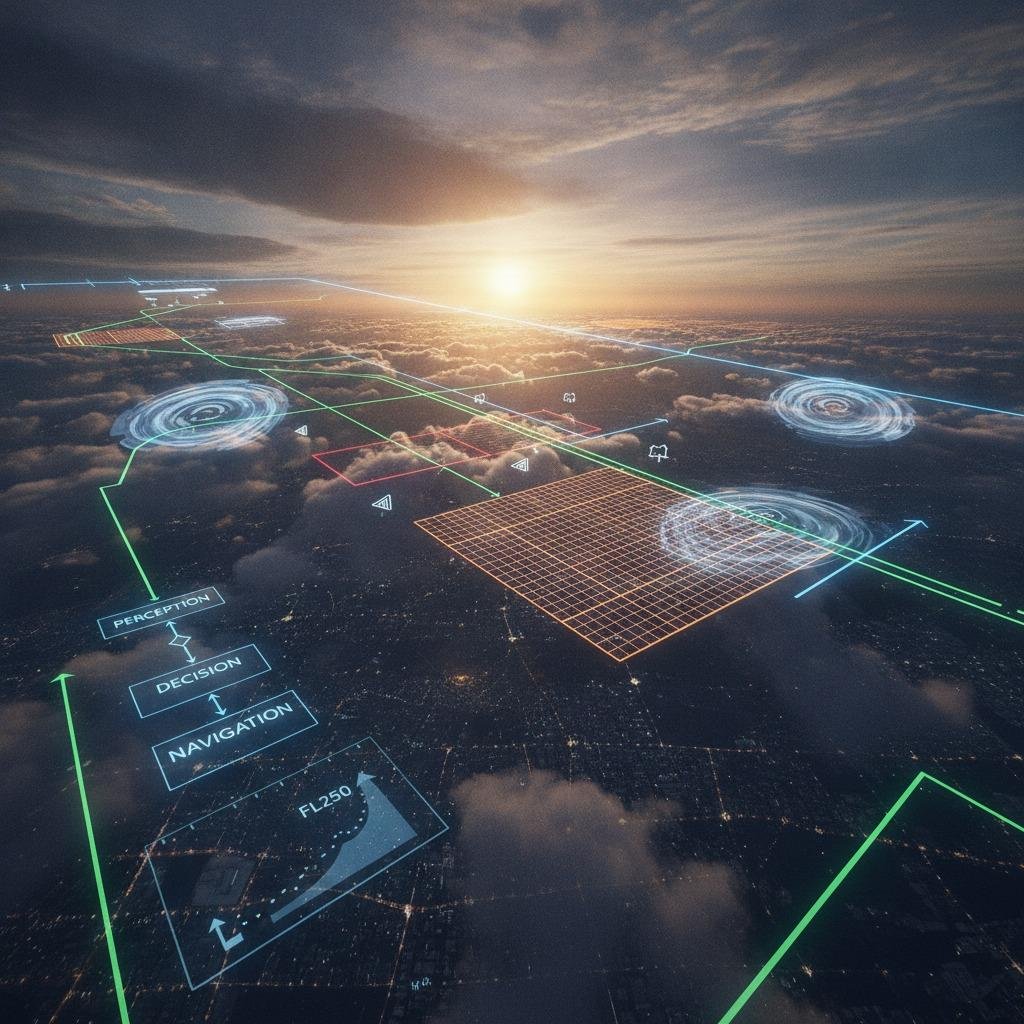
Why complex airspace operation is a different engineering problem
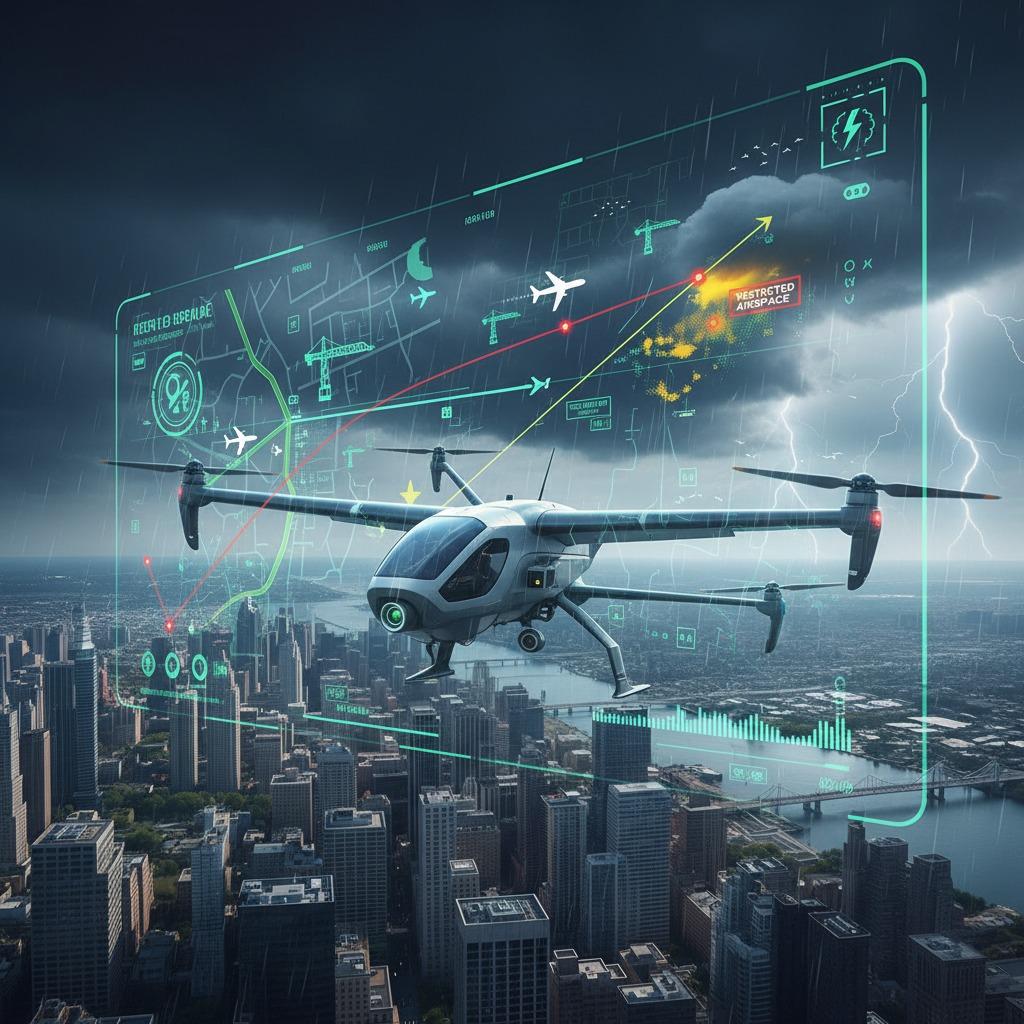
Complex airspace operation is not just a matter of keeping a vehicle aloft and connected. It is a systems problem shaped by traffic density, changing weather, mixed-altitude users, restricted zones, and the simple fact that not every decision can wait for a human on the ground. For engineers, sourcing teams, and product teams, the real question is whether a platform can keep making safe choices when the environment stops being neat and predictable.
That matters because many aerial systems look capable in a demo and then become fragile in the field. Routes change. Visibility drops. A corridor that seemed clear can fill with another aircraft, birds, cranes, or temporary obstacles. In that setting, real-time decision making is not a nice-to-have feature; it is the difference between a usable operational platform and an expensive prototype.
What buyers usually need to separate before they commit
A useful way to approach the topic is to separate three layers: perception, decision, and navigation. They are related, but not interchangeable.
Perception
AI-driven perception helps the system detect and classify objects, terrain cues, and airspace conditions from onboard sensors or fused data sources. The quality of that layer determines how much the rest of the stack can trust what it sees. Weak perception does not always fail dramatically; sometimes it just produces cautious, inefficient behavior that quietly limits range and mission value.
Decision
Real-time decision making turns sensor input into an action. That could mean altering altitude, slowing down, rerouting, or holding position while the situation clears. In complex airspace operation, the decision layer must be conservative enough to reduce risk, but responsive enough to avoid paralysis. Buyers should be careful here. A system that reacts too slowly is obviously bad; a system that reacts too aggressively can also create operational churn and reduce mission continuity.
Navigation
Autonomous navigation is the execution layer. It is where route planning, obstacle response, and stability control come together. A good navigation stack should not assume the environment will remain consistent from one mission segment to the next. It needs enough adaptability to handle partial information and enough discipline to stay within operational limits.
Where sense-and-avoid system design makes the biggest difference
A sense-and-avoid system is often discussed as a single capability, but in practice it is a set of engineering tradeoffs. Sensor type, update rate, processing load, field of view, and response logic all shape performance.
The most common mistake is to focus only on detection range. Range matters, but it is not the whole story. If a system detects an obstacle early but cannot classify it confidently, the response may be conservative and inefficient. If it classifies well but updates too slowly, the platform may already be committed to a bad path. In other words, the buyer should ask how the system behaves under uncertainty, not just what it can see in ideal conditions.
For operations in complex airspace, fusion is usually the more meaningful question. A single sensor modality can be useful, but fused sensing generally gives the controller more stable input, especially when lighting, contrast, or background clutter changes. That does not eliminate risk. It simply improves the odds that the aircraft is reacting to the world rather than to noise.
Selection criteria that matter more than brochure language
When evaluating platforms or subsystems, it helps to look beyond feature lists and ask practical questions:
Does the system support real-time decision making under changing conditions, or only in scripted scenarios?
How does autonomous navigation behave when the map is incomplete or the environment changes unexpectedly?
What kind of AI-driven perception is used, and how does it handle false positives or low-confidence detections?
Can the sense-and-avoid system explain or log its choices in a way that helps operations teams review incidents later?
How much operator intervention is still expected during a mission, and at what point does the system degrade from autonomous to supervised behavior?
Those questions matter because the operational cost of a weak answer can be hidden. A platform that needs constant babysitting may still appear technically advanced, but it will be expensive to deploy at scale.
Common mistakes in procurement and integration
One recurring mistake is assuming autonomy will automatically reduce workload. In reality, early deployments often shift effort from manual flight control to monitoring, exception handling, and system validation. That is still a gain, but only if the team planned for it.
Another mistake is treating the airspace problem as purely a software issue. Complex airspace operation depends on sensors, compute, power budget, mission rules, and integration with the broader platform architecture. A brilliant algorithm can be boxed in by a poor sensor placement or an underpowered processor.
There is also a tendency to overvalue perfect test conditions. Field performance is what counts. Engineers and sourcing managers should ask for evidence of behavior across varied operating environments, even if the data is qualitative rather than polished. A cautious supplier will usually be more credible than one promising flawless performance everywhere.
Practical buying advice for engineering and sourcing teams
If your organization is comparing solutions, start by mapping the missions that are most likely to stress the aircraft: dense corridors, low-visibility segments, mixed traffic, or areas with dynamic obstacles. Then define which function is most critical: perception accuracy, decision speed, route adaptability, or operator oversight.
That framework helps avoid buying a system that is strong in the wrong place. For example, a highly capable AI-driven perception stack may be impressive, but if the mission depends on conservative autonomous navigation in crowded conditions, decision logic may matter more than raw detection range.
A final practical note: ask how the system degrades. Graceful degradation is not glamorous, yet it is often what separates a robust platform from a field headache. When conditions worsen, a good system should reduce capability in a controlled way rather than fail all at once.
FAQ
Is full autonomy always the goal?
Not always. Some operations benefit more from supervised autonomy, where the system handles routine navigation and humans step in for edge cases.
What is the main value of a sense-and-avoid system?
It helps the platform identify hazards and respond quickly enough to reduce collision risk or mission disruption.
Why does real-time decision making matter so much?
Because airspace conditions change faster than many manual workflows can react. Delay is often the hidden failure mode.
Next step for buyers
Before choosing a platform, define the operating environment, the level of autonomy you actually need, and the failure modes you can tolerate. That is usually the fastest way to narrow the field and avoid paying for capabilities that look impressive but do not help in your airspace.