






Revolutionizing Farming with mmWave Radar: Overcoming Precision Challenges
In the world of modern agriculture, farmers face significant challenges in achieving precise application of resources like water and pesticides. Inefficient spraying leads to waste, environmental harm, and reduced yields. Enter mmWave radar, a cutting-edge sensing technology that operates in the millimeter-wave frequency band, offering high-resolution detection even in adverse weather conditions. This innovation is transforming how we approach farming tasks, particularly when integrated with agricultural spraying drones.
The Problem: Inaccuracy in Traditional Spraying Methods
Traditional spraying techniques in agriculture often rely on visual inspections or basic GPS, which falter in low-visibility scenarios such as fog, dust, or nighttime operations. This results in over-spraying or under-spraying, costing farmers money and contributing to soil and water contamination. Drones for agriculture have emerged as a promising solution, but without advanced sensors, they struggle to map terrain accurately or detect crop health in real-time. The lack of reliable detection exacerbates issues in precision agriculture technology, where every drop counts towards sustainability and profitability.
How mmWave Radar Solves These Issues
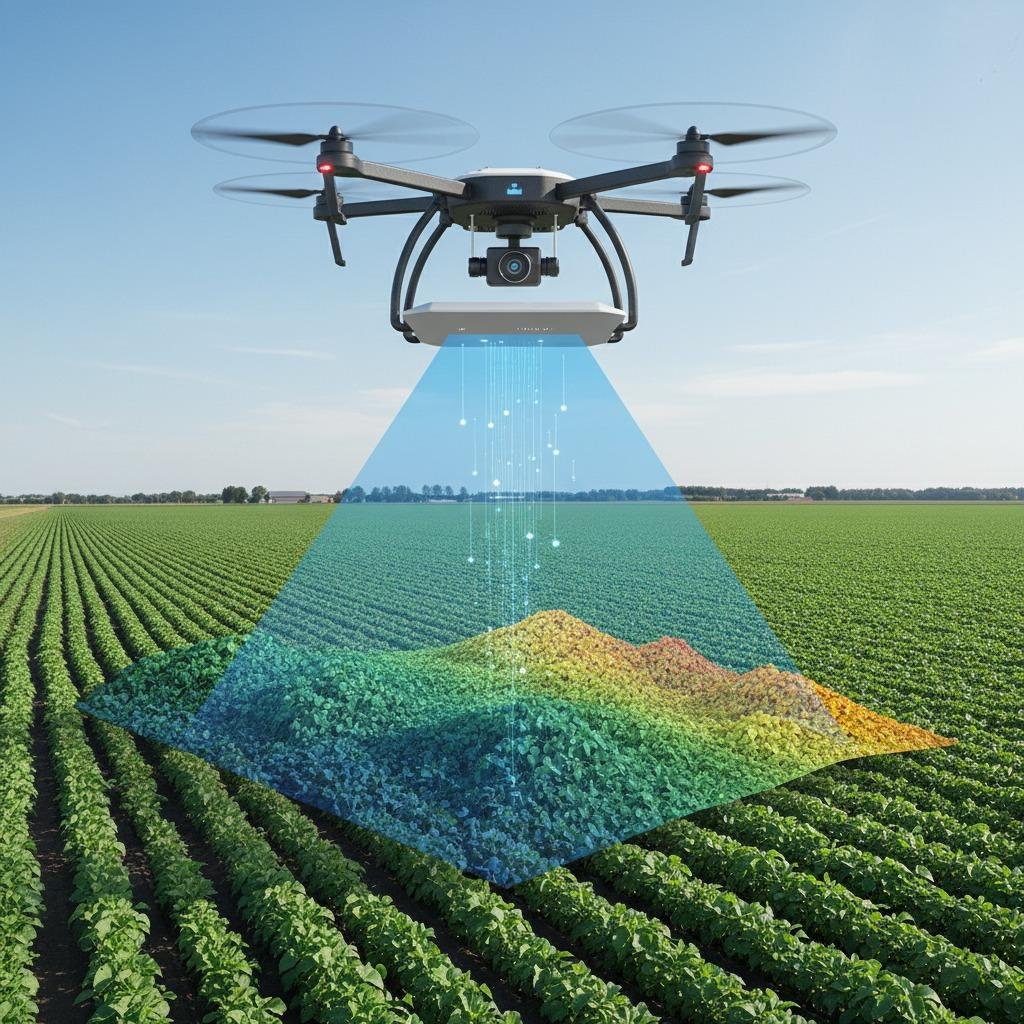
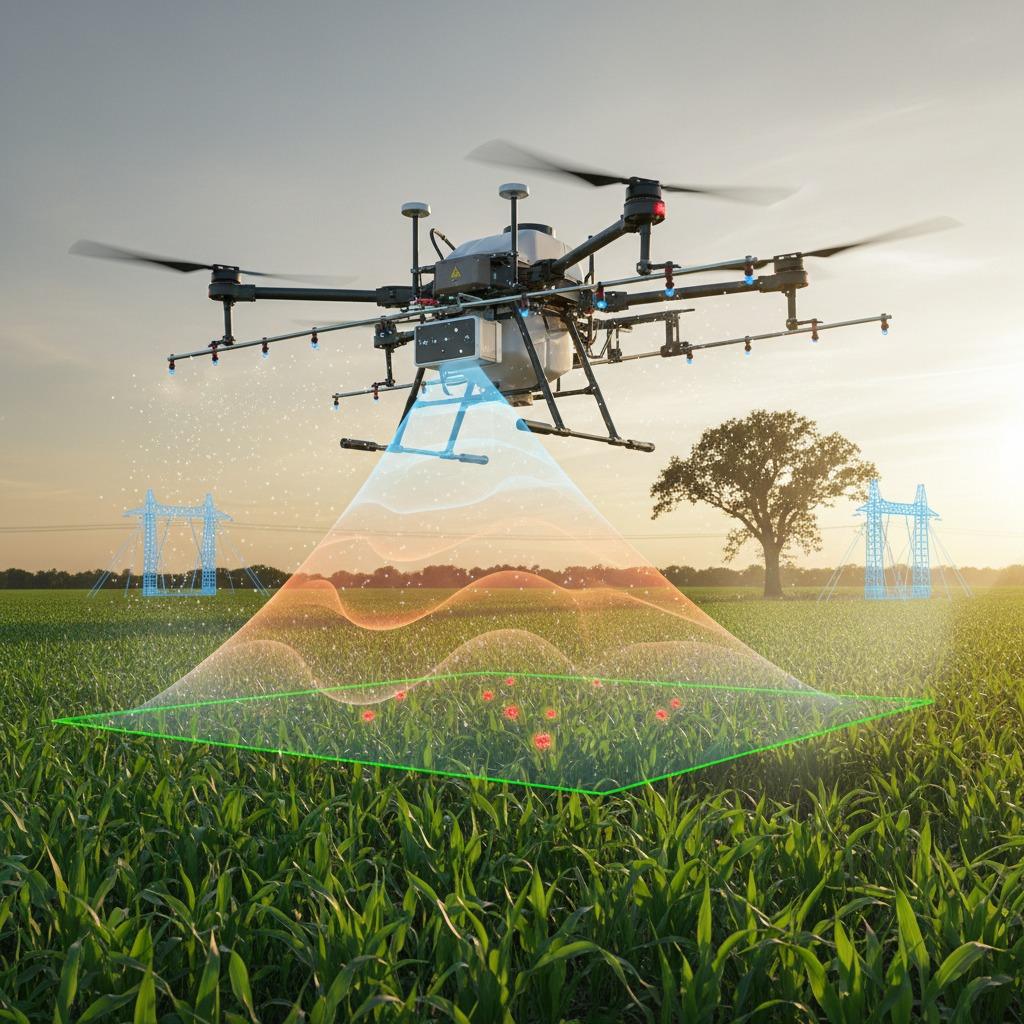
mmWave radar addresses these pain points by providing robust, all-weather sensing capabilities. Unlike optical cameras that fail in poor lighting, mmWave radar uses radio waves to penetrate obstacles and generate detailed 3D maps of fields. In agricultural spraying drones, this technology enables precise navigation and targeted spraying, ensuring chemicals are applied only where needed. For instance, radar technology in farming allows drones to identify plant density, height variations, and even pest infestations without physical contact. By integrating mmWave radar, farmers can optimize drone paths, reducing fuel consumption and minimizing drift—key factors in effective precision agriculture technology.
Implementing mmWave Radar in Drones for Agriculture
To adopt this solution, farmers can equip drones for agriculture with mmWave radar modules designed for agricultural applications. These systems process data in real-time, using algorithms to adjust spray patterns dynamically. A practical setup involves mounting the radar on the drone's undercarriage, where it scans the crop canopy and feeds information to the flight controller. This not only enhances accuracy but also supports data analytics for future planning. Studies show that farms using radar technology in farming see up to a 30% reduction in chemical usage, proving its value in sustainable practices. For those new to this, starting with pilot programs on smaller fields can demonstrate ROI quickly.
Benefits and Future of mmWave Radar in Precision Farming
The advantages extend beyond immediate efficiency. mmWave radar empowers precision agriculture technology by enabling predictive maintenance for equipment and early detection of crop stress through subtle movement patterns. As agricultural spraying drones evolve, integrating mmWave radar will become standard, fostering smarter farms that adapt to climate variability. Looking ahead, advancements in miniaturization and AI will make this technology more accessible, even for small-scale operations. By tackling the core problems of inaccuracy and waste, mmWave radar is paving the way for a more resilient agricultural sector.
In summary, transitioning to mmWave radar-enhanced drones for agriculture is a strategic move for farmers aiming to boost yields while cutting costs. This technology not only solves current spraying dilemmas but also positions agriculture for a high-tech future.