






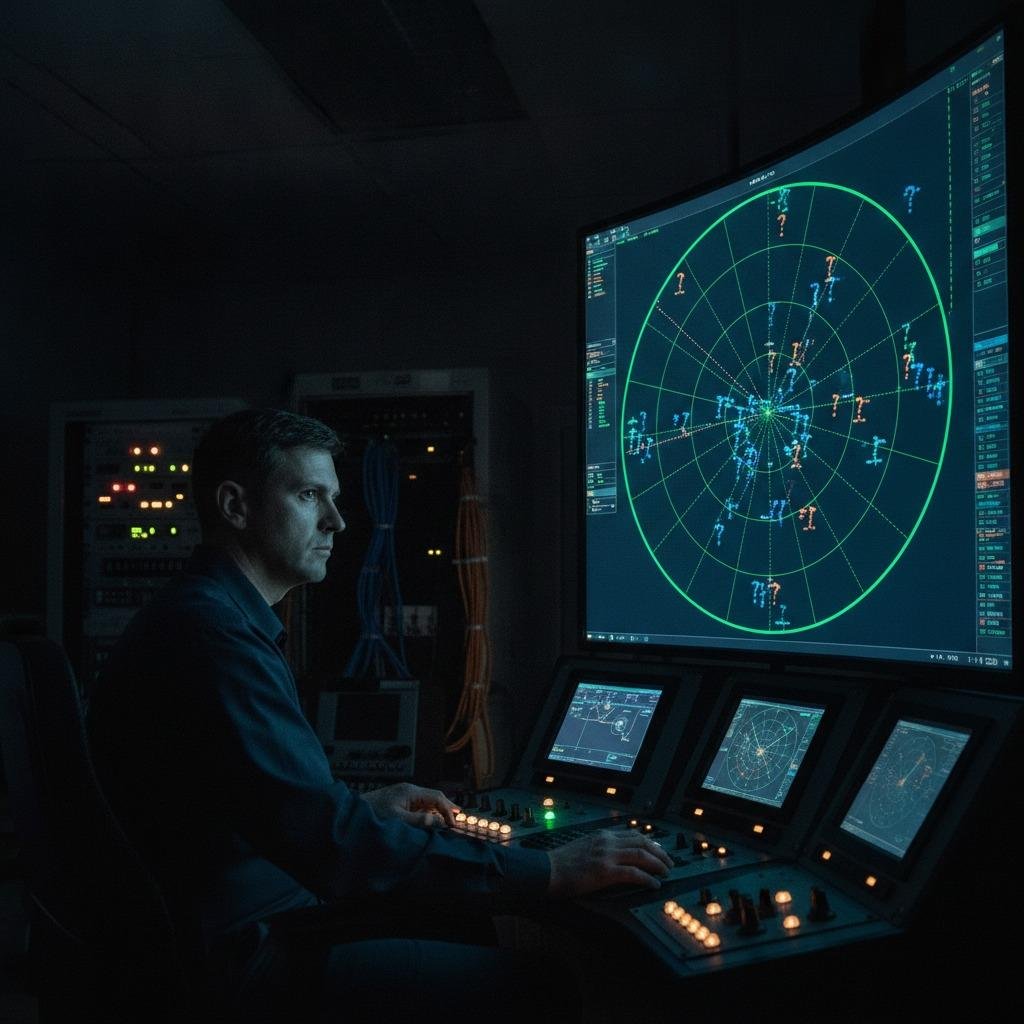
Why false track mitigation matters in real radar operations
False track mitigation is one of those radar topics that only gets attention after a screen fills up with something that should not be there. For engineers and program managers, the problem is not academic. A system that creates phantom tracks can waste operator time, reduce trust in the display, and make it harder to separate a real target from clutter, interference, or brief sensor artifacts. In busy airspace, maritime environments, or ground-surveillance applications, that is more than an annoyance; it can become a decision-making problem.
The core issue is simple enough: a radar or tracking system must decide whether a detection deserves to become a track, and whether that track should be kept, merged, or dropped. The better the system handles that decision chain, the less likely operators are to chase ghosts. That is why false track mitigation is usually discussed alongside track initiation, velocity resolution, range accuracy, and detection range. These are not isolated performance metrics. They interact.

The quick practical view: where false tracks usually come from
False tracks can arise from clutter, multipath reflections, sidelobes, intermittent interference, threshold settings that are too aggressive, or poor association logic between scan-to-scan observations. In plain terms, the system sees something once or twice and decides it is a real object when it is not. Sometimes the cause is environmental; sometimes it is algorithmic. In many deployments, it is both.
Buyers often focus on raw detection range because it is easy to quote and easy to compare. That matters, but a long detection range is not automatically useful if the tracker is also promoting noise into unstable tracks. A shorter-range system with disciplined track initiation and conservative confirmation rules may be more dependable in practice than a longer-range system that floods the operator with false alarms.
What the tracking chain is trying to do
Track initiation
Track initiation is the first gate. The system must decide how many detections, in how many scans, are required before it treats an object as a track. If that gate is too loose, false tracks appear quickly. If it is too strict, legitimate targets can be delayed or missed, especially small or maneuvering ones. The right balance depends on the mission, update rate, and clutter environment.
Velocity resolution
Velocity resolution helps separate moving objects from one another and from background returns. Better resolution can reduce track confusion, but only if the tracker and signal processing chain use that information well. Poor velocity handling can cause nearby detections to merge incorrectly or can make a slow target look like jitter.
Range accuracy
Range accuracy is the other half of the association problem. If the range estimate is noisy, a valid target can appear to jump around from scan to scan. That makes it easier for a tracker to either break a real track or create a false one when it tries to “explain” the movement. In practice, stable range measurements are just as important as a sensitive front end.
How to reduce false tracks without blinding the system
The instinct is often to raise thresholds and filter harder. That can help, but it is a blunt instrument. Good false track mitigation usually comes from a layered approach: better signal conditioning, smarter track initiation, association rules that account for expected motion, and confirmation logic that adapts to the operating environment. A system should reject noise, but not at the cost of missing low-observable targets or short dwell-time detections.
Practical buyers should ask whether the radar or tracking solution supports configurable confirmation criteria, clutter suppression strategies, and clear separation between tentative and confirmed tracks. If the answer is vague, that is a warning sign. A glossy datasheet can make a sensor look polished; the tracking logic is where many systems are won or lost.
Selection criteria that matter more than a headline spec
When comparing systems, it helps to look beyond the brochure number. Detection range matters, but so do the conditions under which that range was measured. Ask how the system behaves near clutter edges, during target crossings, in weather, or when multiple objects are close together. Ask what happens to tentative tracks when the signal weakens for a scan or two. In many real deployments, that is where false track mitigation is tested.
Engineers should also consider how easily the tracker can be tuned. A rigid system may work in one environment and struggle in another. A configurable system gives integrators room to match the track initiation rules and filtering behavior to the mission. That flexibility is valuable, though it does require discipline; a poorly tuned flexible system can perform worse than a simpler one.
Common mistakes buyers make
One common mistake is assuming more sensitivity always improves performance. It can increase detections, but it can also increase the number of spurious candidates the tracker must sort through. Another is evaluating the sensor in a clean test setup and assuming the results will hold in operational clutter. They usually do not.
A third mistake is ignoring the human operator. If the display is noisy, even a technically decent system can become operationally weak because users stop trusting it. That trust gap is expensive to recover.
Questions worth asking before procurement
Can the system separate tentative from confirmed tracks clearly? How does it handle brief dropouts? What role do velocity resolution and range accuracy play in track association? How aggressively does it trade off detection range against track stability? These questions help teams judge whether a solution is optimized for real operations or only for clean lab data.
FAQ: false track mitigation in plain language
Is false track mitigation only a software problem?
No. It is usually a combination of sensor design, signal processing, and tracking logic.
Does improving range accuracy always help?
Usually, yes, because stable measurements make association easier. But it must be paired with sensible track logic.
Can tighter thresholds solve the problem?
Sometimes, but overly tight thresholds can hide weak real targets. That tradeoff needs testing in the actual operating environment.
A better buying approach
The best procurement decisions are made by treating false track mitigation as a system-level requirement, not a side feature. Compare how different solutions initiate tracks, maintain them, and retire them. Look at the clutter conditions you actually face, not just the ones used in demonstration videos. And if a supplier cannot explain how their tracking logic reduces false tracks without sacrificing useful detection range, keep asking.
For teams defining a new radar or surveillance capability, the next step is usually to map the operational environment first, then set acceptance criteria for track initiation, velocity resolution, and range accuracy around that environment. That is a more useful starting point than chasing a headline range figure and hoping the rest falls into place.