






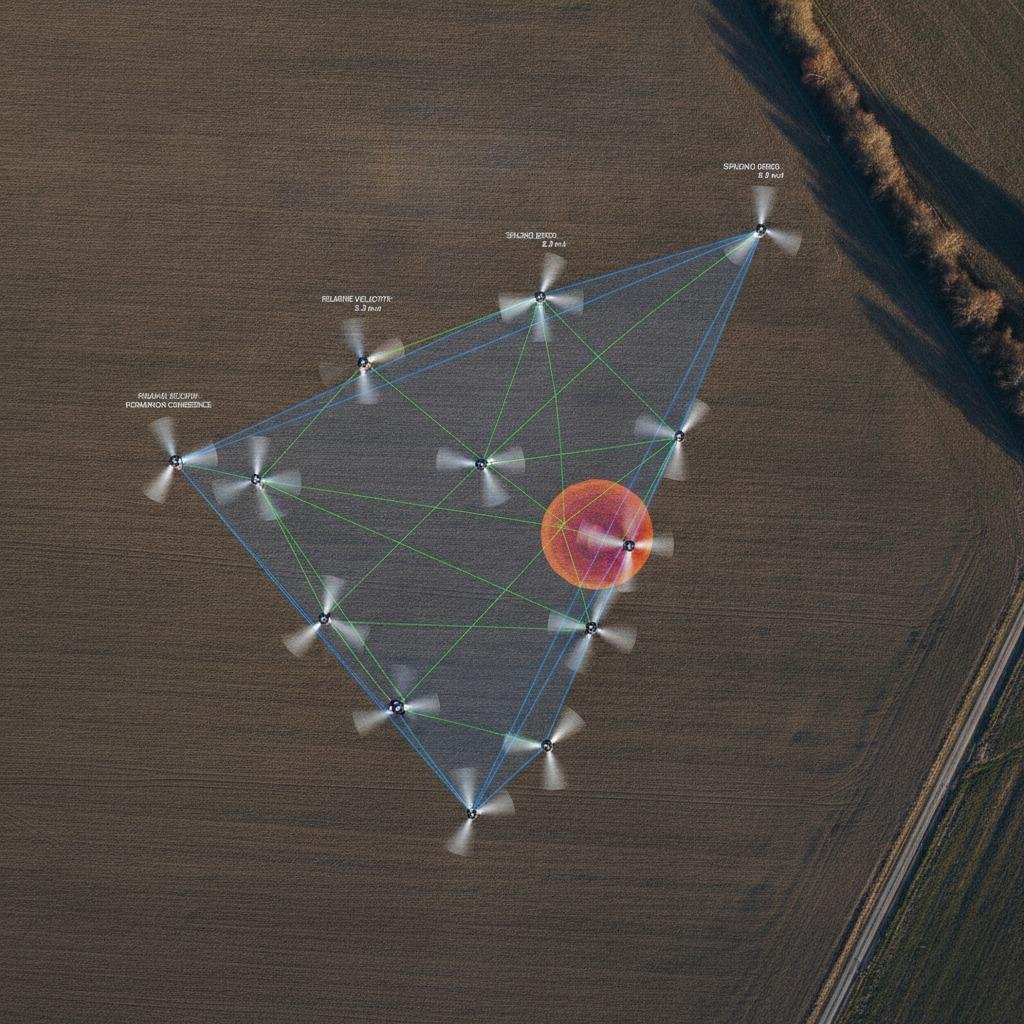
Why formation geometry validation matters before a drone fleet ever leaves the ground
Formation geometry validation is one of those topics that sounds academic until a real flight goes sideways. For teams building multi-drone systems, the question is rarely whether drones can fly; it is whether they can hold a useful shape while moving, turning, accelerating, and recovering from disturbance without drifting into one another. That matters to engineers, sourcing managers, and product teams alike because the geometry is not just a control problem. It affects payload stability, sensor coverage, airspace safety, test repeatability, and the cost of every field trial.
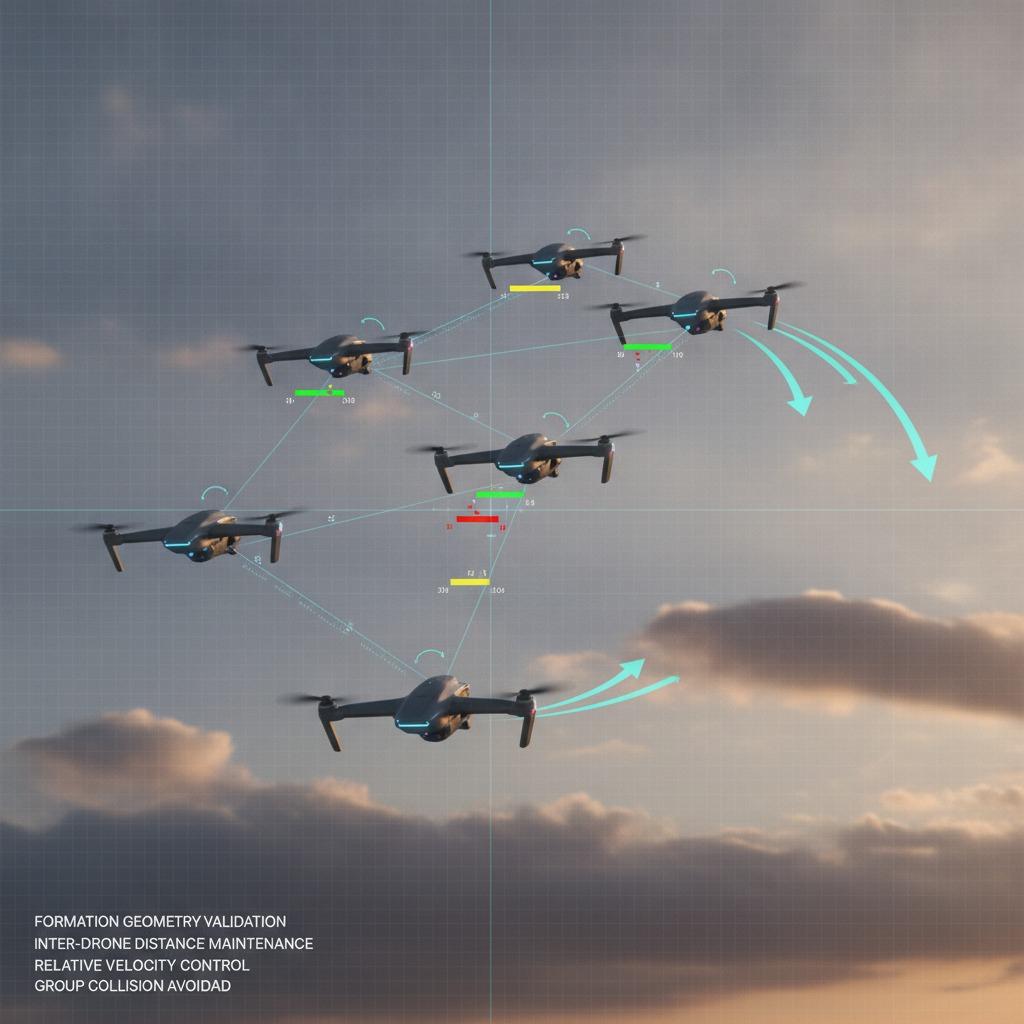
When a formation looks good in simulation but breaks apart in crosswind or during a coordinated turn, the failure usually comes from a gap between intended spacing and actual relative motion. In practice, buyers need to decide what level of precision the system must maintain, how the drones will communicate, and which safety behaviors take over when the formation starts to degrade. That is the real purpose of validation: not to prove perfection, but to show that the formation can stay coherent under the conditions the system will actually face.
The core problem: shape is easy in a lab, harder in motion
Static spacing can be controlled with simple waypoint logic. Dynamic spacing is another matter. Once the drones begin changing speed, bank angle, altitude, or heading, small timing errors stack up quickly. A lead aircraft may start a turn a fraction earlier than the others. One follower may react faster to the command stream. Relative velocity control then becomes as important as absolute position. Without it, the group may technically remain airborne while the intended geometry quietly collapses.
That is why inter-drone distance maintenance is only one part of the story. Distance alone does not tell you whether the formation is holding its intended orientation, whether the corner drones are drifting wide in a turn, or whether the system is consuming too much margin just to stay together. Group collision avoidance is the emergency layer, but a mature formation system should not rely on avoidance logic to correct routine control weaknesses.
What engineers should validate first
A useful validation plan starts with the geometry that matters most to the mission. Is the system meant to preserve a line, wedge, box, or looser swarming arrangement? Does the mission require tight spacing for imaging or wider spacing for inspection and deconfliction? The answer changes both the control approach and the test method.
Key checks that usually deserve attention
First, verify whether the formation can hold shape during steady cruise. Then test transitions: takeoff, climb, split, merge, and landing often expose control lag. Coordinated turn coordination deserves special attention because it is one of the easiest places for a formation to distort. In a turn, outer drones travel farther than inner ones, and any mismatch in timing or speed control becomes visible fast. If the group needs to accelerate together, decelerate together, or recover after a disturbance, relative velocity control should be measured, not assumed.
It is also worth testing failure behavior. What happens when one drone drops behind? Does the formation stretch, re-center, or abort? A system that recovers gracefully is often more valuable than one that holds a tight shape only when conditions are ideal.
Quick comparison: what different validation approaches tell you
Simulation is the fastest way to screen a concept, and it is useful for comparing control laws or formation types before hardware is committed. Hardware-in-the-loop testing adds timing realism and exposes communication delays. Outdoor flight trials are the final proof, because they reveal wind, GPS noise, vibration, and operator workflow issues that models often smooth over.
Each stage answers a different question. Simulation asks whether the math is plausible. Hardware-in-the-loop asks whether the system reacts in time. Flight testing asks whether the formation geometry validation holds up in the field. Skipping any one of those steps tends to create expensive surprises later.
Common mistakes buyers and project teams make
One common mistake is treating collision avoidance as the main control strategy. It is a safety net, not the primary answer. Another is overfitting tests to calm-weather conditions. If the product must operate in open air, a little turbulence should be part of the validation plan. Teams also sometimes specify formation distance without specifying what that means during motion. A static separation target is easy to write down; a dynamic one is what the control system actually has to hold.
There is also a procurement issue that gets overlooked: the formation concept may look strong, but the platform may not offer enough synchronization, telemetry quality, or onboard compute to support it. If the communications link is flaky, even a clever algorithm can become brittle.
Practical buyer advice
If you are sourcing a multi-drone platform or evaluating a custom control solution, ask for evidence that the supplier has tested formation behavior under changing speed and turning conditions. Ask how they measure spacing error, whether they log relative positions over time, and what happens when one node falls outside the expected envelope. If they only talk about waypoint accuracy, keep digging.
For product teams, the safest path is to tie geometry requirements to the mission itself. Surveillance, inspection, display flight, and research swarms do not need the same tolerance for drift. A tighter formation is not automatically better if it increases control burden or narrows the operating window.
FAQ: short answers that usually matter
Is formation geometry validation only for complex swarms?
No. Even small fleets benefit from it, especially when the drones must move in sync or maintain camera overlap.
Do all formations need the same control method?
No. A line formation and a rotating wedge face different dynamics, especially during turns and speed changes.
What is the most overlooked risk?
Assuming that a stable formation in one flight condition will stay stable in all of them. That assumption usually costs time.
A sensible next step
If your team is defining a multi-drone system now, start by writing the geometry requirements in operational terms: how close, how stable, how fast to recover, and under what conditions. Then validate against those conditions before freezing the design. That is the cleanest way to avoid buying control capability you do not need, or discovering too late that the fleet cannot hold the shape your application depends on.