


Mastering Millimeter Wave Radar: A Comprehensive Guide to Implementation and Optimization
In the rapidly evolving world of advanced technologies, millimeter wave radar stands out as a pivotal innovation for precision sensing and detection. This guide will walk you through the essentials of millimeter wave radar, from understanding its core principles to practical applications in automotive and industrial settings. Whether you're an engineer designing systems or a developer integrating sensors, this how-to resource provides step-by-step insights to leverage millimeter wave radar effectively.
Understanding the Fundamentals of Millimeter Wave Radar
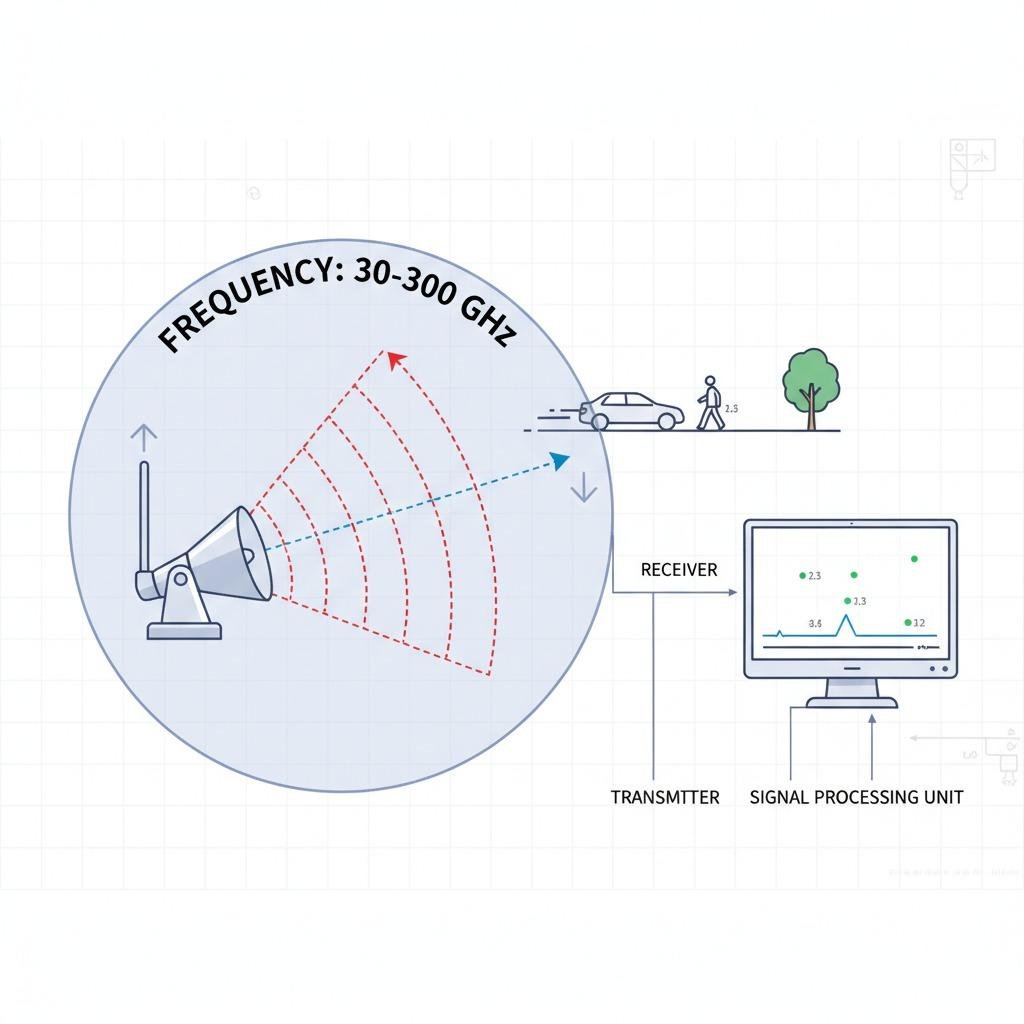
To begin harnessing millimeter wave radar, it's crucial to grasp its basic operation. Millimeter wave radar operates in the high-frequency band between 30 and 300 GHz, enabling high-resolution imaging and detection even in challenging environments. Start by selecting the appropriate frequency range for your application—for instance, 77 GHz is common for automotive uses due to its balance of range and resolution.
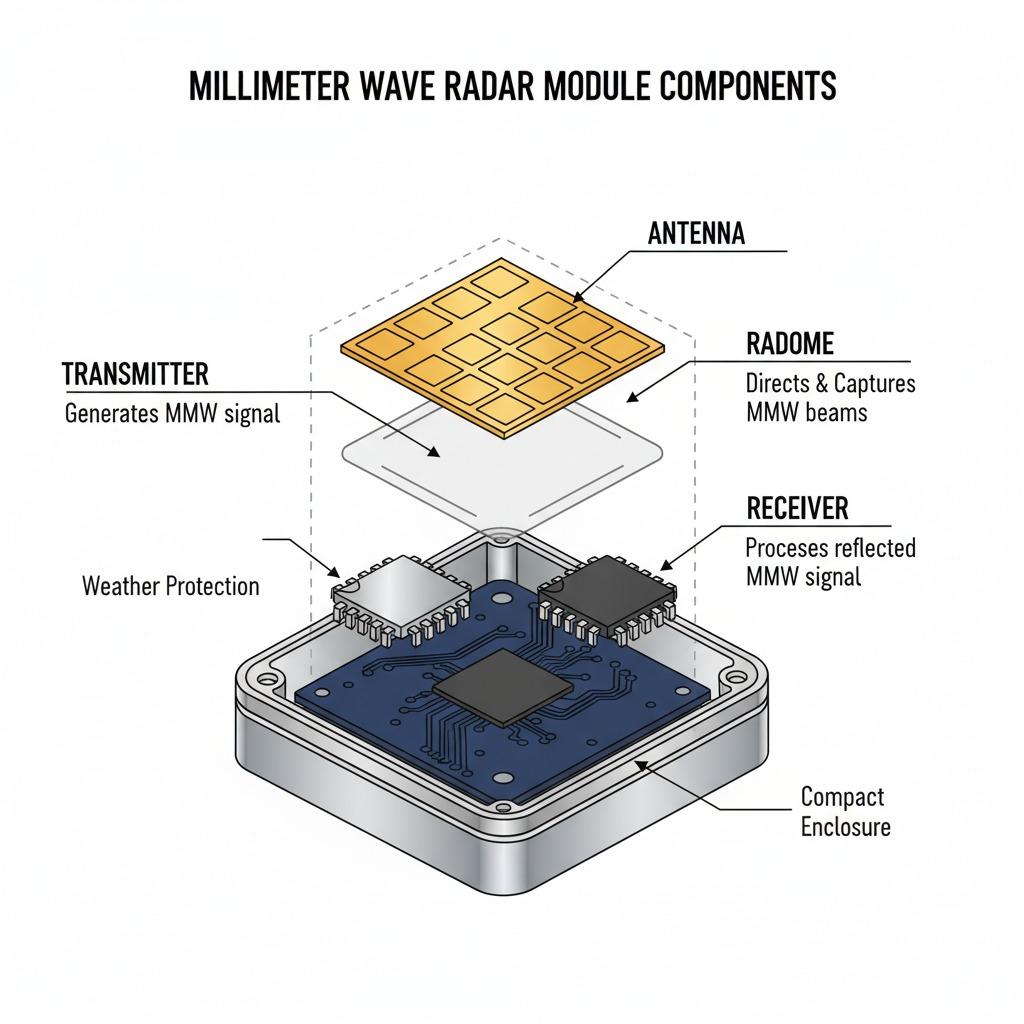
First, assess your project's requirements: Do you need long-range detection or short-range precision? Equip your setup with a reliable radar module, such as a compact MMW radar module, which integrates transmitter and receiver components. Calibrate the system using standard tools like spectrum analyzers to ensure signal integrity. Next, design the radar antenna—focus on phased array antennas for beam steering capabilities. A step-by-step process involves simulating antenna patterns with software like HFSS, then prototyping and testing for minimal side lobes. This foundation ensures your millimeter wave radar system delivers accurate data from the outset.
Integrating ADAS MMW Radar for Automotive Safety
For automotive applications, integrating ADAS MMW Radar is a game-changer for enhancing vehicle safety. Begin by choosing a radar sensor that supports multi-lane coverage and high-resolution detection, like the cutting-edge automotive radar sensor that provides real-time data on traffic conditions. Mount the sensor strategically on the vehicle's bumper or grille, ensuring a clear line of sight.
Step one: Interface the radar with the vehicle's ECU using protocols like CAN bus. Configure it for features such as blind spot detection and adaptive cruise control by programming thresholds for distance and speed measurements. Test in simulated environments to verify weather adaptability—rain or fog shouldn't hinder performance. Our advanced sensor, with its energy-efficient design, seamlessly fits into driver assistance systems, reducing power draw while maintaining reliability. Follow up with reliability testing of millimeter wave radar to simulate real-world stresses like vibration and temperature fluctuations. This methodical integration not only boosts safety but also paves the way for autonomous driving.
Exploring Industrial Sensing with MMW Radar
Beyond automotive, industrial sensing with MMW radar offers robust solutions for automation and monitoring. Identify use cases like inventory tracking or machinery surveillance, where millimeter wave radar's ability to penetrate dust or smoke excels. Select a low-cost MMW radar solution for scalable deployment—opt for modules under 24 GHz for cost-effectiveness without sacrificing performance.
Begin implementation by installing sensors in fixed positions, such as on conveyor belts for object detection. Use millimeter wave radar data analysis tools to process echoes: Apply Fourier transforms to extract velocity and range information from raw signals. For robotics integration, pair the radar with controllers like ROS and calibrate for precise obstacle avoidance in dynamic environments. In smart city applications, MMW radar for smart city infrastructure can monitor traffic flow—deploy arrays along roadsides and analyze data streams for anomaly detection. Ensure thorough reliability testing of millimeter wave radar, including endurance runs to validate long-term operation. This approach minimizes downtime and enhances efficiency in industrial setups.
Advanced Techniques in Radar Antenna Design and Data Analysis
Optimizing radar antenna design is key to maximizing millimeter wave radar's potential. Start with material selection—use low-loss dielectrics to reduce signal attenuation. Employ simulation software to iterate designs, aiming for a compact form factor that supports beamforming. Prototype using 3D printing for rapid testing, then refine based on measured radiation patterns.
For data handling, dive into millimeter wave radar data analysis. Collect datasets from your compact MMW radar module and preprocess them to filter noise—techniques like CFAR detection help identify targets reliably. Use machine learning models, such as neural networks, to classify objects from radar signatures, improving accuracy in robotics or ADAS scenarios. For a low-cost MMW radar solution, leverage open-source libraries like Python's SciPy for efficient processing. In robotics, integrate this analysis to enable real-time path planning, ensuring safe navigation.
Best Practices for Reliability and Deployment
To ensure long-term success, prioritize reliability testing of millimeter wave radar from the design phase. Conduct accelerated life tests to simulate years of use, checking for failures in components like amplifiers. For MMW radar for smart city projects, deploy in networks with redundancy—use edge computing to process data locally and reduce latency.
Finally, scale your implementation by starting small: Pilot a single sensor setup before expanding. Monitor performance metrics like false alarm rates and adjust parameters accordingly. By following these steps, you'll unlock the full capabilities of millimeter wave radar, driving innovation across automotive, industrial, and urban applications. This guide equips you to build systems that are not only effective but also future-proof.