







The Challenges of Complex Airspace Operations
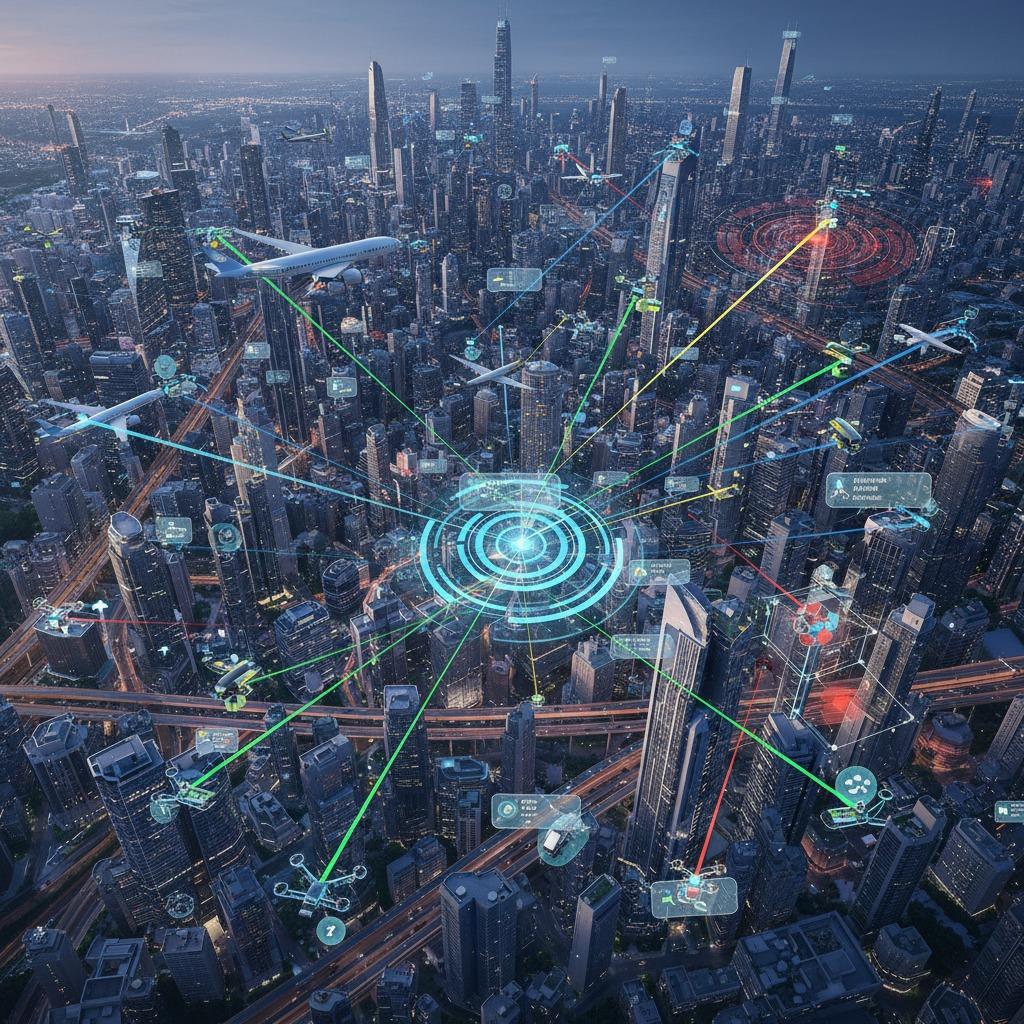
In today's rapidly evolving aviation landscape, complex airspace operation presents significant hurdles for unmanned aerial vehicles (UAVs) and manned aircraft alike. Navigating crowded skies filled with commercial flights, drones, and other obstacles demands precision and reliability to prevent collisions and ensure safety. One of the core issues is the integration of diverse aircraft types in shared airspace, which can lead to unpredictable scenarios without proper management. This problem is exacerbated by increasing air traffic density, regulatory constraints, and the need for seamless coordination. For instance, urban air mobility initiatives, like delivery drones or air taxis, amplify the risk of mid-air incidents if operations aren't optimized. Addressing complex airspace operation requires innovative technologies that can handle dynamic environments effectively.
Real-Time Decision Making for Safer Skies
A key solution to the challenges of complex airspace operation lies in real-time decision making capabilities embedded within advanced flight systems. Real-time decision making allows aircraft to process vast amounts of data instantaneously, evaluating threats and opportunities on the fly. By leveraging powerful algorithms, these systems can predict potential conflicts and adjust flight paths accordingly, minimizing human error and response delays. In high-stakes environments, such as near airports or over populated areas, this technology ensures compliance with air traffic control directives while maintaining operational efficiency. For example, integrating real-time decision making with GPS and sensor fusion enables UAVs to reroute autonomously during unexpected weather changes or sudden traffic surges. Companies developing these systems emphasize their role in reducing accident rates, making them indispensable for modern aviation.
Enhancing Safety with Sense-and-Avoid Systems
To tackle the visibility and detection issues in complex airspace operation, sense-and-avoid systems emerge as a critical technological advancement. These systems use a combination of radar, lidar, and optical sensors to detect obstacles in real time, allowing aircraft to maneuver clear without pilot intervention. Unlike traditional air traffic control, which relies on ground-based monitoring, sense-and-avoid systems provide onboard autonomy, ideal for beyond-visual-line-of-sight operations. This solution directly addresses the problem of limited human oversight in dense airspace, where quick reactions are vital. By continuously scanning the environment, sense-and-avoid systems can identify birds, other drones, or aircraft from miles away, initiating evasive actions seamlessly. Regulatory bodies like the FAA are increasingly mandating such technologies for certification, underscoring their importance in scaling airspace operations safely.
Empowering Flights Through Autonomous Navigation
Autonomous navigation represents another pillar in solving the intricacies of complex airspace operation. This technology enables vehicles to chart courses independently, adapting to airspace restrictions and no-fly zones without constant manual input. The problem of navigational errors in congested areas is mitigated through AI-powered mapping and path optimization, which consider factors like wind patterns and traffic density. Autonomous navigation systems integrate with existing infrastructure, such as ADS-B transponders, to share positional data and avoid conflicts. In practice, this means drones can deliver packages efficiently across cities or conduct surveillance missions in challenging terrains, all while adhering to safety protocols. By reducing reliance on ground stations, autonomous navigation enhances scalability, allowing more aircraft to operate concurrently without overwhelming control systems.
AI-Driven Perception: The Future of Airspace Management
Finally, AI-driven perception ties together these solutions, revolutionizing how we approach complex airspace operation. AI algorithms analyze sensor data to understand the environment holistically, distinguishing between benign objects and genuine threats with high accuracy. This addresses the core problem of information overload in busy skies, where traditional methods fall short in processing multifaceted inputs. AI-driven perception not only improves detection rates but also learns from past encounters to refine future responses, fostering a proactive rather than reactive approach. For instance, in swarm drone operations, it coordinates multiple units to avoid intra-group collisions while navigating external hazards. As AI evolves, it promises to make airspace more accessible, supporting innovations like eVTOLs and widespread drone integration. By combining real-time decision making, sense-and-avoid systems, and autonomous navigation with AI-driven perception, the aviation industry can overcome current limitations, paving the way for safer, more efficient complex airspace operation.