






Mastering Millimeter Wave Radar: A Comprehensive Guide to Implementation and Applications
In the rapidly evolving landscape of sensor technology, millimeter wave radar stands out as a pivotal innovation for precision detection and real-time monitoring. This guide explores how to effectively implement and leverage millimeter wave radar in various applications, from automotive to industrial settings. Whether you're an engineer designing ADAS systems or a developer integrating sensors for smart cities, understanding the fundamentals will empower you to harness its full potential.
Understanding the Basics of Millimeter Wave Radar
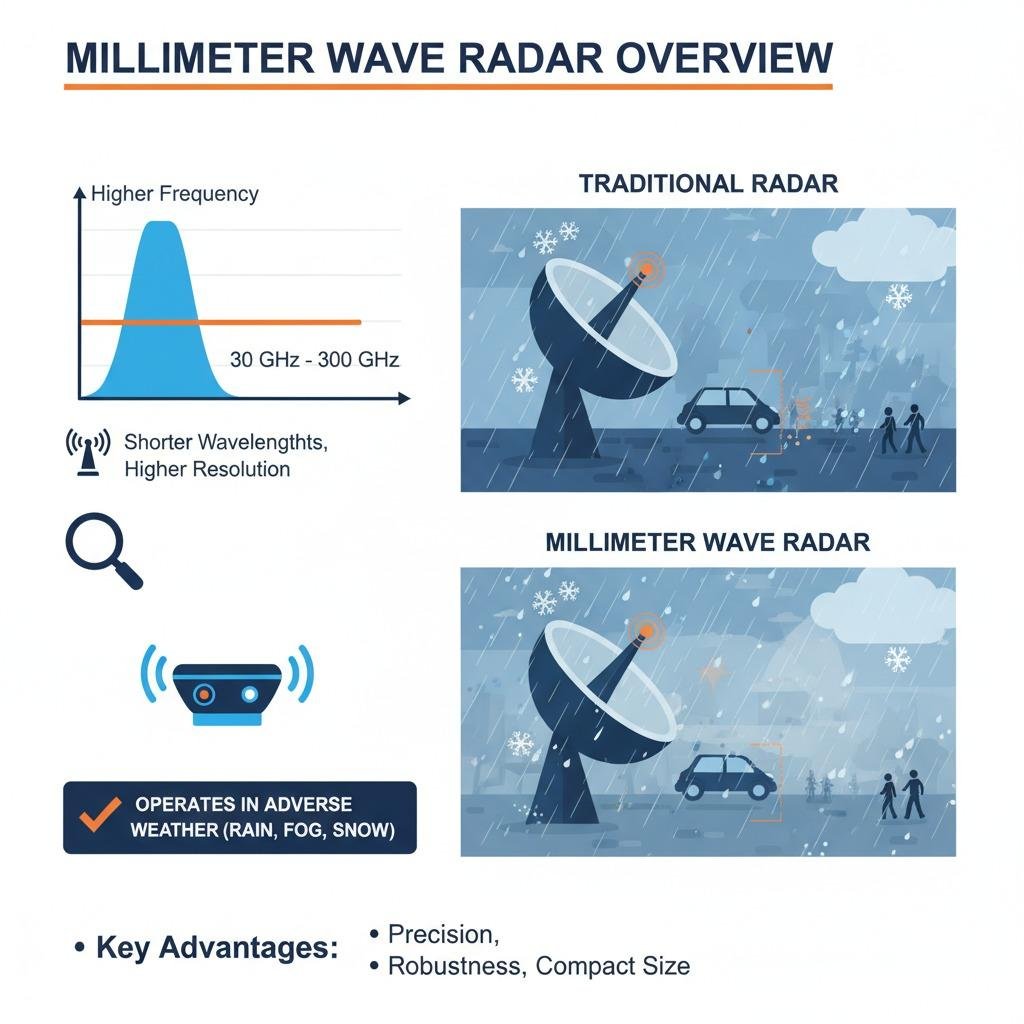
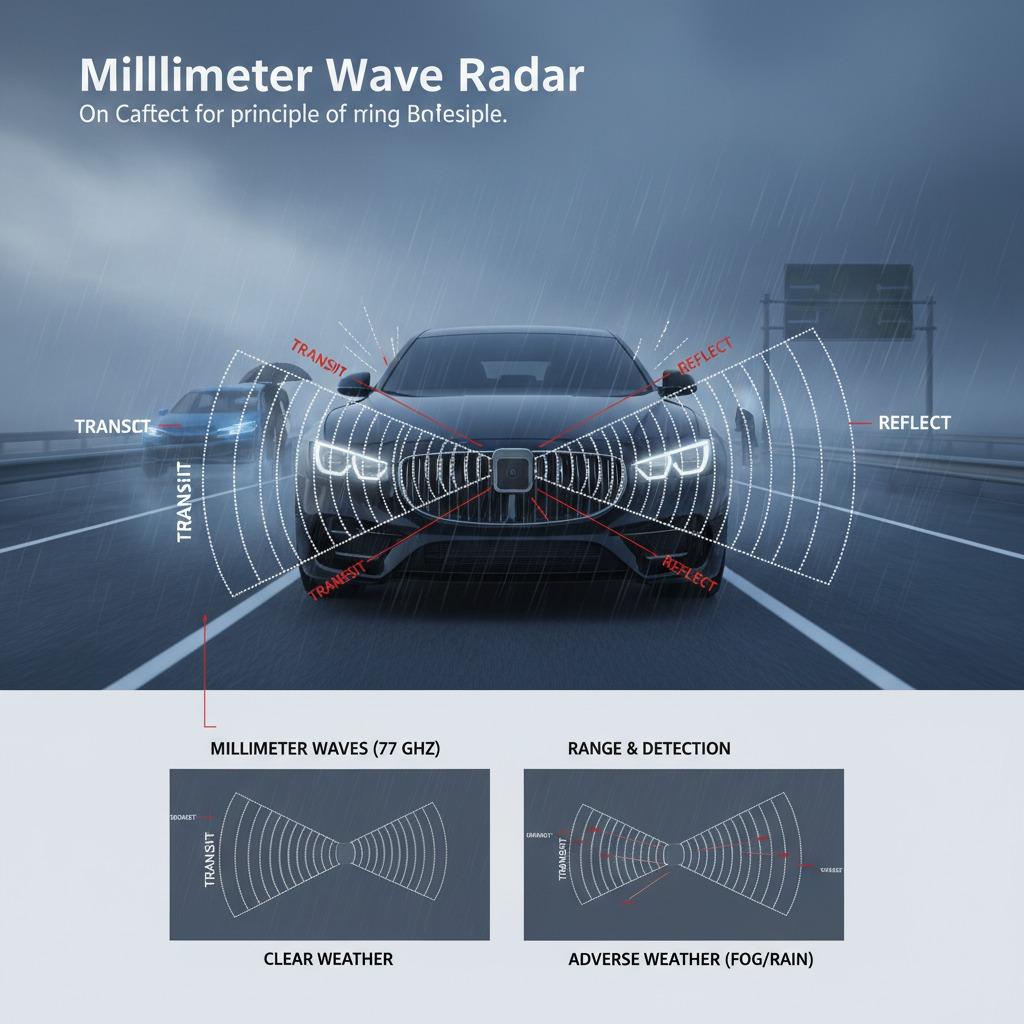
To begin integrating millimeter wave radar into your projects, start by grasping its core principles. Operating in the millimeter wave frequency band, typically between 30 GHz and 300 GHz, this technology uses short wavelengths to achieve high-resolution imaging and detection. Unlike traditional radars, millimeter wave radar excels in adverse weather conditions, penetrating fog, rain, and dust with minimal signal loss. For optimal setup, select a frequency band like 77 GHz, which is common for automotive applications due to its balance of range and resolution.
First, assess your environment: determine the required detection range—up to 200 meters for vehicular uses—and the angular resolution needed for accurate object tracking. Install the radar module in a location that minimizes interference, such as behind a vehicle's front grille for ADAS MMW radar integrations. Ensure proper calibration using built-in self-test features to verify signal integrity. By following these steps, you'll establish a reliable foundation for advanced functionalities like velocity estimation and distance measurement.
Designing Radar Antenna and System Architecture
Once the basics are covered, dive into radar antenna design, a critical aspect of millimeter wave radar performance. The antenna dictates the system's field of view and sensitivity. Opt for phased array antennas to enable beam steering, which is essential for 360-degree coverage in dynamic environments. In our cutting-edge Automotive Radar System, advanced antennae technology provides this comprehensive view, detecting objects with remarkable accuracy even in complex urban scenarios.
To design effectively, use simulation software like CST Studio Suite to model antenna patterns and optimize gain. For a compact MMW radar module, focus on miniaturization techniques such as integrating multiple-input multiple-output (MIMO) configurations on a multi-layered PCB. This setup, as seen in our product, ensures high-speed data processing via advanced microchips, facilitating seamless integration into space-constrained applications like robotics. Test prototypes in anechoic chambers to refine directivity and reduce side lobes, ensuring robust signal transmission for reliable operation.
Implementing Millimeter Wave Radar in ADAS and Beyond
Applying millimeter wave radar in ADAS MMW radar systems requires a structured approach to enhance vehicle safety. Begin by interfacing the radar with the vehicle's electronic control unit (ECU) using protocols like CAN bus for real-time data exchange. Configure features such as adaptive cruise control and collision avoidance by processing radar echoes to identify obstacles, pedestrians, and vehicles ahead.
Our Automotive Radar System exemplifies this, with its durable housing built for all weather conditions and precise road monitoring capabilities. For industrial sensing with MMW radar, adapt the setup for factory automation: mount sensors on robotic arms to detect part positions or monitor conveyor belts. In robotics, a low-cost MMW radar solution can be achieved by selecting cost-effective silicon-based transceivers, reducing overall system expenses without compromising performance.
Extend this to MMW radar for smart city applications, where deploying arrays along roadways enables traffic flow optimization and infrastructure monitoring. Position units at intersections for velocity tracking and anomaly detection, integrating with IoT networks for city-wide data aggregation. Always prioritize power efficiency—aim for modules consuming under 5W—to support battery-operated deployments.
Data Analysis and Reliability Testing
Effective millimeter wave radar data analysis is key to unlocking actionable insights. Collect raw data streams, including range-Doppler maps, and apply signal processing algorithms like Fast Fourier Transform (FFT) to extract features such as target speed and direction. Use machine learning models, trained on datasets from similar environments, to classify detected objects and reduce false positives.
For reliability testing of millimeter wave radar, conduct accelerated life tests under thermal cycling and vibration simulations to mimic real-world stresses. Our system's robust design, with optimal signal transmission via intricate circuit boards, withstands these rigors, ensuring longevity in demanding applications. Validate performance metrics like detection probability (>95%) and false alarm rates (<1%) through field trials.
Incorporate feedback loops to iteratively improve algorithms, especially for edge cases like multi-target scenarios. Tools like MATLAB or Python libraries (e.g., PyRadar) streamline this process, making analysis accessible for teams without deep RF expertise.
Overcoming Challenges and Future-Proofing Your Setup
Addressing common hurdles in millimeter wave radar deployment involves strategic planning. Interference from nearby electronics can degrade signals, so implement frequency-hopping techniques to maintain clarity. For cost-sensitive projects, explore low-cost MMW radar solution options with open-source firmware to customize without high licensing fees.
Looking ahead, integrate millimeter wave radar with complementary sensors like LiDAR for fused perception in autonomous systems. In smart cities and robotics, this hybrid approach enhances accuracy for MMW radar for smart city initiatives and precise navigation. By staying updated with standards from bodies like IEEE, you'll future-proof your implementations, driving innovation in safety and efficiency.
This guide equips you with the knowledge to deploy millimeter wave radar effectively, transforming theoretical concepts into practical solutions that advance technology across industries.