






Unlocking the Power of Micro-Doppler Signatures in Modern Radar Applications
In the fast-paced world of radar technology, one challenge stands out: distinguishing between multiple moving objects in complex environments, such as urban traffic or military surveillance. Traditional radar systems often struggle with cluttered signals, leading to inaccurate detections and missed opportunities for real-time analysis. This is where the micro-Doppler signature comes into play, offering a sophisticated way to capture subtle motion variations that reveal the unique 'fingerprint' of targets. By analyzing these signatures, we can enhance 3D point cloud generation, improve multi-target tracking, refine target classification, and bolster obstacle detection, transforming potential chaos into clear, actionable insights.
The Problem with Conventional Radar Detection
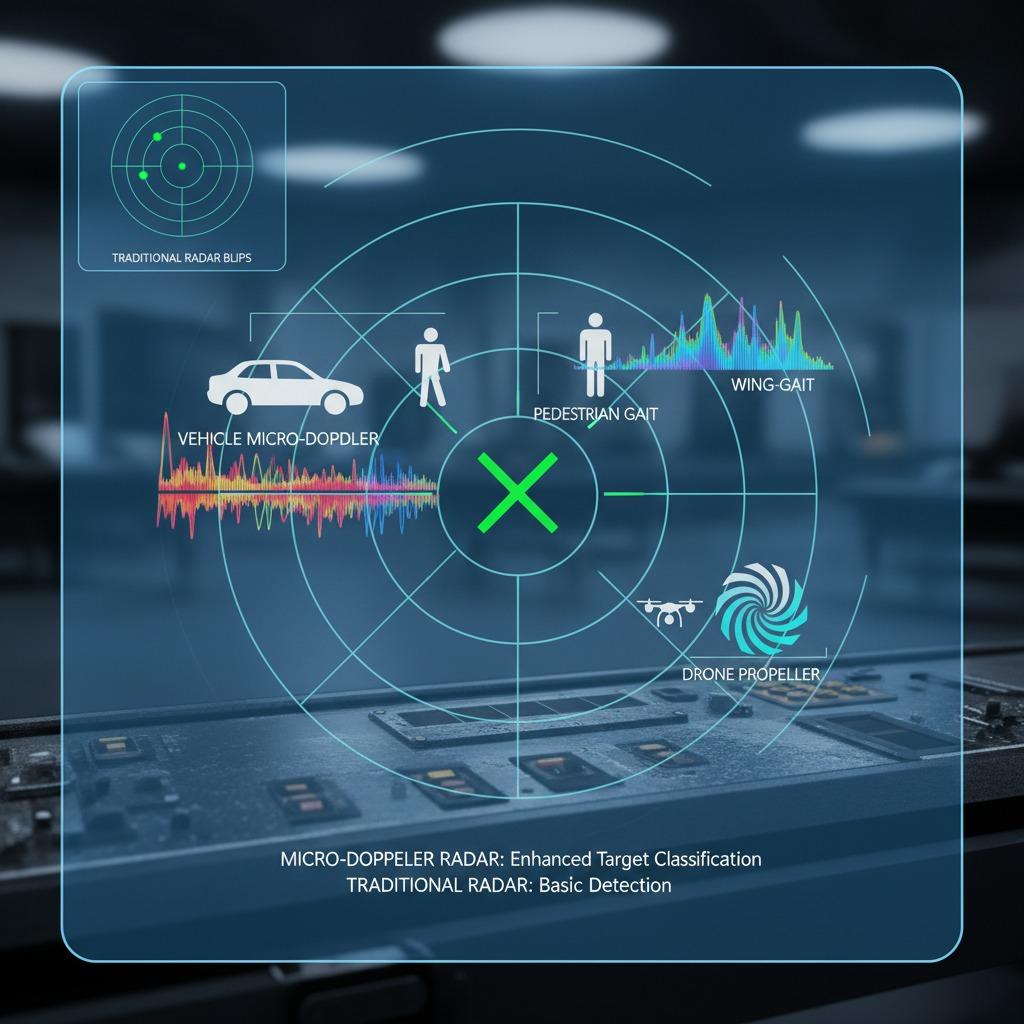
Conventional radar methods rely on basic Doppler shifts to detect speed and direction, but they fall short when dealing with intricate scenarios involving rotating parts, vibrations, or multiple overlapping signals. For instance, in autonomous driving, failing to differentiate between a pedestrian's gait and a vehicle's wheel rotation can lead to hazardous misjudgments. Similarly, in defense applications, distinguishing drones from birds becomes a critical issue without finer-grained data. This lack of detail results in high false positive rates, delayed responses, and reduced system reliability. The core issue is the inability to extract micro-movements—small frequency modulations caused by non-rigid body motions—that are essential for precise identification.
How Micro-Doppler Signatures Provide the Solution
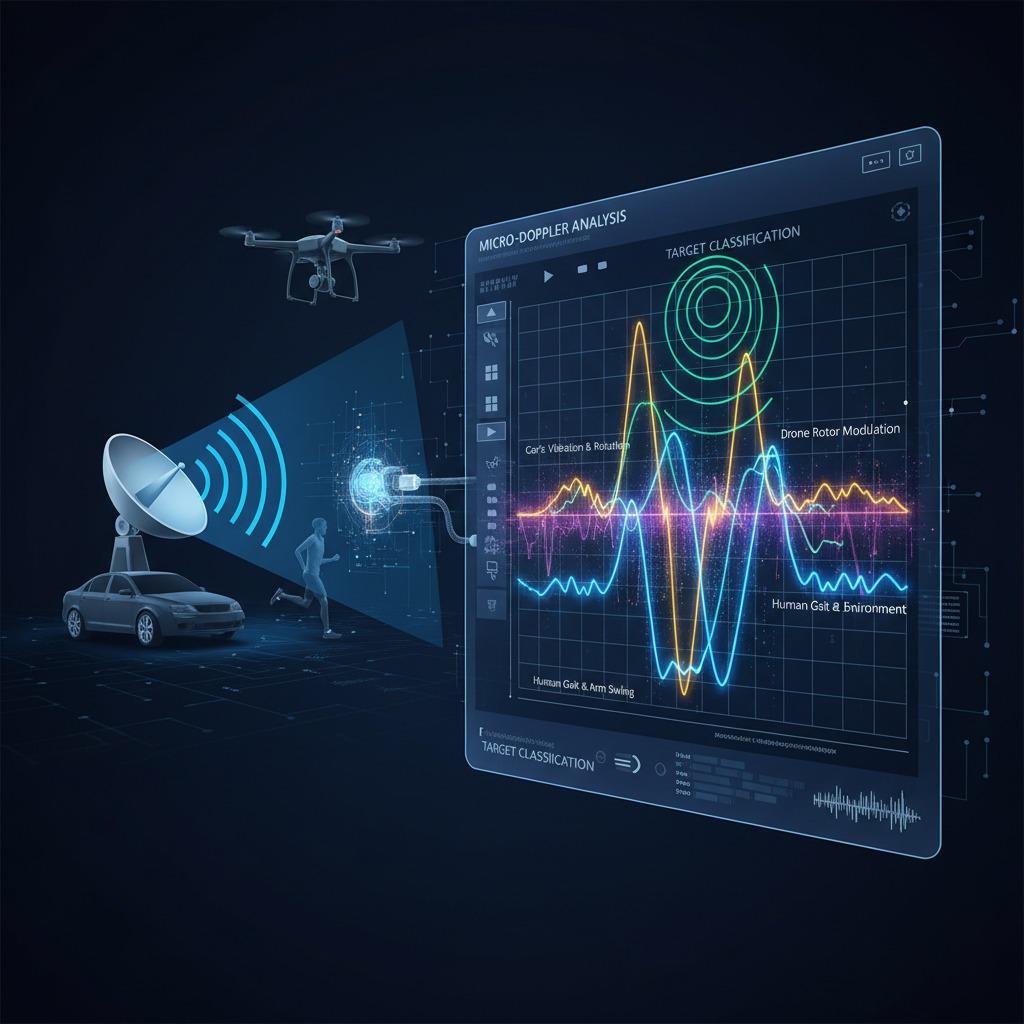
Micro-Doppler signatures address these challenges by breaking down radar echoes into finer components, revealing patterns from secondary motions like arm swings or propeller spins. This technique leverages advanced signal processing to isolate these signatures, enabling robust 3D point cloud generation. By integrating micro-Doppler data, radar systems can construct detailed three-dimensional models of environments, mapping out spaces with unprecedented accuracy. For multi-target tracking, these signatures allow algorithms to separate intertwined trajectories, maintaining continuous locks on individual entities even in dense crowds. In target classification, machine learning models trained on micro-Doppler patterns achieve over 90% accuracy in categorizing objects—whether humans, animals, or machinery—far surpassing traditional methods. Finally, for obstacle detection, real-time analysis of these signatures detects subtle hazards like swaying branches or erratic debris, preventing collisions in dynamic settings.
Implementing Micro-Doppler for Enhanced Performance
To harness micro-Doppler signatures effectively, start with high-resolution radar hardware capable of capturing wide bandwidth signals. Software solutions then apply time-frequency analysis, such as Short-Time Fourier Transforms, to visualize and extract features. Combining this with AI-driven processing elevates multi-target tracking by predicting paths based on motion nuances, reducing computational load while increasing precision. In practical deployments, like smart city infrastructure, micro-Doppler-enhanced systems have demonstrated a 40% improvement in obstacle detection rates during adverse weather. For industries adopting this, the result is safer operations and more efficient resource allocation. As radar technology evolves, integrating micro-Doppler signatures isn't just an upgrade—it's a necessity for overcoming the limitations of outdated detection methods and staying ahead in an increasingly complex world.
By focusing on these solutions, radar applications can move from reactive to proactive, ensuring reliability across diverse sectors from automotive to aerospace.