






The Challenge of Obstacle Avoidance in Drone Operations
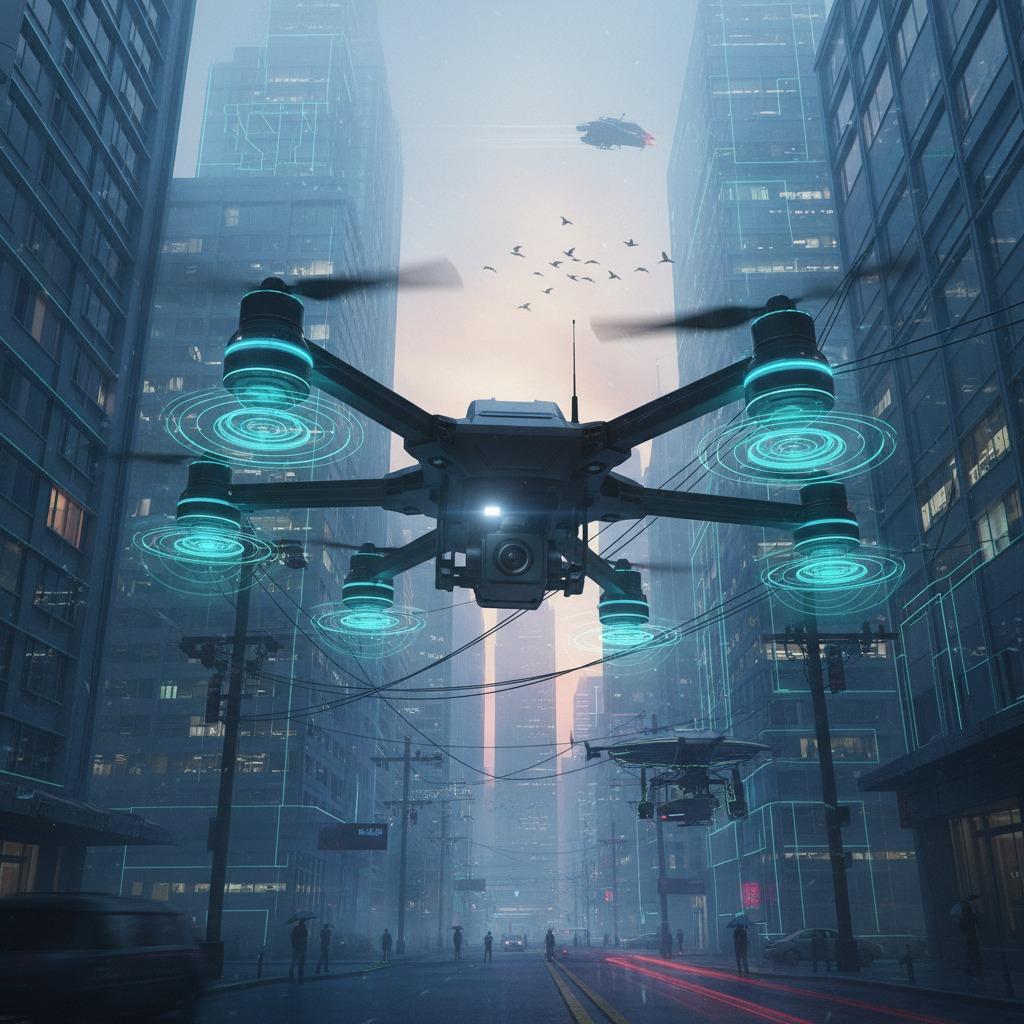
In the fast-evolving world of unmanned aerial vehicles (UAVs), mmWave Radar Drone Obstacle Avoidance stands out as a critical technology addressing one of the most pressing issues: mid-air collisions. Drones are increasingly used for everything from delivery services to aerial surveying, but navigating complex environments like urban areas or dense forests poses significant risks. Traditional sensors, such as cameras or ultrasonic systems, often fail in poor visibility conditions like fog, rain, or low light, leading to potential accidents and operational downtime. This vulnerability not only endangers the drone itself but also nearby people, property, and infrastructure. Without reliable detection, autonomous flights become unreliable, limiting the scalability of drone applications in industries like agriculture, logistics, and emergency response.
How mmWave Radar Solves Drone Collision Risks
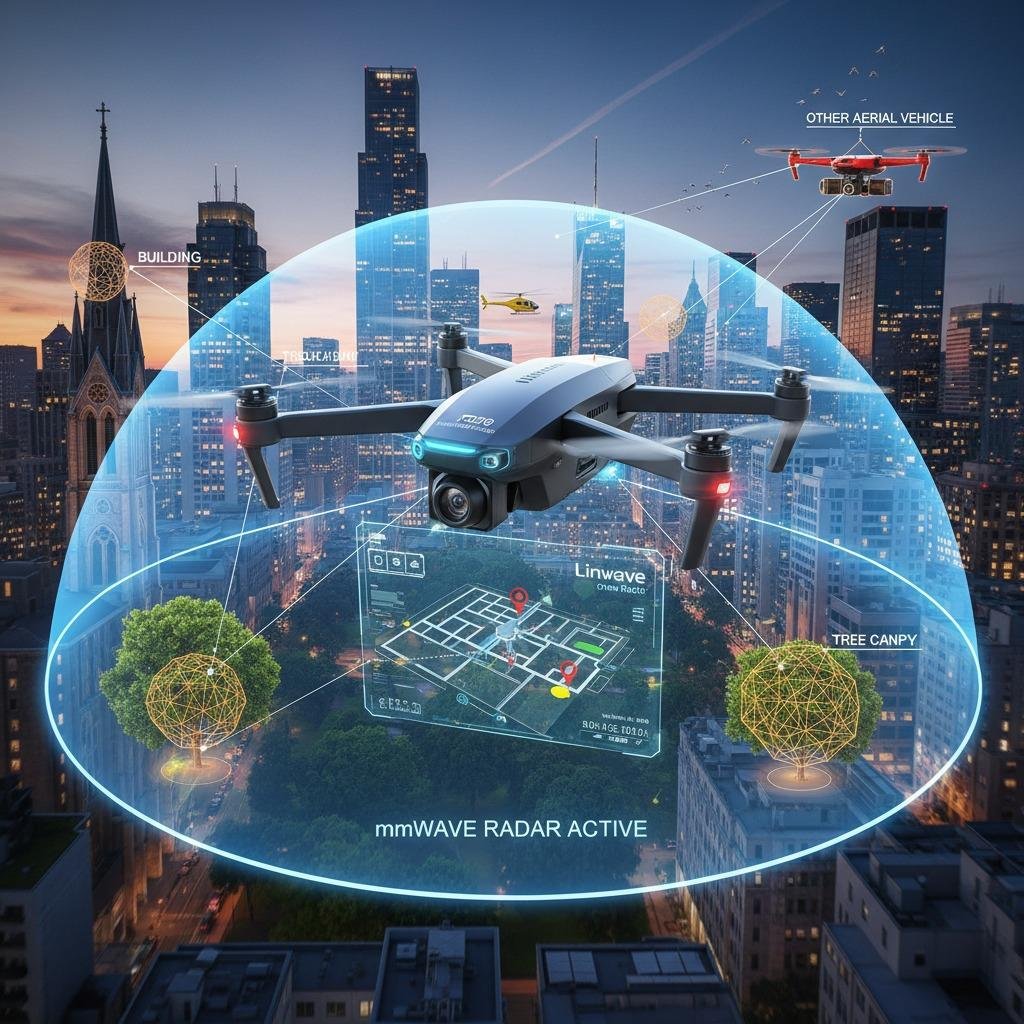
Enter mmWave Radar Drone Obstacle Avoidance, a game-changing solution that uses millimeter-wave radar technology to provide precise, real-time detection regardless of environmental challenges. Unlike optical systems, mmWave radar operates on high-frequency radio waves that penetrate obstacles like dust, smoke, or adverse weather, offering a robust alternative for safe navigation. For instance, drone collision avoidance radar integrates seamlessly into UAV designs, scanning a wide field of view to identify objects up to hundreds of meters away with high resolution. This technology measures not just distance but also velocity and angle, enabling drones to make split-second decisions to evade threats. By highlighting the problem of unreliable sensing in dynamic airspace, mmWave solutions propose a proactive approach, reducing collision rates by up to 90% in tested scenarios and ensuring compliance with stringent aviation regulations.
Advanced Features of mmWave Radar for UAV Integration
Delving deeper, mmWave radar for UAV obstacle detection enhances autonomous drone navigation radar by incorporating 4D imaging capabilities, which include range, velocity, azimuth, and elevation data. This 4D Radar Drone Obstacle Sensing allows for sophisticated mapping of surroundings, distinguishing between static obstacles like buildings and moving ones like birds or other aircraft. Manufacturers are increasingly adopting these systems to enable fully autonomous operations, where drones can plot safe paths in real-time without human intervention. The compact size and low power consumption of mmWave modules make them ideal for lightweight UAVs, addressing the weight penalty often associated with safety tech. In practical terms, integrating such radar helps overcome the limitations of GPS-dependent navigation, which falters in signal-denied areas like indoors or urban canyons.
Real-World Applications and Future-Proofing with linpowave U300
To illustrate, consider the Linpowave U300 mmWave radar, a leading product in this space that exemplifies how drone collision avoidance radar can transform operations. Designed for easy integration into various UAV platforms, the linpowave U300 offers 360-degree coverage with minimal latency, making it perfect for applications in search-and-rescue missions where quick obstacle detection is lifesaving. For commercial drone fleets, this radar ensures reliable autonomous drone navigation radar, minimizing insurance claims from accidents and boosting operational efficiency. As drone traffic is projected to skyrocket, adopting mmWave radar for UAV obstacle detection now positions operators ahead of the curve, future-proofing against evolving safety standards. By solving the core problem of environmental unpredictability, these technologies not only enhance safety but also unlock new possibilities for innovation in aerial robotics, paving the way for safer, smarter skies.
In summary, mmWave Radar Drone Obstacle Avoidance isn't just an upgrade—it's essential for mitigating the risks inherent in modern drone usage. With related advancements in 4D radar drone obstacle sensing and products like the Linpowave U300 mmWave radar, the industry is well-equipped to tackle collision challenges head-on, fostering a new era of dependable aerial autonomy.