






Monitoring high-speed, multi-target environments has always been a major challenge for traffic management, autonomous driving systems, UAV swarm operations, and industrial logistics. Traditional low-resolution radars or cameras often struggle with missed detections, misclassification, or delayed response, especially when multiple objects move simultaneously or are in close proximity. Millimeter-wave (mmWave) radar, with its high resolution, Doppler velocity measurement, and real-time data processing, provides reliable perception in complex dynamic scenarios, enabling accurate multi-target tracking and low-latency response.
Challenges in High-Dynamic Environments
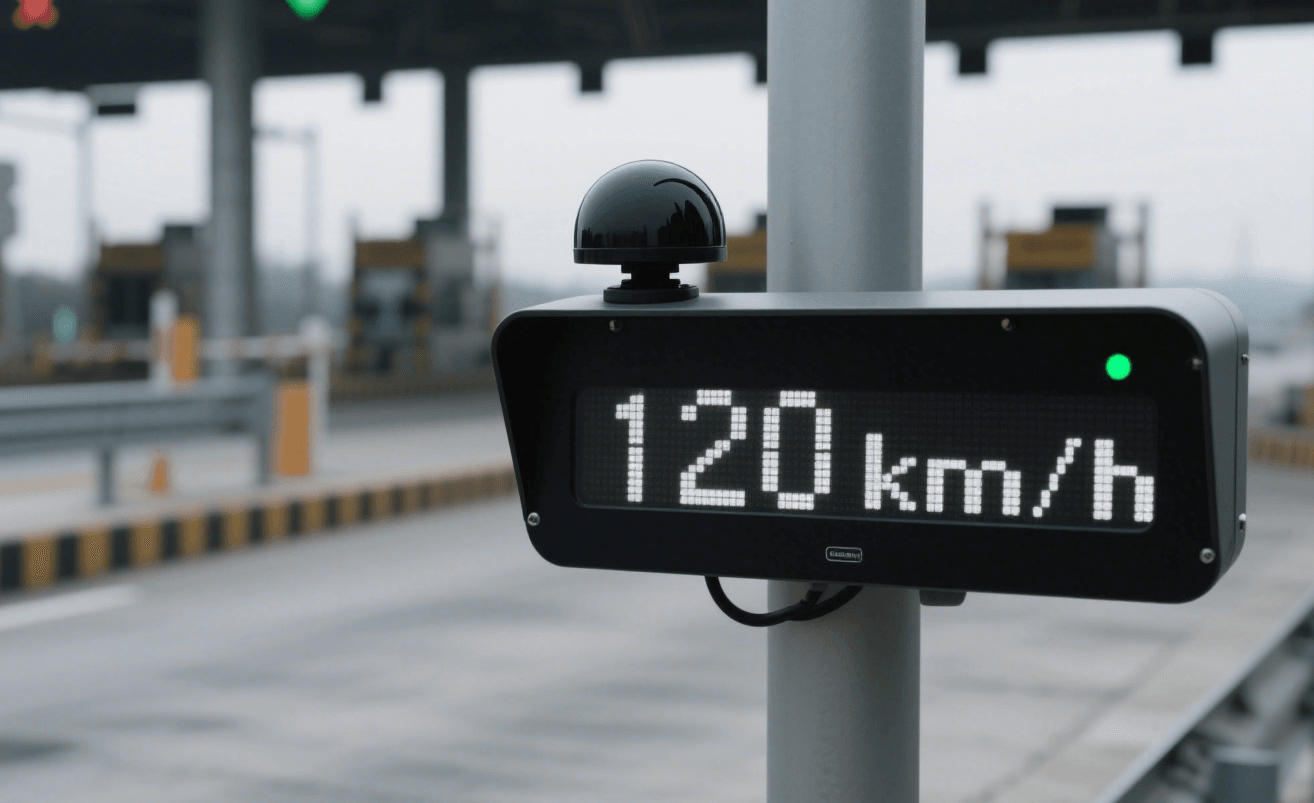
On highways, vehicles can be very close to one another while traveling at high speeds, making it difficult for traditional cameras to capture accurate speed and position due to occlusion, motion blur, or lighting variations. Although LiDAR has excellent ranging precision, it can suffer from target interference in dense multi-lane traffic. mmWave radar overcomes these challenges with high refresh rates and angular resolution, allowing it to distinguish and track multiple targets, providing stable speed and position data even under heavy traffic conditions.
In UAV swarm operations, dense formations and high-speed flight place significant demands on sensors. mmWave radar can capture the speed, direction, and relative distance of each drone in real time, helping maintain formation and avoid collisions. Even in complex airspace or under wind disturbances, radar ensures accurate trajectory tracking.
In port and industrial logistics scenarios, multiple vehicles, cranes, and automated guided vehicles (AGVs) operate simultaneously. mmWave radar can track all moving targets at the same time, providing position, speed, and direction information. This allows operators to receive collision warnings and optimize workflow in real time. Even in high-density areas, radar separates targets using angle and distance information, minimizing interference.
For security and perimeter surveillance, cameras may lose detection capability at night or in adverse weather conditions, while mmWave radar is unaffected by lighting and can continuously track moving targets in darkness, rain, or snow. With multi-target tracking algorithms, radar can identify and follow multiple intruders simultaneously, providing real-time monitoring data and ensuring timely response.
Technical Advantages of mmWave Radar
High Refresh Rate and Low Latency
Modern mmWave radar systems operate at refresh rates between 20–100 Hz, capturing small movements between frames and ensuring near-real-time tracking. This is critical for autonomous vehicles and UAV swarms, where delayed perception can compromise safety.
Multi-Target Tracking
Advanced algorithms allow the radar to process multiple high-speed targets simultaneously. By combining distance, velocity, and angle measurements, each target maintains an independent trajectory. Even when targets are close together or moving across each other’s paths, radar preserves continuous tracking for each object.
Doppler Velocity Measurement
mmWave radar provides precise Doppler velocity measurement, distinguishing fast and slow-moving targets to reduce speed misclassification. This capability is particularly important in complex traffic conditions or UAV formations to enhance operational safety.
Joint Angle and Distance Processing
Using MIMO antenna arrays for high angular resolution, radar can separate adjacent targets and combine distance information for precise localization, maintaining high tracking accuracy even in multi-lane highways or dense UAV swarms.
Deployment and Tuning Recommendations
Practical deployment considerations include configuring the refresh rate according to maximum target speed and application needs to ensure high-speed targets are captured. Defining regions of interest (ROI) and target grouping strategies reduces interference between closely spaced objects. Algorithm optimization, including CFAR threshold adjustment, Kalman filter tuning, and multi-target tracking parameters, further enhances performance in dense scenarios. Additionally, ensuring radar interfaces such as CAN, RS485, or Ethernet are synchronized with control systems allows real-time data transmission and rapid response. Regular calibration and maintenance in real-world conditions verify tracking accuracy and latency, ensuring long-term stability.
Conclusion
Millimeter-wave radar provides high-precision, low-latency real-time tracking in high-speed, multi-target environments. It is suitable for highway traffic monitoring, UAV swarm navigation, port logistics management, and intelligent security surveillance. By combining high refresh rates, multi-target tracking algorithms, Doppler velocity measurement, and ROI deployment strategies, mmWave radar enables continuous perception and rapid response in complex scenarios, ensuring both safety and operational efficiency.