






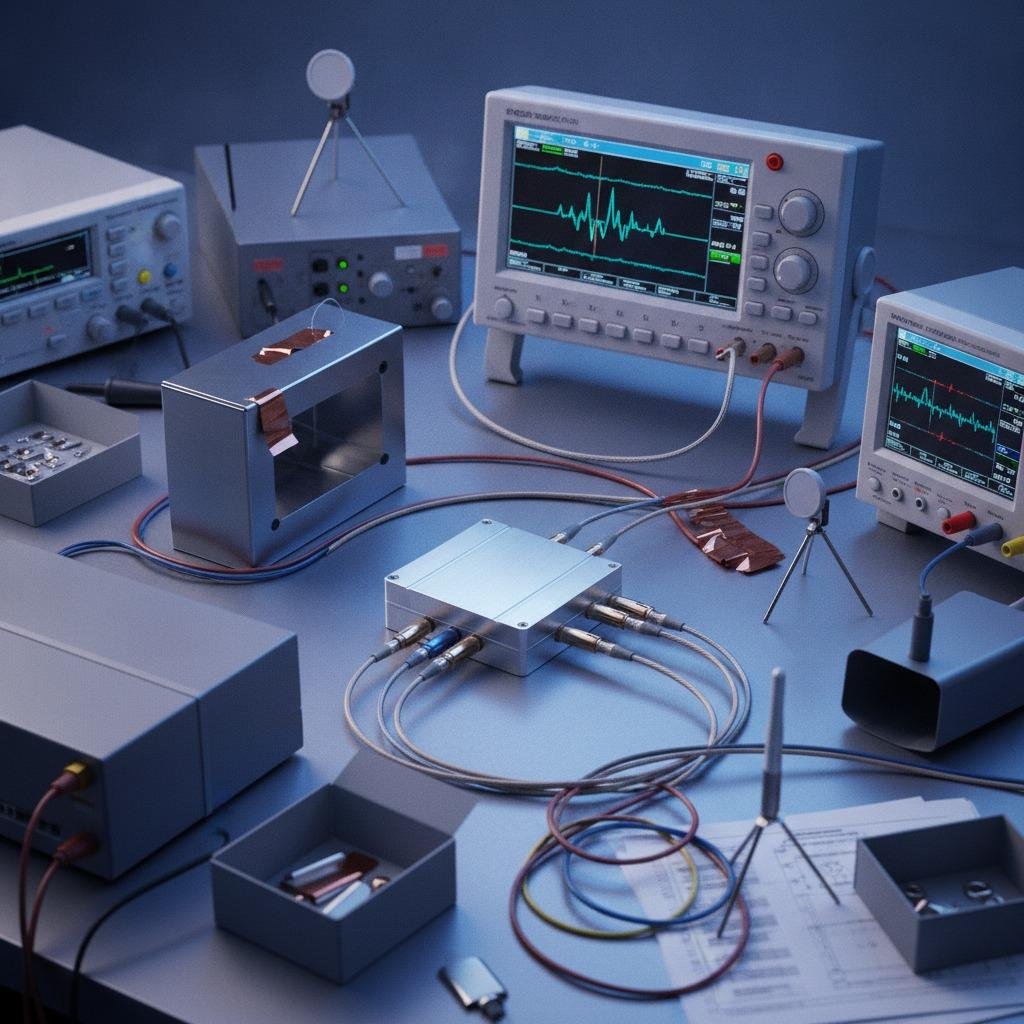
Why noise figure minimization still matters in real systems
Noise figure minimization is one of those engineering concerns that sounds abstract until a receiver starts missing weak signals, a radio link loses margin, or an imaging system buries detail under its own front-end hiss. For engineers and sourcing teams, the issue is not simply “can we reduce noise?” but “how much sensitivity, stability, and usable range do we gain if we do?” That is the decision this article helps frame.
In practice, noise performance affects more than signal clarity. It influences link budget, measurement confidence, power efficiency, and how hard the rest of the system must work to recover information. A front end with poor noise characteristics can force higher transmit power, more aggressive filtering, or additional digital processing downstream. Those fixes cost money, add complexity, and sometimes create new problems of their own.
What engineers are really trying to improve
When buyers talk about low-noise design, they often lump several objectives together. That is understandable, but it can blur the selection process. A better approach is to separate the target outcomes: lower added noise, better weak-signal sensitivity, wider useful operating range, and more resilience against interference.
In some applications, the key metric is raw input sensitivity. In others, it is the gain-to-noise temperature ratio, especially when comparing receiver front ends in systems where temperature-related noise behavior matters. For many platforms, dynamic range extension is the bigger story, because a system must preserve weak signals without clipping or desensitizing when stronger ones appear nearby. The right design choice depends on which of those pressures is dominant.
Where noise enters the chain
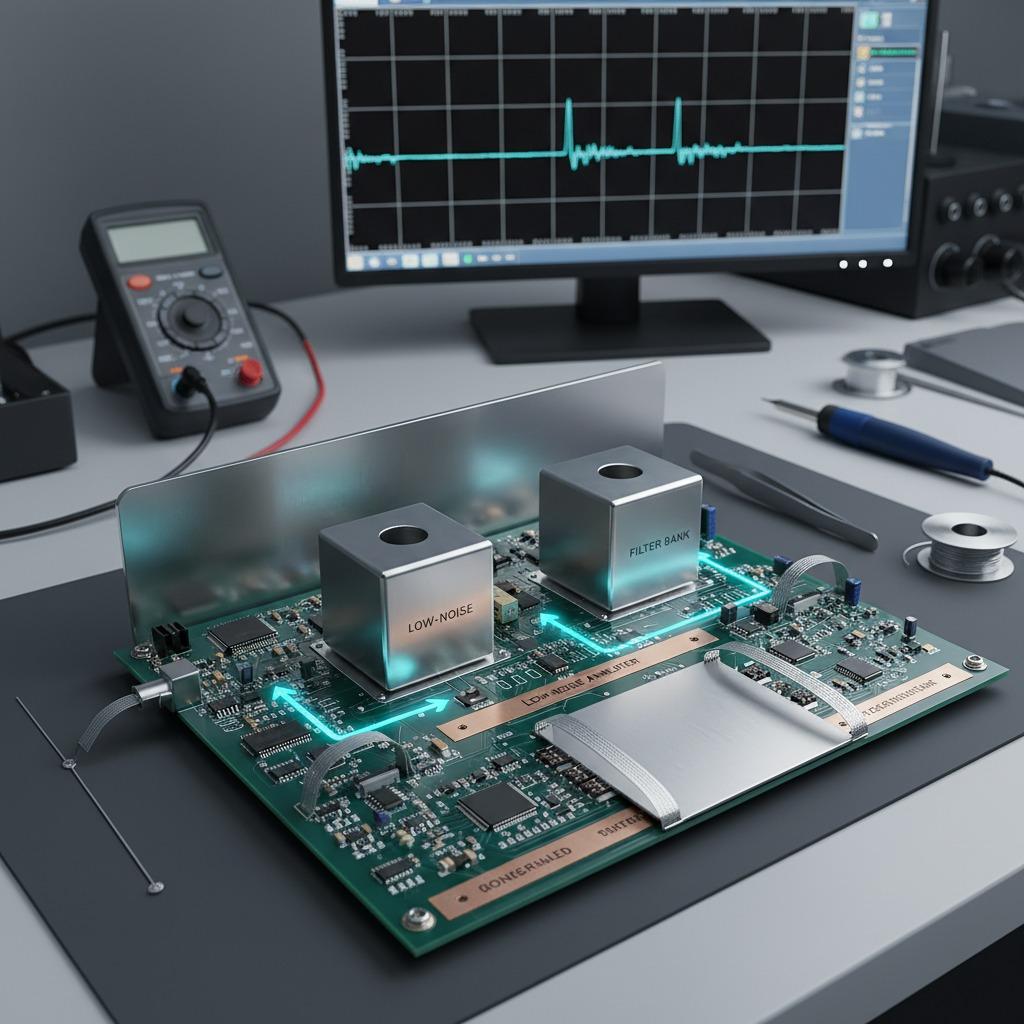
Noise is not a single event. It accumulates across components and stages, and the earliest stages usually matter most. That is why front-end selection deserves close attention. A low-noise amplifier, filter bank, or receiver module can shape the entire system’s effective performance. If the first active stage adds too much noise, later improvements rarely recover the lost margin.
There are also layout and integration issues. Shielding, grounding, impedance matching, thermal drift, and power-supply cleanliness all influence the final result. A component that measures well on a bench may behave differently once installed in a crowded enclosure with switching converters, cabling, and nearby emitters. Buyers sometimes overlook this, then wonder why field performance trails the datasheet narrative.
Common approaches to reducing noise
Front-end optimization
This is the oldest and still the most effective path. Keep the first stage clean, stable, and well matched. Short interconnects, controlled impedance, and careful filtering can do more than a pile of later-stage processing. If the front end is wrong, the rest of the chain starts at a disadvantage.
Adaptive signal processing
Adaptive filtering for noise reduction has become a practical tool in systems where the noise environment changes over time. Rather than relying on one fixed filter, the system adjusts its response based on the observed spectrum or signal conditions. That can be valuable in communications, sensing, and measurement equipment, though it does demand good algorithm design and enough processing headroom.
Spatial suppression
Interference cancellation via beamforming is particularly useful when unwanted energy comes from identifiable directions. By steering the array response, the system can emphasize the desired signal while reducing the impact of interferers. This is not a magic cure; it works best when the array geometry, calibration, and signal environment are understood. But when it fits the use case, the payoff can be substantial.
How to evaluate solutions without getting lost in specifications
Start with the use case, not the marketing language. A product can advertise strong noise performance and still be a poor fit if its operating band, linearity, or thermal behavior is mismatched to the application. Engineers should ask what kind of noise they are fighting: thermal noise, phase noise, broadband interference, impulsive noise, or a mixture.
Then compare the whole chain. A small improvement in the first stage can matter more than a larger gain later in the path. At the same time, do not trade away too much linearity or overload tolerance just to chase a prettier noise number. That is a common buyer mistake. In dense RF environments especially, a design that looks excellent on paper may fail when strong adjacent signals are present.
For procurement teams, it helps to request application-level evidence rather than isolated claims. Ask how the component or method behaves in the intended band, with the expected source impedance, and under realistic thermal conditions. If the supplier cannot describe those limits clearly, treat the specification with caution.
Practical selection checklist
Before choosing a noise-reduction path, teams should align on a few points: the operating spectrum, the expected interference environment, allowable power draw, system latency, and whether the priority is sensitivity or dynamic range extension. Those factors usually decide the architecture more reliably than a headline figure.
It also helps to decide early whether the solution will be mostly hardware-based, mostly algorithmic, or a combination. Hardware can lower the noise floor up front, while software can adapt to changing conditions. In many products, the best answer is a blend. The wrong answer is assuming one clever method will compensate for a weak foundation.
What good buyers ask suppliers
Buyers should ask how the design behaves at the edge of its range, not just in the middle. They should ask what compromises were made, because every noise improvement has a cost somewhere else: power, heat, size, linearity, or complexity. They should also ask how the solution will be integrated and verified in the real system, not only in a lab setup.
That is especially important for teams comparing off-the-shelf modules with custom designs. A standard part may shorten procurement time, while a custom approach can better match the application. The right decision depends on volume, risk tolerance, and how tightly the noise target is tied to product differentiation.
FAQ: quick answers for sourcing and engineering teams
Is lower noise always better? Not always. Lower noise is valuable, but not if it seriously weakens linearity, increases cost beyond the budget, or makes the system harder to integrate.
Does digital processing solve everything? No. Digital methods are useful, but they work best when the front end has already preserved the signal cleanly.
Should we prioritize sensitivity or interference rejection? That depends on the deployment environment. Quiet environments reward sensitivity; crowded ones usually demand more suppression and resilience.
Next step for teams evaluating low-noise designs
If your team is comparing receiver architectures, front-end components, or post-processing methods, start by mapping the dominant noise sources and the real operating conditions. Then measure candidates against the same scenario, not separate lab setups. That simple discipline often reveals which solution will actually improve performance once the product leaves the test bench.