






Overcoming Challenges in Radar Systems with Doppler Processing
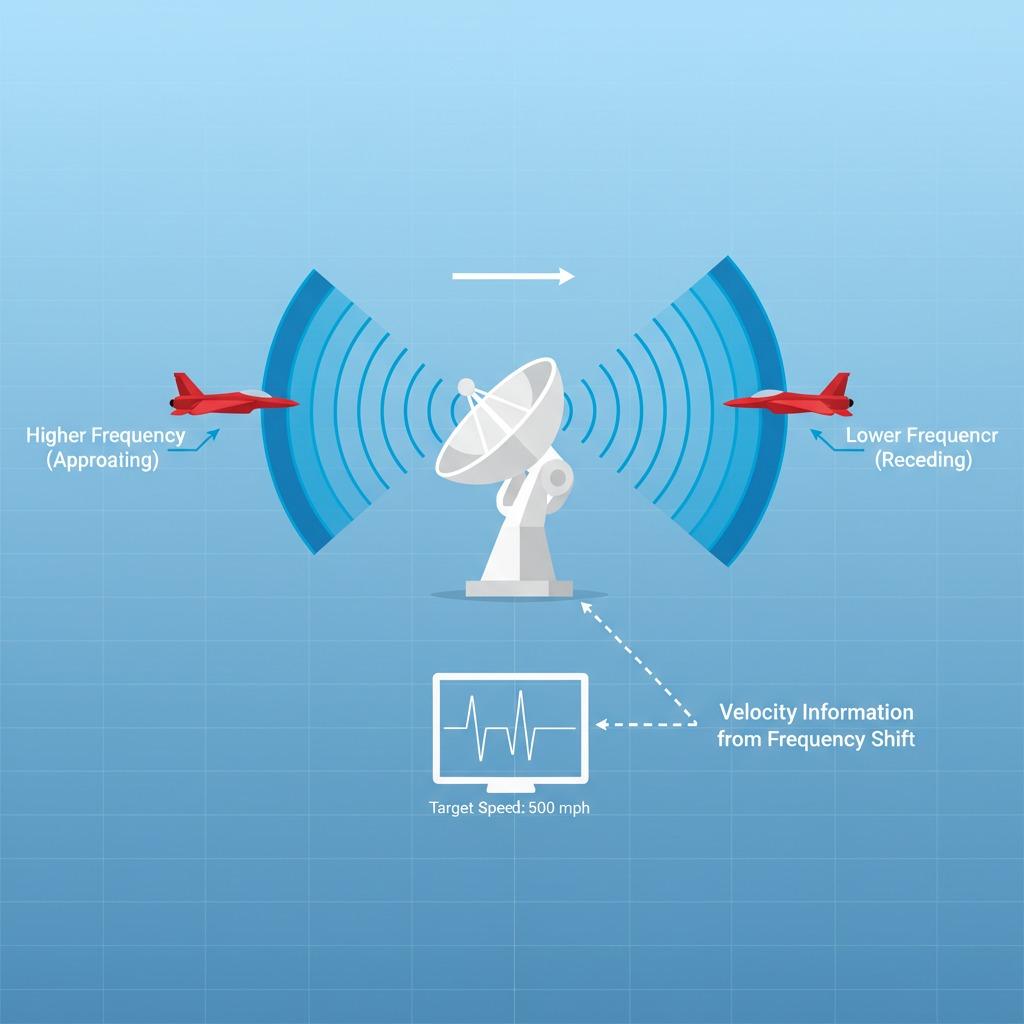
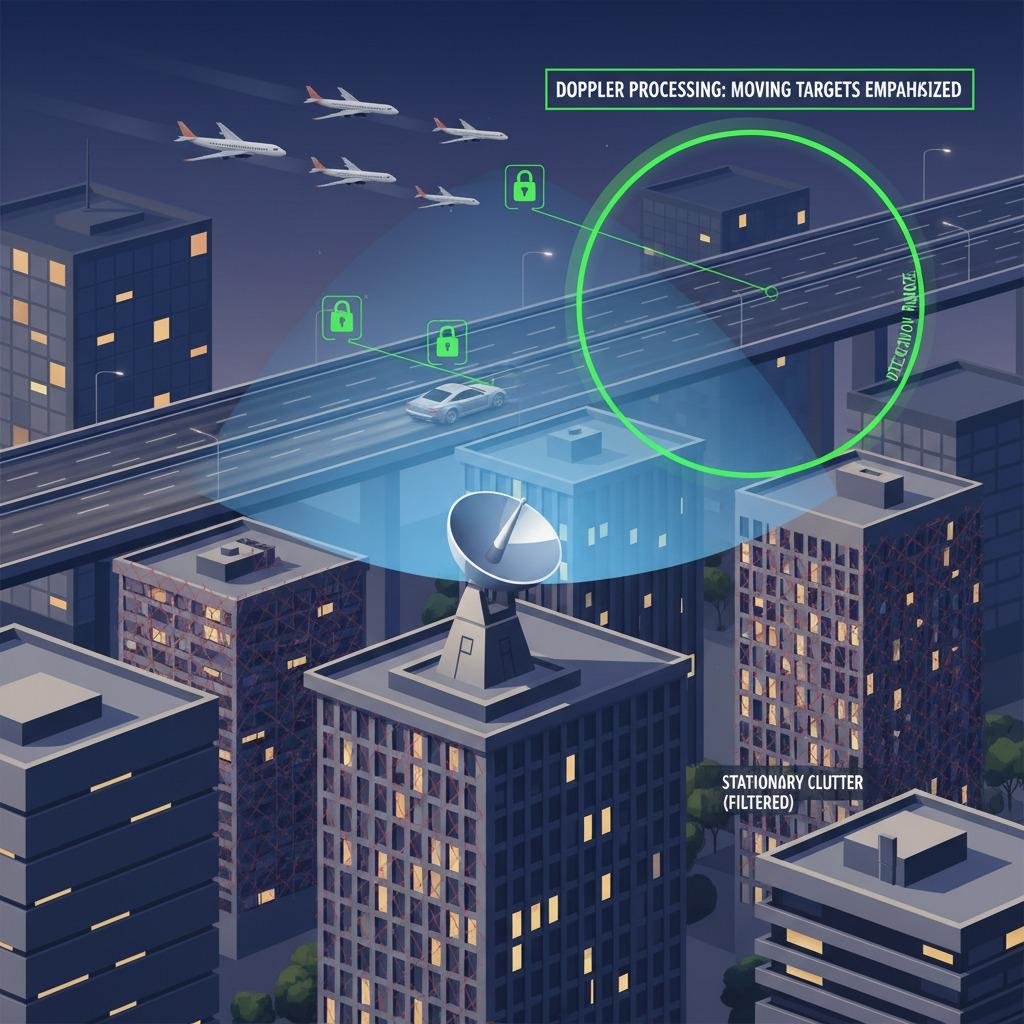
In modern radar applications, one of the most pressing problems is distinguishing moving targets from stationary clutter in complex environments, such as urban areas or adverse weather conditions. This issue often leads to false alarms, reduced detection reliability, and inefficient resource use. Doppler Processing emerges as a critical technique to address these challenges by leveraging the Doppler effect to analyze frequency shifts in reflected signals, enabling clearer separation of targets based on their motion relative to the radar.
Enhancing Detection Range in Cluttered Environments
A key limitation in radar systems is the restricted Detection Range, where signals weaken over distance and get masked by noise or interference. Traditional methods struggle to maintain accuracy beyond certain thresholds, compromising surveillance or tracking capabilities. Doppler Processing solves this by filtering out stationary echoes and amplifying those from moving objects, effectively extending the Detection Range. For instance, by processing the frequency spectrum, it isolates Doppler shifts from targets, allowing radars to detect objects at greater distances—up to several kilometers in some cases—without increasing power consumption. This not only improves operational efficiency but also reduces the need for multiple radar installations, making it a cost-effective solution for defense and aviation sectors.
Improving Angular Accuracy for Precise Targeting
Another common problem is poor Angular Accuracy, which results in imprecise localization of targets, leading to errors in guidance systems or collision avoidance. In scenarios with multiple moving entities, radars often face ambiguity in determining the exact angular position, exacerbating risks in real-time applications like air traffic control. Doppler Processing mitigates this by integrating velocity data with angular measurements, refining the beamforming process to achieve higher resolution. Techniques such as monopulse processing combined with Doppler analysis can narrow the angular error to fractions of a degree, ensuring targets are pinpointed accurately even in dense scenarios. This enhancement is vital for applications requiring fine-grained spatial awareness, turning potential hazards into manageable insights.
Accurate Velocity Measurement for Dynamic Tracking
Tracking fast-moving objects poses significant difficulties due to inaccurate Velocity Measurement, where conventional radars fail to differentiate speeds amid noise, resulting in erratic predictions and failed intercepts. This is particularly problematic in military or automotive radar systems, where misjudging velocity can have dire consequences. Doppler Processing directly tackles this by measuring the phase shift in returned signals proportional to the target's radial velocity, providing real-time and precise speed data. Advanced algorithms within Doppler Processing can resolve velocities from a few meters per second to hundreds, enabling predictive tracking models that anticipate trajectories. By incorporating multi-pulse integration, it minimizes errors from multipath propagation, offering reliable Velocity Measurement that supports adaptive response strategies.
Achieving Superior Range Resolution
Finally, insufficient Range Resolution hampers the ability to separate closely spaced targets, often merging them into a single echo and obscuring critical details. This challenge is acute in high-density environments like ports or battlefields, where distinguishing between objects just meters apart is essential. Doppler Processing addresses this through high-resolution profiling, utilizing wideband signals and coherent integration to resolve ranges down to centimeters. By combining Doppler information with pulse compression techniques, it enhances the discriminability of targets, preventing overlap and enabling detailed scene analysis. This solution not only boosts overall system performance but also facilitates advanced features like synthetic aperture radar for imaging, providing a comprehensive fix to resolution bottlenecks.
In summary, Doppler Processing stands as a transformative approach to radar dilemmas, integrating solutions for Detection Range, Angular Accuracy, Velocity Measurement, and Range Resolution. By adopting this technology, engineers and operators can build more robust, efficient systems that perform reliably in demanding conditions, ultimately advancing fields from security to transportation.