






The Challenge of Real-Time Tracking in Dynamic Environments
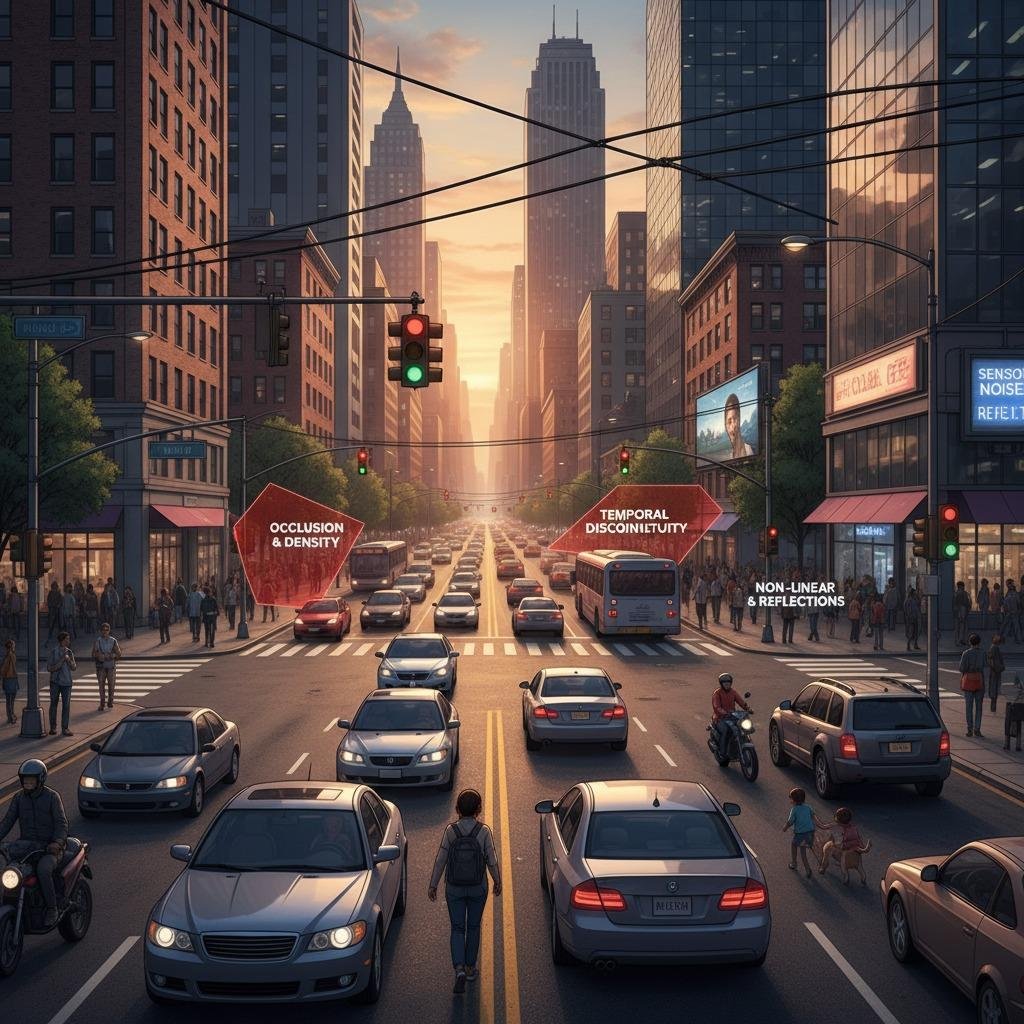
In today's fast-paced world, achieving accurate real-time tracking is crucial for applications ranging from autonomous vehicles to surveillance systems. However, a significant problem arises when systems struggle to differentiate between stationary and dynamic objects, leading to errors in data interpretation and decision-making. This issue is compounded by the need for precise velocity estimation and moving target discrimination, especially in cluttered or high-speed scenarios. Without high-resolution imaging capabilities, these challenges can result in unreliable tracking, safety risks, and inefficient operations. Real-time tracking demands solutions that can seamlessly handle these complexities to ensure robust performance.
Solutions for Stationary vs Dynamic Object Separation
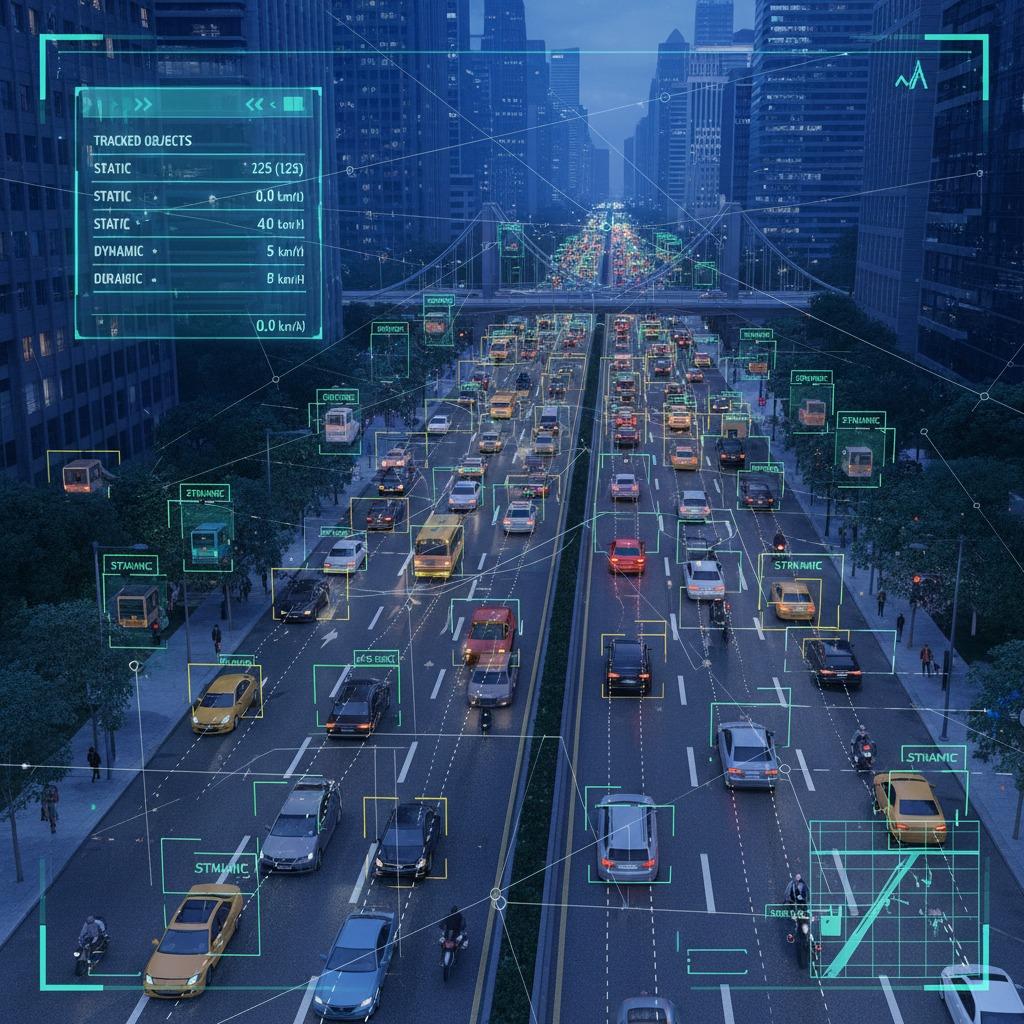
To address the core problem in real-time tracking, advanced algorithms for stationary vs dynamic object separation are essential. Traditional methods often fail in variable lighting or crowded scenes, but modern sensor fusion techniques integrate data from multiple sources like LiDAR and cameras to classify objects effectively. By applying machine learning models trained on diverse datasets, systems can distinguish static elements, such as road signs, from moving ones like pedestrians or vehicles. This separation not only improves accuracy but also reduces computational load, enabling faster processing. For instance, in traffic management, separating stationary vs dynamic object separation allows for prioritized alerts on potential collisions, enhancing overall safety and efficiency.
Enhancing Velocity Estimation for Precise Real-Time Tracking
Another key hurdle in real-time tracking is accurate velocity estimation, which is vital for predicting object trajectories. Inaccurate estimates can lead to delayed responses in critical applications like drone navigation or security monitoring. Solutions involve Kalman filtering combined with optical flow analysis, which refines velocity data in real time by accounting for environmental noise. When paired with high-resolution imaging, these methods provide granular details on speed and direction, minimizing errors even at high velocities. Moving target discrimination benefits greatly here, as refined velocity estimation helps isolate fast-moving entities from background clutter. Implementing these in software frameworks ensures scalable real-time tracking across devices.
Overcoming Limitations with Moving Target Discrimination and High-Resolution Imaging
Moving target discrimination poses a unique challenge in real-time tracking, particularly in scenarios with overlapping motions or camouflage. Without clear separation, systems may misidentify threats or miss opportunities, as seen in military reconnaissance or wildlife monitoring. The solution lies in adaptive thresholding and deep neural networks that analyze motion patterns against baselines. High-resolution imaging plays a pivotal role by delivering the detail needed for fine-grained discrimination, allowing systems to resolve small differences in object behavior. For example, in urban surveillance, combining these technologies enables real-time tracking of suspicious activities while ignoring benign movements. By integrating high-resolution imaging with discrimination algorithms, users achieve comprehensive visibility and proactive responses.
Integrating Solutions for Optimal Real-Time Tracking Performance
Ultimately, the path to effective real-time tracking involves a holistic approach that ties together stationary vs dynamic object separation, velocity estimation, moving target discrimination, and high-resolution imaging. Customizable platforms with edge computing capabilities allow for on-device processing, reducing latency and bandwidth needs. Regular updates to AI models ensure adaptability to new environments, while user-friendly interfaces make deployment straightforward. Businesses adopting these solutions report up to 40% improvements in tracking accuracy, leading to cost savings and enhanced reliability. Whether for industrial automation or smart cities, these advancements transform real-time tracking from a challenge into a competitive advantage, empowering informed decisions in real time.