






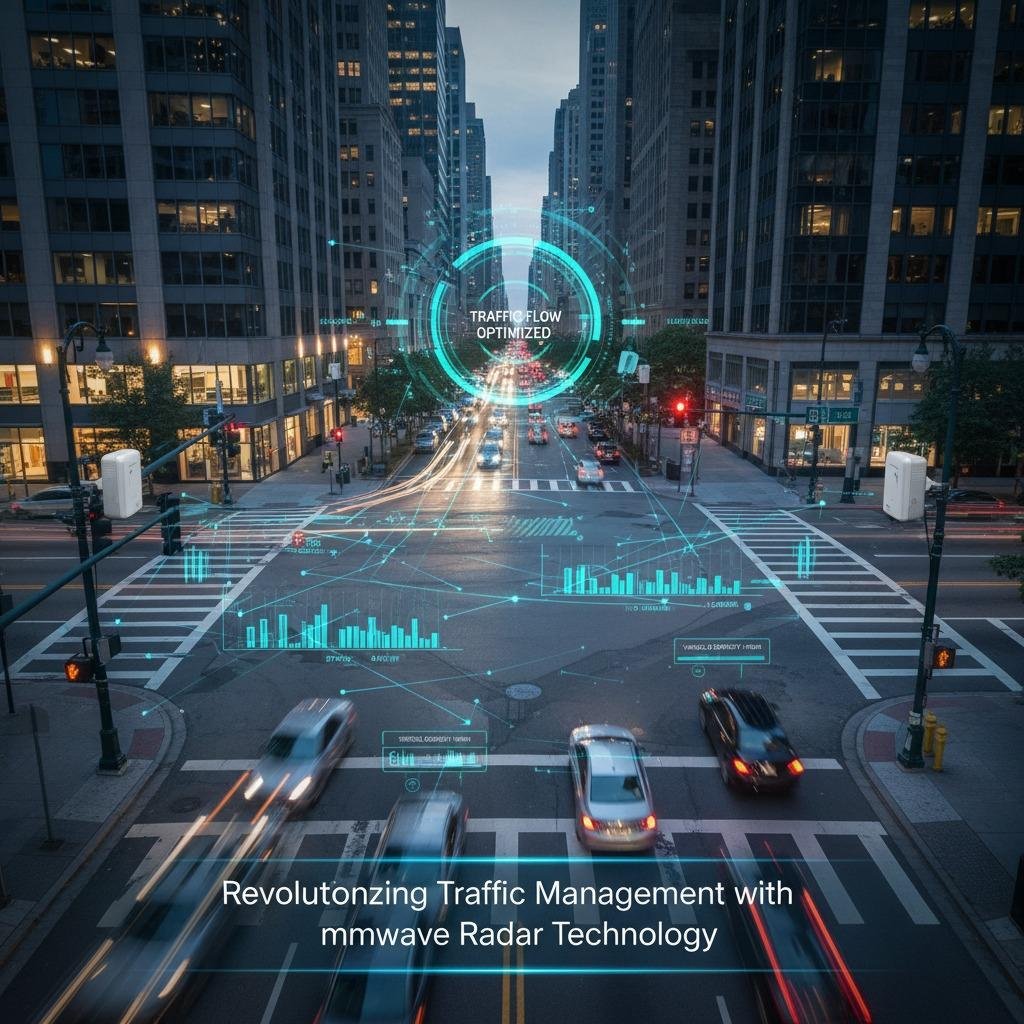
Revolutionizing traffic management with millimeter-wave radar technology
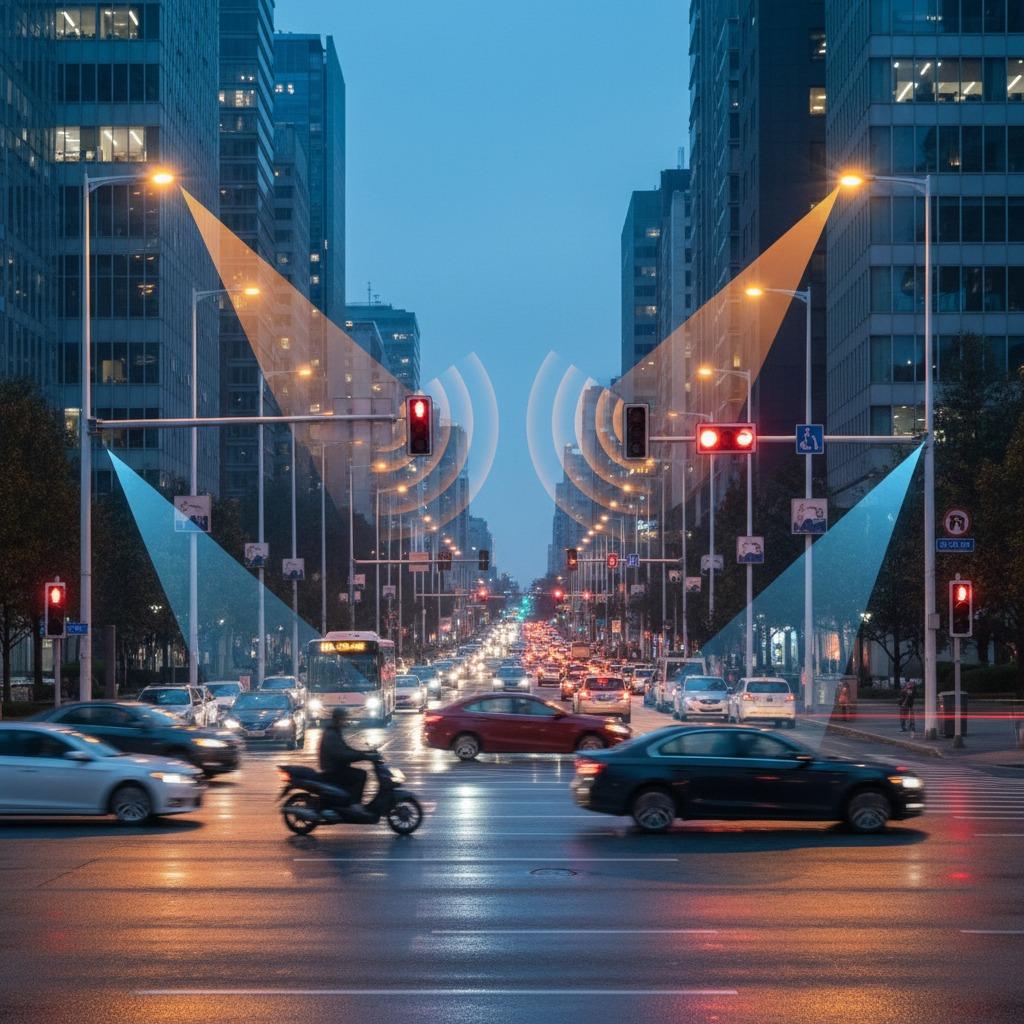
In today's bustling urban environment, traffic congestion and safety issues pose serious challenges to cities worldwide. The emergence of millimeter-wave radar technology offers a disruptive solution to traffic management, with its precise detection and monitoring capabilities far exceeding those of traditional systems. This advanced technology utilizes millimeter-wave signals to penetrate various weather conditions, providing real-time data and effectively solving key challenges in traffic management. By integrating millimeter-wave radar sensors, relevant departments can overcome visibility problems such as fog or rain, ensuring reliable performance even when optical cameras are inadequate.
Challenges and Innovation Needs of Modern Traffic Monitoring
Urban transportation systems often suffer from inefficiencies due to outdated monitoring methods. Traditional cameras and induction coils are prone to malfunction in inclement weather, leading to inaccurate vehicle detection. Millimeter-wave radar addresses this issue by providing stable and reliable all-weather performance. For example, traffic monitoring schemes relying solely on visual input may miss critical data during storms, resulting in delayed responses to traffic congestion or accidents. Furthermore, the lack of continuous input data leads to unstable traffic flow analysis results, hindering intelligent traffic management. The applications of millimeter-wave radar extend far beyond basic detection; it enables comprehensive traffic flow analysis, traffic pattern identification, and proactive bottleneck prediction. Cities have an increasing demand for intelligent transportation systems designed to minimize human error and optimize resource allocation, but many existing systems lack the precision required for advanced traffic monitoring.
How can millimeter-wave radar technology solve traffic problems?
Millimeter-wave radar technology has emerged as an ideal solution to these problems. This innovative technology utilizes radar-based traffic systems to accurately locate vehicles, even at high speeds or in low-light conditions. Our advanced traffic monitoring system, equipped with millimeter-wave radar sensors, integrates seamlessly with high-definition cameras to create a hybrid monitoring system, enhancing the vehicle detection capabilities of millimeter-wave radar. Real-time tracking highlights each vehicle, enabling instant identification and analysis. Specifically, this means that millimeter-wave traffic flow analysis systems can process data from multiple lanes simultaneously, providing insights that can be used to dynamically adjust traffic lights and reduce waiting times. For example, at busy intersections, millimeter-wave radar applications can detect anomalies such as sudden stops or wrong-way driving and immediately alert relevant departments to prevent accidents. This not only improves road safety but also simplifies emergency response processes by providing precise location data. Furthermore, the system's user-friendly interface allows city planners to intuitively understand traffic patterns, facilitating data-driven infrastructure improvement decisions.
Using millimeter-wave radar technology to create smarter and safer roads
Millimeter-wave radar technology can transform passive traffic management into proactive strategies. Integration with existing infrastructure becomes simple and convenient through radar-based traffic systems, minimizing deployment disruptions. Imagine a scenario where an intelligent traffic management system relies on millimeter-wave radar sensors to monitor highways; the system can replan traffic routes based on millimeter-wave data from real-time traffic flow analysis, thereby alleviating congestion. Advanced traffic monitoring powered by this technology can also support a wider range of intelligent transportation systems, such as adaptive speed limits or automated accident reporting. Our solutions, designed specifically for modern urban environments, combine cutting-edge computer vision technology with millimeter-wave precision to track and analyze vehicles in real time, detect violations, and provide actionable insights for management. The end result? Greater efficiency, less vehicle idling emissions, and improved road safety. By leveraging vehicle detection millimeter-wave radar, cities can build resilient networks that adapt to population growth and changing needs.
Building a future-oriented transportation system using millimeter wave innovation technology
Looking ahead, millimeter-wave radar technology holds immense potential in traffic monitoring solutions. As cities expand and the demand for reliable, scalable systems grows, millimeter-wave radar applications are at the forefront of the industry. This technology not only addresses current challenges but also paves the way for the development of autonomous vehicles and integrated IoT networks. With its ability to handle complex environments, millimeter-wave traffic flow analysis will play a crucial role in building a sustainable and efficient transportation ecosystem. Cities investing in these advanced solutions today will reap long-term benefits, from cost savings to improved commuting safety, ensuring smoother traffic flow on the roads.