







Why short-range high-precision sensing has become a practical design issue
Short-range high-precision sensing is no longer a niche topic reserved for labs and specialist inspection rigs. It now sits in the middle of product design conversations for automation, robotics, consumer devices, safety systems, and industrial inspection. The reason is straightforward: many of the hardest sensing jobs happen close up, where small movements, tight geometries, and fast-changing surfaces can make ordinary sensors unreliable. When a system must read a tiny displacement, map a dense surface, or react before a collision, the sensing problem becomes a mechanical and operational one, not just an electronics one.
That matters to engineers and sourcing managers because the wrong sensor choice can quietly add cost downstream. A system that looks fine in a clean test bay may struggle when mounted near reflective metal, textured plastics, moving assemblies, or cramped housings. Buyers are often not deciding between “good” and “better” so much as deciding which sensing approach will still behave once the product is assembled, shipped, and used by real operators.
What this type of sensing is trying to solve
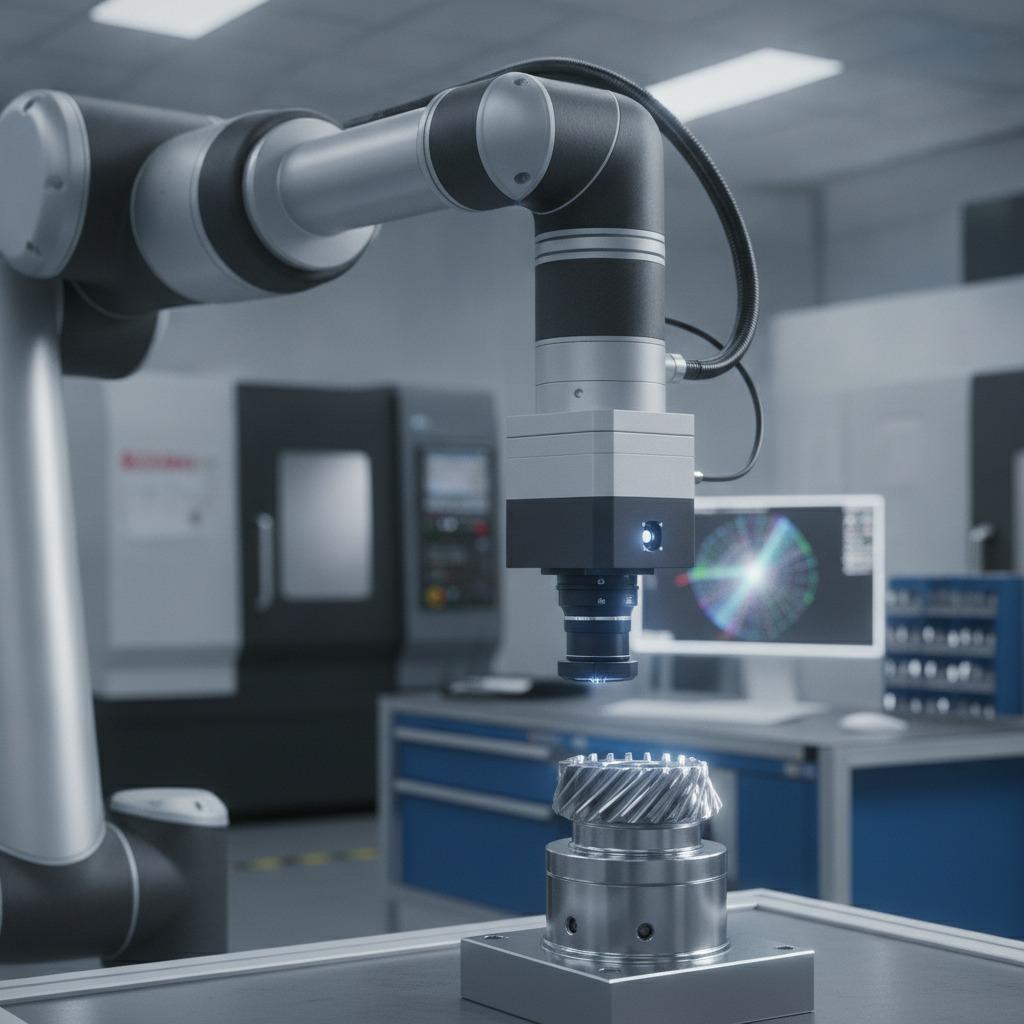
At short distances, a sensor has to deal with detail rather than breadth. It may need to support near-field imaging for surface inspection, micro-motion detection for vibration or displacement, intricate structure reconstruction for complex parts, or proximity hazard warning in tight working environments. Each of these use cases has a different tolerance for noise, latency, and environmental interference, but they share one requirement: stable information at close range.
That is where the phrase short-range high-precision sensing becomes useful. It usually refers to systems designed to measure small changes accurately within a limited range, often with more emphasis on resolution and repeatability than on long-distance coverage. In many products, the challenge is not seeing far; it is seeing cleanly when the target is only a short distance away and the geometry is unforgiving.
Quick comparison: what buyers should separate early
Before comparing products, it helps to separate the job into a few categories. A sensor used for proximity hazard warning may prioritize reliable detection and fast response. A system used for intricate structure reconstruction will care more about resolution, depth detail, and how it handles edges, recesses, and narrow features. Micro-motion detection, by contrast, demands sensitivity to very small changes and a low-noise signal chain. Near-field imaging often sits somewhere in between, balancing fine detail with usable scan speed.
This distinction sounds obvious, but it is one of the most common sourcing mistakes. Teams sometimes buy for nominal range or headline precision, then discover the sensor was optimized for a different operating condition. The result is not usually total failure; it is subtler than that. The system works, but only after extra filtering, shielding, recalibration, or mechanical redesign.
Selection criteria that matter more than brochure specs
1. Resolution versus usable precision
Vendors often list impressive theoretical figures. In practice, what matters is usable precision in the target environment. Engineers should ask how the sensing method behaves with vibration, ambient light, surface finish, dust, or enclosure constraints. A smaller advertised number is not automatically better if it collapses in production conditions.
2. Target surface and geometry
Close-range sensing can be surprisingly sensitive to the object itself. Shiny surfaces, dark materials, thin edges, slots, and curved shapes all change how data is returned. Intricate structure reconstruction is especially vulnerable here, because the more complex the part, the more likely a sensor will miss detail in shadowed or steep-angle regions.
3. Response speed and signal stability
For safety or motion control, speed matters as much as precision. A sensor that detects a hazard a fraction too late is not useful. But a very fast sensor can still be a poor choice if it generates unstable readings that force the controller to over-filter the signal. The better system is the one that balances reaction time with clean, repeatable output.
4. Integration burden
Some sensing solutions look attractive until you add calibration steps, mounting tolerance issues, or software complexity. In manufacturing environments, integration cost often matters more than unit price. A sensor that simplifies enclosure design, cable routing, and maintenance can save more money than a cheaper alternative with a harder setup.
Common mistakes buyers make
One mistake is treating all short-range applications as interchangeable. They are not. Another is assuming that proximity hazard warning and precision inspection can be solved with the same hardware settings. They usually cannot. Teams also underestimate how much mechanical design affects sensing performance. Brackets, covers, vibration, and installation angle can change results enough to invalidate early testing.
There is also a tendency to over-focus on the sensor and ignore the workflow around it. If the data must feed a control system, inspection station, or operator alert, the full chain matters. A good sensing device with poor mounting or weak signal handling can still produce a disappointing system.
Practical buyer advice for engineering teams
For sourcing, the best next step is to define the operating envelope before comparing models. Specify the target distance range, object types, required update rate, and the level of detail the system truly needs. If the application involves near-field imaging or intricate structure reconstruction, ask for sample data on parts that resemble your own, not just generic demo targets. If the goal is micro-motion detection, insist on proof that the system stays stable under the mechanical conditions of your machine.
It also helps to treat sensing as part of the full product architecture. Enclosure design, firmware filtering, installation method, and service access all influence field performance. That is especially true in proximity hazard warning systems, where maintenance teams need a setup that remains dependable after repeated use, not only during commissioning.
FAQ for first-time evaluators
Is short-range sensing always more precise than long-range sensing?
Not automatically. Short-range systems can achieve finer detail, but actual precision depends on the sensing principle, the target surface, and the operating environment.
What should I test first?
Start with the hardest real-world sample you have. If the sensor handles that, it is more likely to survive production conditions.
Should I optimize for speed or accuracy?
That depends on the job. Safety and motion control lean toward speed. Inspection and reconstruction usually lean toward accuracy. Most projects need a workable compromise.
A sensible next step
If your team is evaluating short-range high-precision sensing for a new product or process, begin with the application, not the spec sheet. Define the surface, geometry, distance, response time, and integration constraints first. Then compare sensing options against those actual needs. That approach takes a little longer up front, but it usually prevents the kind of redesign work that nobody wants once hardware is already in motion.