






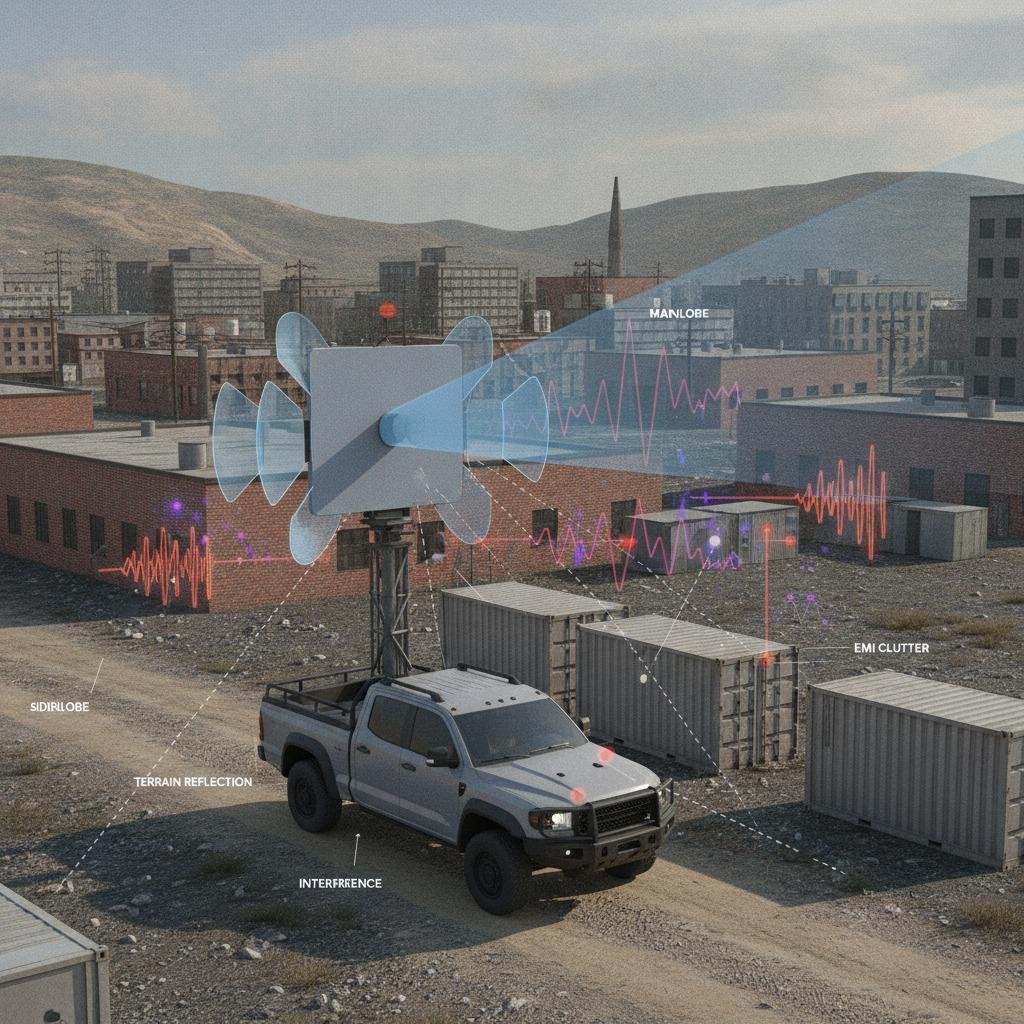
Why sidelobe suppression matters in real radar and electronic systems
Sidelobe suppression is one of those engineering topics that tends to stay quiet until a system starts behaving badly. Then it becomes impossible to ignore. In radar, communications, sensing, and related electronic systems, unwanted sidelobes can leak energy into the wrong directions, create false targets, raise the noise floor, or make a receiver more vulnerable to interference. For engineers and sourcing teams, the issue is not abstract: it affects detection reliability, measurement clarity, and how well a design holds up once it leaves the lab and enters a complex electromagnetic environment.
The practical question is simple. How do you reduce unwanted radiation and response without damaging useful signal performance? That is the balance behind sidelobe suppression, and it is also why buyers should look beyond a single spec line. A design can look strong on paper and still struggle when a jammer, strong reflector, or crowded spectrum enters the picture.
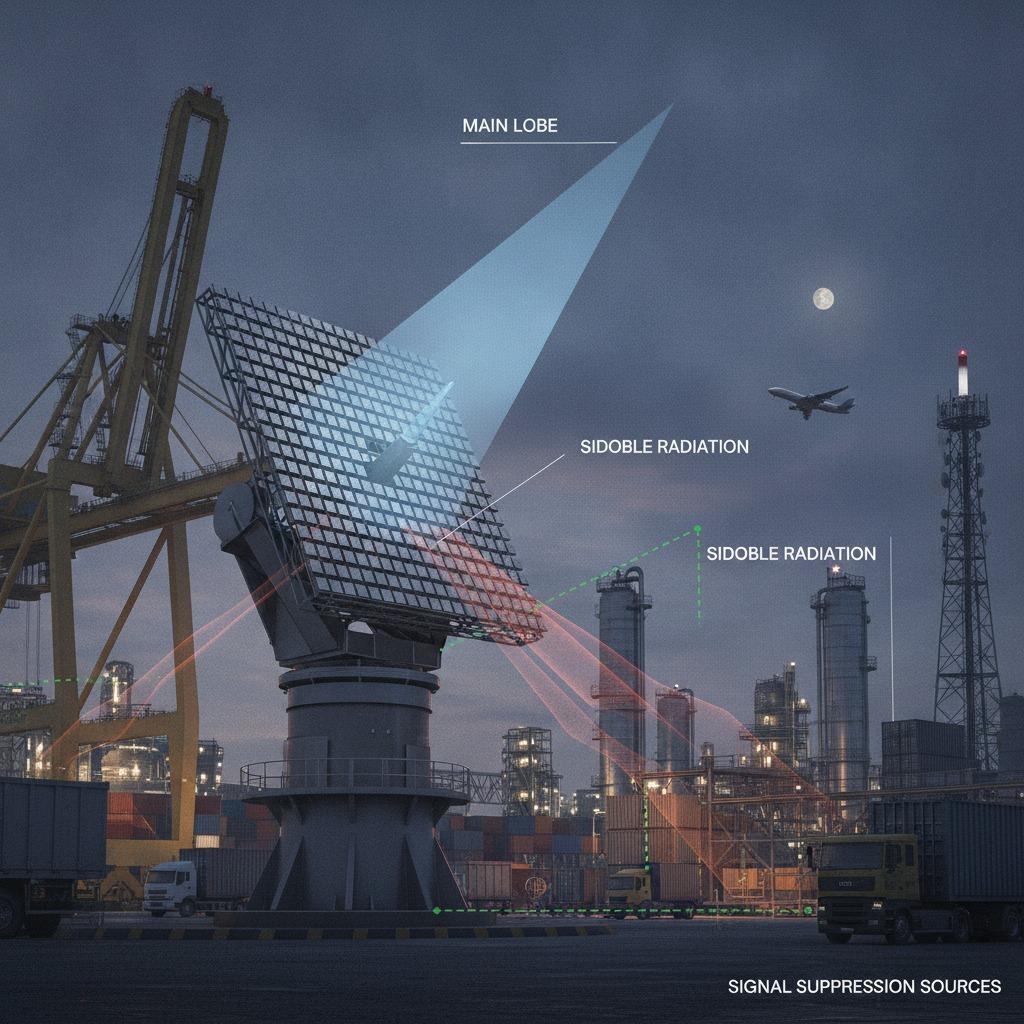
What sidelobes do to system performance
Sidelobes are not necessarily a sign of a bad system; they are a byproduct of real antennas, finite apertures, and signal processing choices. The trouble begins when they are high enough to matter. In detection systems, they can cause false alarms or obscure weak targets. In measurement applications, they can distort angle or range estimates. In communication systems, they can increase interference susceptibility and complicate spectrum coexistence.
For buyers, this matters because sidelobe behavior often shows up as a system-level problem rather than a neat component issue. The antenna, waveform, processor, and operating environment all interact. A procurement team that only compares headline gain or bandwidth can miss the part that decides field performance.
Key techniques used to improve suppression
There is no single remedy. Effective sidelobe suppression usually combines hardware, waveform design, and adaptive signal processing. The right mix depends on the application, frequency band, power budget, and how much processing margin the platform can support.
Antenna and aperture design
Physical design choices set the baseline. Array geometry, element spacing, tapering, and feed network quality all influence sidelobe levels. Designers often trade a little mainlobe sharpness or aperture efficiency to get cleaner off-axis behavior. That tradeoff is common and usually worth it, but it should be made knowingly rather than discovered after integration.
Waveform shaping and pulse compression gain
Signal design plays a major role too. Techniques that support pulse compression gain can improve range resolution and sensitivity, but they can also introduce sidelobe concerns if the waveform and matched filtering are not carefully managed. In practice, engineers try to preserve useful compression performance while controlling range sidelobes, because a system that resolves more detail but also produces clutter-like artifacts is only a partial win.
Adaptive processing and environment-aware control
Modern systems increasingly rely on algorithms that respond to changing conditions. Complex electromagnetic environment adaptation is becoming more important as crowded spectrum, reflection-rich installations, and adversarial interference make static settings less reliable. The system may adjust thresholds, beam patterns, filtering, or waveform parameters to keep sidelobes from dominating the return picture.
In some applications, frequency hopping pattern design is also part of the toolbox. Well-structured hopping can help a system avoid persistent interferers and reduce predictability, although it is not a magic shield. The pattern must still be chosen with the receiver architecture, timing constraints, and spectrum rules in mind.
Where smart countermeasures fit in
When interference is intentional, sidelobe management becomes even more important. A system that is easy to confuse through high sidelobes is easier to degrade in the field. Smart jammer counteraction typically combines detection, classification, and adaptive response. The goal is not just to reject noise, but to recognize patterns of interference and respond without destabilizing the main mission signal.
This is where engineers often find the hardest tradeoff. Aggressive filtering can protect the receiver, but it may also remove valuable data. Overly conservative settings preserve data but leave the system exposed. The best designs keep enough flexibility to react without forcing a full operating reset.
What buyers should ask before selecting a solution
If you are sourcing a radar module, signal processor, or antenna assembly, do not stop at nominal sidelobe figures. Ask how those numbers were measured, under what operating conditions, and what happens when the system is pushed outside the ideal case. A modest-looking specification can be perfectly acceptable if the system is intended for a controlled environment. The same spec may be inadequate for a platform exposed to heavy clutter or interference.
It is also worth asking whether the vendor can explain the design tradeoffs in practical terms. If they cannot discuss mainlobe behavior, waveform impacts, or adaptation limits, that is a warning sign. Buyers do not need marketing language here; they need engineering clarity.
Common mistakes that lead to disappointing results
One frequent mistake is treating sidelobe suppression as a late-stage add-on. Once the antenna architecture and signal chain are locked, the available options shrink fast. Another mistake is assuming the best suppression setting is always the strictest one. In some systems, over-suppression reduces sensitivity or limits coverage. A third issue is failing to test in realistic conditions. Lab results are useful, but they rarely reproduce the reflections, interference, and timing quirks of an actual site.
There is also a sourcing mistake that shows up often: comparing vendors solely on a headline side-lobe number without checking the full operating context. That can be a costly shortcut.
Practical takeaway for engineering and sourcing teams
The best sidelobe suppression strategy is the one that fits the actual mission, not the cleanest brochure graph. Start with the environment, the target behavior, and the acceptable tradeoffs in gain, complexity, and cost. Then look for a solution that combines stable hardware design with flexible processing, especially if the platform must operate in a complex electromagnetic environment adaptation scenario or face active interference.
If you are evaluating options, use sidelobe behavior as a systems question. Ask how the design handles clutter, jammer exposure, waveform tuning, and field variability. That framing usually leads to better decisions than chasing one number in isolation.
FAQ
Is lower sidelobe always better?
Not automatically. Lower sidelobes are usually desirable, but they can come with tradeoffs in aperture efficiency, processing complexity, or mainlobe shape. The right level depends on the application.
Does pulse compression help or hurt sidelobes?
It can do both. Pulse compression gain improves sensitivity and resolution, but the waveform and filtering choices must be managed carefully to avoid unwanted sidelobe growth.
Why does the operating environment matter so much?
Because reflections, interference, and intentional jamming can all expose weaknesses that do not appear in controlled tests. Real-world conditions often decide whether a design is robust or merely adequate.
Next step
Before committing to a platform, request side-lobe data in the context of the intended operating environment, not just a simplified benchmark. The right answer is usually buried in the tradeoffs, and that is exactly where a good technical buyer should be looking.