






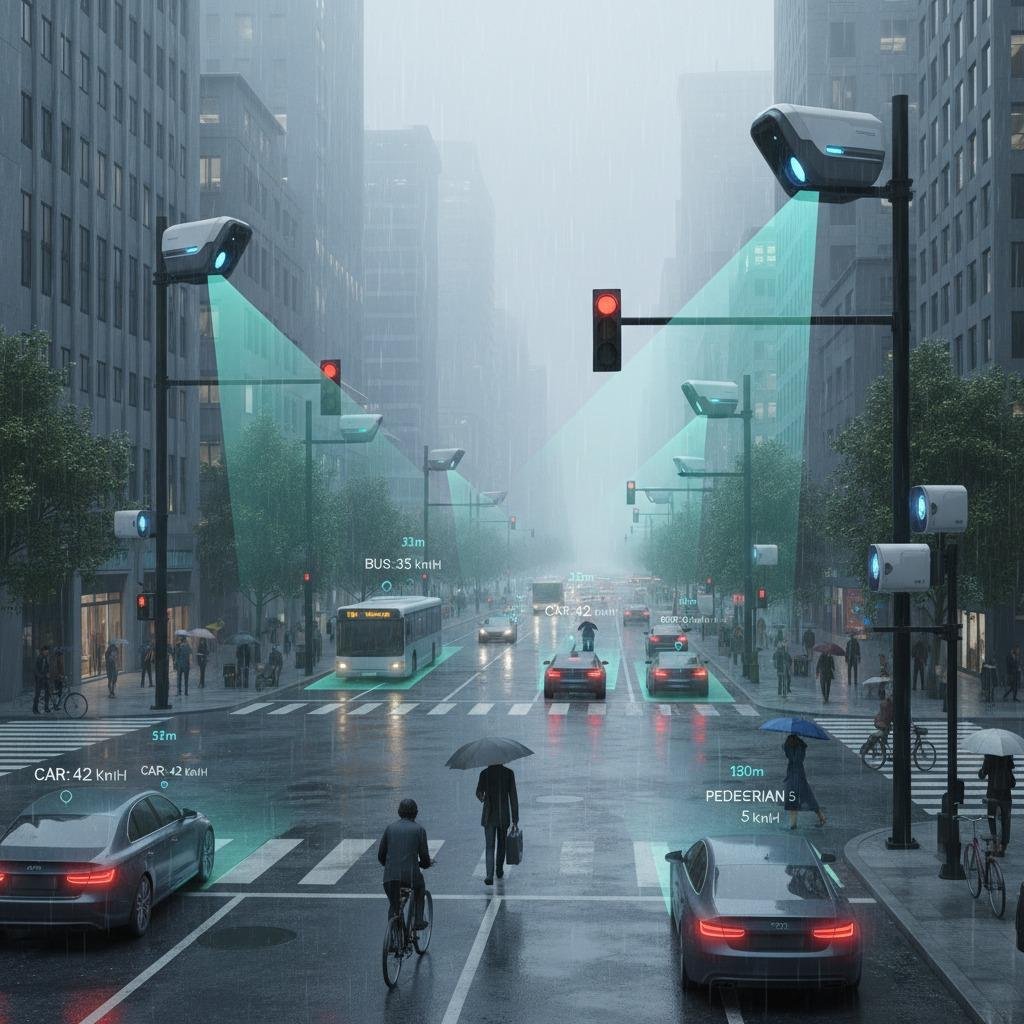
Overcoming urban traffic challenges using millimeter-wave radar technology
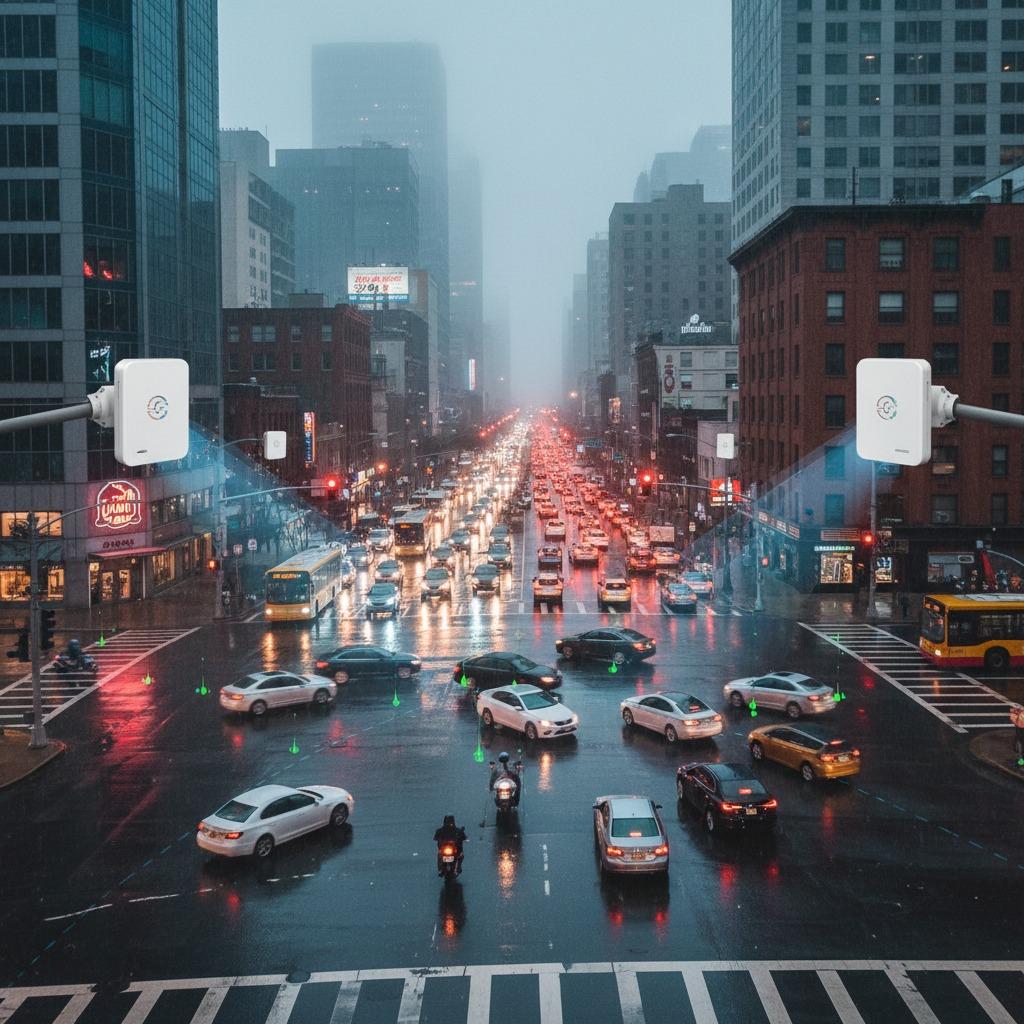
In bustling urban environments, traffic congestion causes serious problems, leading to delays, increased emissions, and safety risks. Traditional monitoring methods often perform poorly in inclement weather or low-light conditions, making accurate vehicle detection and traffic flow analysis difficult. This is where millimeter-wave radar technology comes in as a game-changing solution, providing reliable all-weather performance to address these urban traffic challenges.
Understanding the core issues of traffic monitoring
Urban areas face increasingly severe traffic management challenges. Traditional camera-based systems encounter visibility problems in rain, fog, or at night, resulting in incomplete data for traffic flow analysis, thus necessitating millimeter-wave solutions . Furthermore, manual monitoring or outdated sensors fail to provide real-time insights, exacerbating congestion and hindering intelligent traffic management. Vehicle-detecting millimeter-wave radar addresses these issues by penetrating environmental obstacles, ensuring consistent data capture for better decision-making.
Key applications and advantages of millimeter-wave radar technology
Millimeter-wave radar applications are expanding into various scenarios, particularly in enhancing traffic monitoring solutions. These sensors can accurately detect motion and classify objects, enabling advanced traffic monitoring even under complex conditions. For example, radar-based traffic systems are seamlessly integrated into intelligent transportation systems, providing data for optimizing signal timing and reducing bottlenecks. By leveraging millimeter-wave radar sensors, cities can achieve superior vehicle detection capabilities, free from the limitations of optical systems, accurately tracking speed and traffic flow.
Implementing millimeter-wave radar to achieve intelligent traffic flow
To address traffic inefficiencies, deploying millimeter-wave traffic flow analysis technology has proven highly effective. This approach allows for dynamic adjustments to intelligent traffic management, such as adaptive signals in response to real-time vehicle counts. Unlike traditional setups, millimeter-wave radar technology is unaffected by lighting or weather conditions, ensuring uninterrupted service. Cities adopting these radar-based traffic systems report improvements in traffic efficiency of up to 30%, minimizing accidents and supporting sustainable urban development.
Real-world integration of advanced traffic monitoring
Integrating millimeter-wave radar sensors into existing infrastructure is remarkably straightforward, enhancing the overall intelligent transportation system. For example, installing these sensors at intersections can provide comprehensive coverage for traffic monitoring solutions, identifying everything from cars to pedestrians. This leads to proactive measures in advanced traffic monitoring, such as predictive analytics during peak hours. The non-invasive nature of the technology means minimal disruption during installation, making it ideal for upgrading legacy systems to meet modern needs.
Millimeter-wave radar technology is for the future.
Looking ahead, the development of millimeter-wave radar applications is expected to make greater progress in vehicle detection millimeter-wave radar and other fields. With the expansion of smart cities, this technology will play a key role in creating resilient traffic flow analysis millimeter-wave networks. By prioritizing reliability and accuracy, millimeter-wave radar technology not only addresses current pain points but also paves the way for innovative, data-driven urban planning. Adopting these solutions can ensure safer and smoother commutes for everyone.