






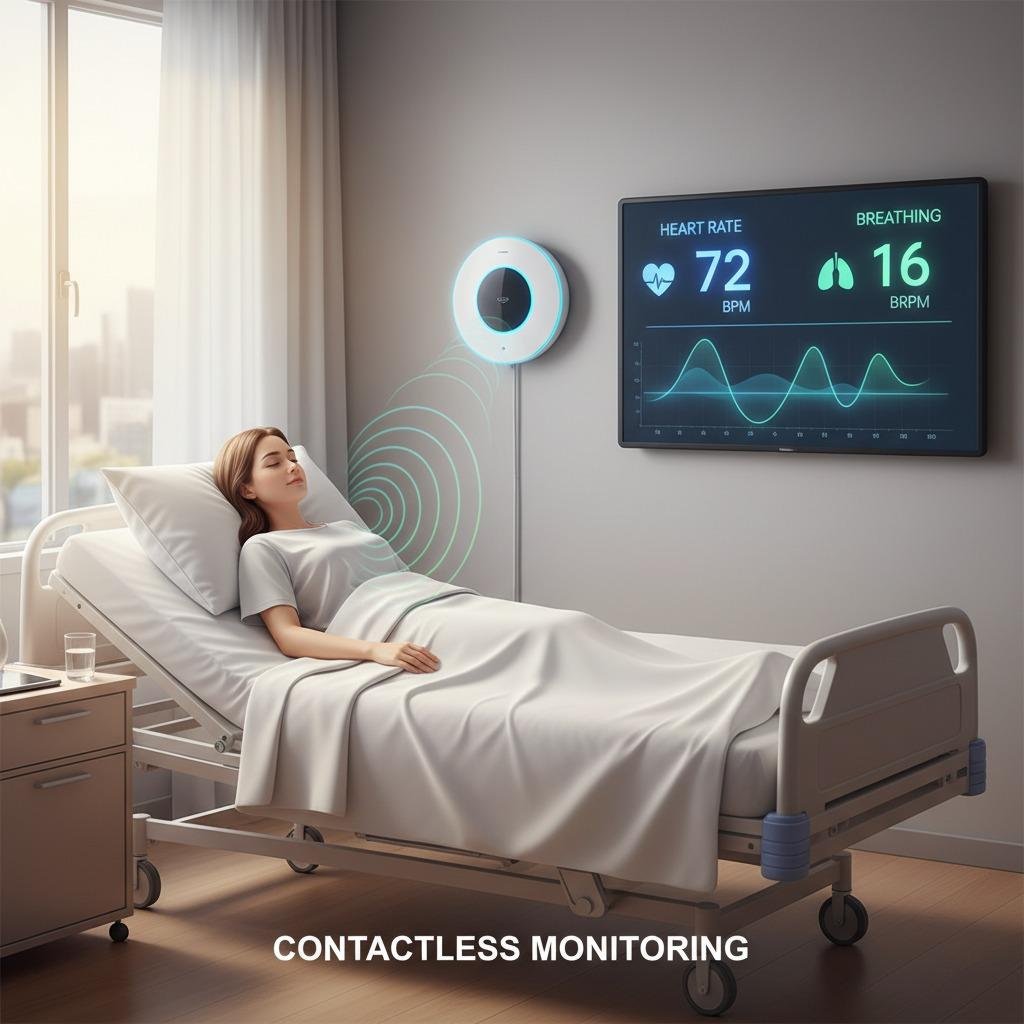
Vital Signs Monitoring Radar: Revolutionizing Health Tracking
In today's fast-paced world, keeping tabs on vital signs like heart rate and breathing can be a challenge, especially for individuals with chronic conditions or those requiring constant monitoring in healthcare settings. Traditional methods often involve cumbersome wires, uncomfortable attachments, or invasive procedures that limit mobility and comfort. Enter Vital Signs Monitoring Radar, an innovative technology that offers a non-intrusive way to track essential health metrics in real-time. This radar-based solution uses advanced sensors to detect subtle movements associated with breathing and heartbeat, providing accurate data without any physical contact.
The Problem with Conventional Vital Signs Monitoring
Conventional vital signs monitoring relies heavily on wearable devices, pulse oximeters, or ECG machines that require direct skin contact. These methods can cause skin irritation, restrict movement, and pose challenges in scenarios like driving or sleeping, where constant attachment is impractical. For elderly patients or those in remote areas, the need for frequent manual checks increases the risk of oversight and delays in care. Moreover, in high-stakes environments such as vehicles or hospital rooms, ensuring reliable monitoring without disrupting daily activities remains a persistent challenge. The lack of seamless, contactless options leads to gaps in health data, potentially missing critical alerts for conditions like sleep apnea or cardiac events.
How mmWave Breathing Detection Enhances Vital Signs Monitoring Radar
Vital Signs Monitoring Radar addresses these limitations through mmWave Breathing Detection technology, which employs millimeter-wave radar to capture minute chest movements indicative of respiration. Unlike optical sensors that falter in low light or with occlusions, mmWave technology penetrates clothing and operates effectively across various distances, making it ideal for continuous monitoring. This solution not only detects breathing patterns with high precision but also filters out environmental noise, ensuring reliable readings even in dynamic settings. By integrating mmWave breathing detection into everyday devices, users gain peace of mind knowing their respiratory health is tracked effortlessly, reducing the burden on caregivers and enabling proactive interventions.
Heart Rate Detection Radar: A Contactless Breakthrough
Another key challenge is the discomfort and inaccuracy of traditional heart rate monitors during physical activity or stress. Heart Rate Detection Radar, a core component of vital signs monitoring radar systems, uses Doppler-based radar signals to measure cardiac activity by detecting the subtle vibrations of the chest wall caused by each heartbeat. This contactless approach eliminates the need for electrodes or straps, providing accurate heart rate data up to several meters away. It's particularly valuable for athletes, patients with mobility issues, or even in automotive applications, where real-time health insights can prevent accidents. With Heart Rate Detection Radar, monitoring becomes as simple as being in the radar's range, offering a scalable solution for personal and professional use.
Contactless Health Monitoring Radar for Broader Applications
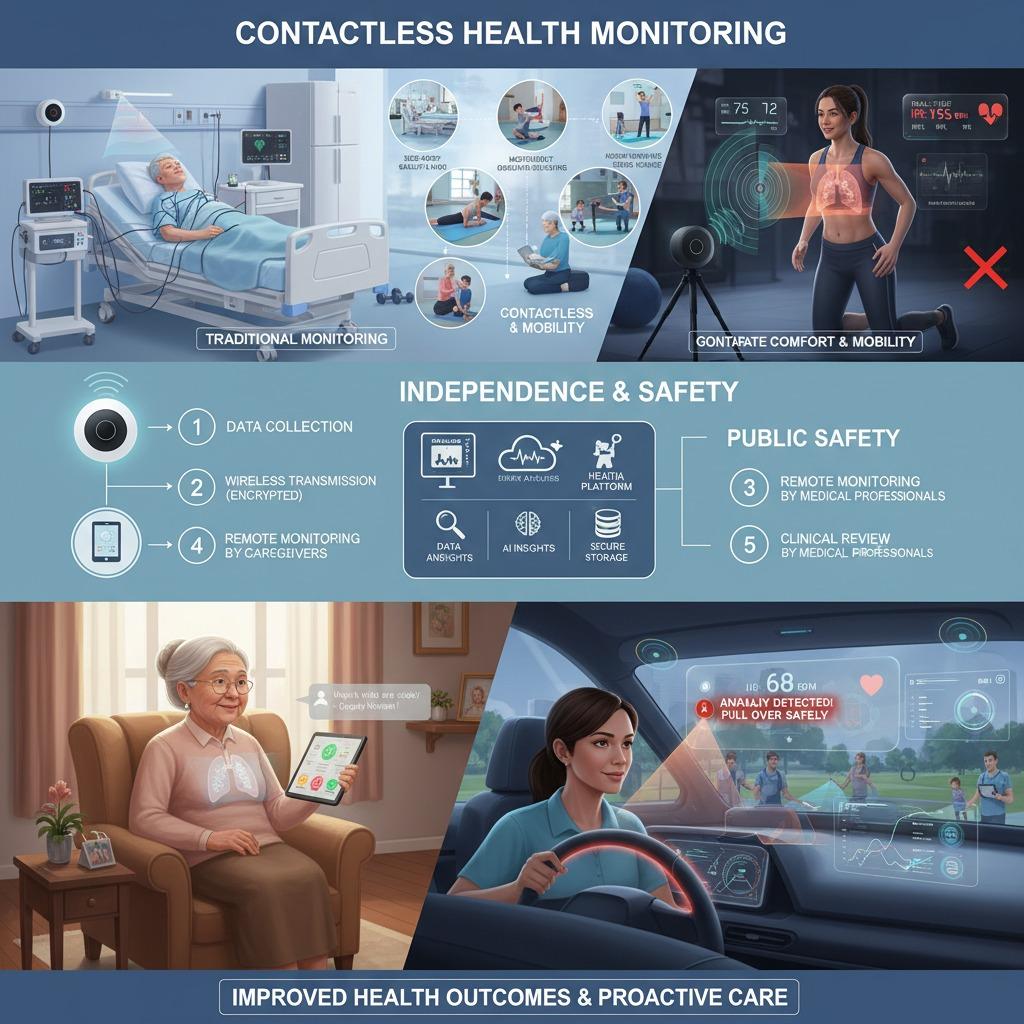
Expanding on these capabilities, contactless health monitoring radar takes vital signs monitoring radar to versatile applications, from home healthcare to public safety. This technology allows for unobtrusive tracking in beds, chairs, or open spaces, alerting users to irregularities like irregular heartbeats or shallow breathing without invading privacy. In rehabilitation centers, it supports remote patient monitoring, freeing up medical staff for more critical tasks. The non-invasive nature reduces patient anxiety and improves compliance, making it a game-changer for long-term health management. By solving the accessibility issues of wired systems, contactless health monitoring radar empowers individuals to maintain independence while staying connected to their health data.
In-Cabin Vital Signs Radar: Safety in Motion
One of the most compelling uses of vital signs monitoring radar is in vehicular environments through in-cabin vital signs radar. Driver drowsiness or medical emergencies on the road are leading causes of accidents, yet current detection methods, like cameras, can be unreliable due to lighting or privacy concerns. In-Cabin Vital Signs Radar discreetly monitors the driver's breathing and heart rate from the dashboard, using radar waves to assess alertness levels in real time. If anomalies are detected—such as elevated heart rates indicating stress or slowed breathing suggesting fatigue—the system can trigger alerts or even activate safety protocols like slowing the vehicle. This integration not only enhances road safety but also extends to passenger monitoring, particularly for children or the elderly, providing a comprehensive safety net during travel.
In summary, vital signs monitoring radar, bolstered by technologies like mmWave breathing detection, heart rate detection radar, contactless health monitoring radar, and in-cabin vital signs radar, transforms the landscape of health monitoring. By tackling the core problems of discomfort, inaccuracy, and inaccessibility in traditional methods, this radar innovation delivers precise, effortless, and life-saving solutions. As adoption grows, it promises a future where health vigilance is seamless and ever-present, ultimately improving outcomes for individuals and society alike.