




Low-power chipset design
Home
Low-power chipset design

EXPLORE
Millimeter Wave Radar Solutions
1. Why battery life has become a design constraint, not just a maintenance issue 2. What the power budget is really telling you 3. Where the biggest gains usually come from 4. Low-power chipset design is important, but it is not the whole answer 5. Selection criteria engineers and buyers should keep in view 6. Common mistakes that shorten runtime 7. Practical buyer advice 8. FAQ: a few questions that come up early 9. A sensible next step
 Ningbo Linpowave
1. Battery-Constrained Optimization: Why It Has Become a Design Decision, Not a Nice-to-Have 2. What Battery-Constrained Optimization Actually Means 3. Where the Energy Goes: A Quick Reference for Buyers and Engineers 4. Design Tactics That Usually Pay Off 5. How Low-Power Chipset Design Fits Into the Bigger Picture 6. Common Mistakes That Undercut Battery Life 7. What Buyers Should Ask Before Choosing a Solution 8. FAQ: Short Answers for Project Teams 9. Choosing the Next Step
Ningbo Linpowave
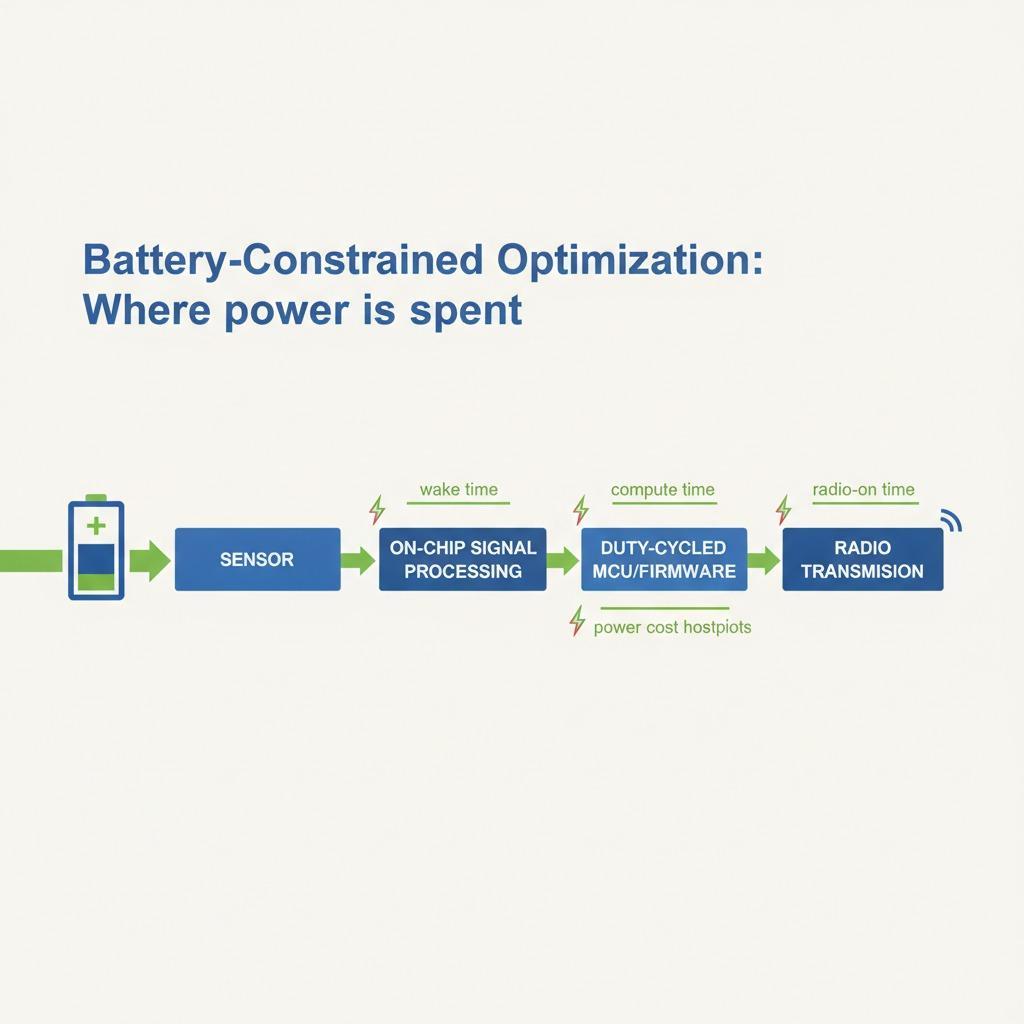
1. Why low-power chipset design has become a sourcing issue, not just an engineering preference 2. What buyers are really trying to solve 3. Quick reference: the design choices that usually move power the most 4. Process and architecture matter as much as the headline power number 5. On-chip signal processing changes the power math 6. Duty cycling is useful, but only if the wake strategy is disciplined 7. Selection criteria for sourcing and engineering teams 8. Common mistakes that quietly ruin power savings 9. What a good buying decision looks like 10. FAQ 11. Next step for product teams
Ningbo Linpowave